Episode Transcript
[00:00:00] Speaker A: Wow. Wow. So glad to be here. Yeah. So, obviously, you know, Miracle is a big fan of Blade. I am, too. That's why I'm. You know. So. The Puppet Master series is near and dear to my heart, so.
[00:00:14] Speaker B: Adrian, it's the wrong type of Blade.
[00:00:16] Speaker A: Yeah, that's the wrong Blade. Get that. The fuck?
Is that a Blade? The Marvel Blade T shirt? Miracle, what the fuck?
The is Morbius?
No, Puppet Master. This is Blade right here.
[00:00:28] Speaker B: No, this is Blade right here from 1973.
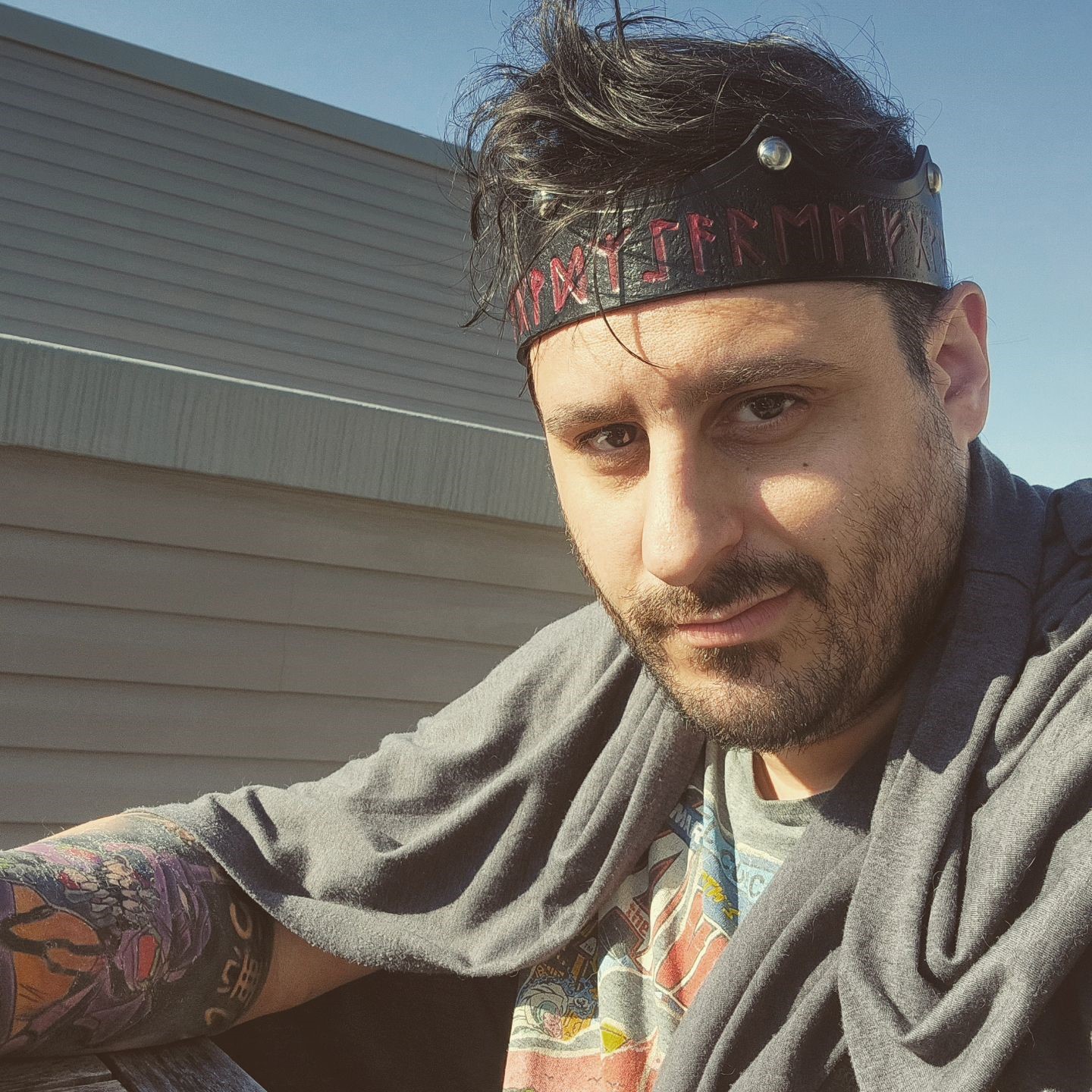
[00:00:32] Speaker A: Adrian. Is that my hat?
[00:00:35] Speaker C: Why?
[00:00:36] Speaker B: I don't know. Were you wearing my hat last time?
[00:00:40] Speaker A: That was my hat, too.
[00:00:42] Speaker D: Huh?
[00:00:42] Speaker B: Because they're all your hats. No, sir.
I earned this hat.
[00:00:46] Speaker A: Dude, I get no respect. We can't talk about fucking. You can't get the movie right? You steal my fucking hat?
Like, what the fuck is happening?
[00:00:55] Speaker B: Life, Daniel. Life is happening.
But.
[00:01:00] Speaker A: Right, yes, I guess it's going to be a Blade episode. Okay, well, now that our confusion is wrapped up, how's everyone doing?
[00:01:09] Speaker B: Peachy keen.
[00:01:10] Speaker C: Yeah, Pretty well.
[00:01:15] Speaker A: Okay.
Moving along. Yeah. So, I am King Loki. I'm the editor of Death Wish Poetry, and this is Demon Toast, the official podcast of Death Wish Poetry magazine. We're here to talk about none other than the Day Walker, the Night Stalker, slayer of vampires, Blade, played by Sticky Fingers and sometimes Wesley Snipes.
[00:01:36] Speaker B: Always Snipes.
[00:01:38] Speaker A: Of course. Sticky Fingers played him in the classic Spike TV TV series that everybody loves. I'm a big fan, personally.
[00:01:44] Speaker B: He's not. He's really not.
[00:01:47] Speaker A: It's pretty fucking awful. So, guys, I wanted to ask you. So, obviously, you know, Blade is a character going back to the 70s. And, you know, he's. He pops up from time to time. What do you think of when you think of Eric Brooks, also known as Blade?
[00:02:01] Speaker D: I think of badass.
[00:02:02] Speaker A: What adjectives come to mind?
Okay. Miracle says badass.
[00:02:07] Speaker B: He's one bad mother. Shut your mouth.
[00:02:10] Speaker A: Bad.
[00:02:11] Speaker C: In the same vein, a little more mild. I had said sassy.
[00:02:15] Speaker A: There's this moment in the third movie where the guy where Blade's like, tell me what they got in there. And he's like, I can't. They'll kill me. And he goes, they'll kill you, motherfucker. I'll kill you.
Great. It's great.
Yeah, I would agree with that.
Blade is cool. Blade is sinister. Blade is a lot of things. He's a superhero. He's a vampire. He's a comic character. He's been in some movies, he's been in some TV shows, he's been in some Cartoons. And I think it's interesting to look at a character like Blade because, yes, he's a comic book character and he's a horror comic book character. There aren't a lot of those. But he's also a black character, and there's a lot of baggage there, and there's a lot of things to talk about. And that's why I'm happy that, you know, Erica's not all alone. Representing. I'm really happy to have Miracle Austin here. Miracle is, of course, a novelist. She is a. Of horror movies and horror literature as well.
So, Miracle, tell me about your.
Your association with Blade. You know, where'd you first see him? What do you think about him before we get into some of the material?
[00:03:20] Speaker D: You know, Absolutely. Let me tell you. I was living in Wichita, Kansas, back in the late 90s because my husband was in the Air Force. So when I saw this commercial, this is my very first introduction to Blade. Okay.
I didn't even know he existed. You know, I didn't read the comic book, et cetera. So I didn't know anything about him. So when I saw the commercial come on the television screen that evening, that afternoon, whatever time it was, I was like, oh, my gosh, I gotta see this. I didn't know anything about him. So that was my first introduction to him. And I was, you know, I told my husband, I said, we gotta get tickets, we gotta go. We gotta check this out and see what it's all about. So watching Blade on screen in Wichita, Kansas, was my first introduction to him because I knew nothing. And I fell completely, you know, love and over heels with the character and everything that he represented.
[00:04:19] Speaker A: Yeah, yeah, definitely. Definitely. And that was all the first movie, right?
Yeah, yeah.
So I. I do want to talk about the movie because, like, a lot of characters, like, a lot, a lot, a lot of characters, he was kind of obscure.
And that movie breathed some real life into him.
I'll tell you now. I mean, I'm a giant dork. I grew up reading comic books.
I didn't get shoved in lockers because I was fucking scary and no one wanted to go near me. But, you know, that said, like Iron man, you know, he was just a boring, dorky superhero that nobody liked. And then we get the Robert Downey Jr. Movie.
Instant, instant, instant, instant magic sorcery. He's a different character in the comic books. He doesn't look like Walt Disney anymore. Now he looks like Robert Downey Jr. Talks like him. He's eccentric. He is. He's fun, you know, it's happened for quite a few characters, you know, didn't happen to Thor because Thor was a very fun character before. But Blade, Blade, Blade had a radical change after that movie, for good reason, Adrian. And we'll talk about that in a second. But, Adrian, where did you first. Well, actually, Erica, why don't you tell me? How do you.
Where did you first meet Blade?
[00:05:34] Speaker C: So my dad was a big fan and a big comic book sort of fellow when he was younger. My father was born in the early 60s, so he got to consume a lot of this media as it was first coming out. And then by the time I was old enough to appreciate it, the movies had already been out for a bit, so we had them on DVD. And I remember when I was like 8 or 9, maybe my dad was like, all right, it's time.
I see you're getting into your weird little things. I see that you like the horror. We're gonna get you, right? You're gonna sit down and you're gonna watch this with me. And I fell in love.
[00:06:09] Speaker B: Your dad sounds like he was a badass.
Like, that's how you raise your kids.
[00:06:18] Speaker A: I agree. I agree. That's wonderful. That's a great story, Erica. Well, I.
I grew up in the 90s with a very cool Spider man cartoon. And I'm just gonna share my screen. People listening to this on Spotify. Spotify and junk. They're not going to be able to see this, but they can just look up, look, look up Spider Man, 90s Blade. As you can see, that's the Blade I grew up with.
That's how he looked in the 90s, by the way, before Wesley Snipes, with his energy blades and blades, his motorcycle and his bad attitude. He was angry. So in this story, he's looking for Morbius. And he, of course, Spider man is trying to help Morbius.
So they do what superheroes do when they don't talk things through. They fight a lot. And, yeah, he gets like two or three episodes. He's pretty delightful. He's pretty great. I do recommend watching them on Disney plus or elsewhere, wherever you can watch these things legally or whatever. I'm not telling you, I'm not your dad, you know, but, yeah, that was where I first met Morbius and Blade, who go way back.
Way back. As in, like, way back to the 70s.
So, yeah, that was Blade for a long time. That was his second incarnation. Right, Because Blade went through. I'm calling it, I'm gonna say four incarnations, right, That I consider to be his Second incarnation, the motorcycle jacket, the close cropped hair, but not quite the Wesley Snipes hair, you know, and the rage, the angry, angry man. Let's call it, you know, diplomatically.
So let's talk about the first incarnation of Blade. You know, this is his first appearance. All right, And I have some sad stories to tell about Blade Comics, which we'll get to in due time.
This is Tomb of Dracula number 10. This is where he first appears. And as you can see, there's the Marvel Dracula holding a nice lady. A nice blonde white lady.
[00:08:21] Speaker D: Yes.
[00:08:22] Speaker A: And there's this sinister with the afro, the awesome green glasses and throwing knives and green pants.
And there's. The first time they see him, they call me Blade. The Blade. The vampire killer. So I. I did a little research, okay? So this was the point where the comic. So the. So the. The Tomb of Dracula. We're not talking about that here. That's a future episode of Demon Toast.
But the Tomb of Dracula comic started out because basically Marvel wanted to do horror comics. There was something called the Comics code authority at the time where basically you could not publish a comic book with torture, death, sex, queerness are monsters.
However, you were allowed to have monsters if they were classic monsters, like, you know, Frankenstein or Dracula or the Wolfman, because those were seen as culturally relevant and not degenerate to steal from the Nazis. Right, because that's. That's what the comics code is. Right?
[00:09:29] Speaker C: It's.
[00:09:29] Speaker A: It's a way to control the media.
So Tomb of Dracula started out as this, like, neo Gothic, like, comic book where this guy named Frank Drake inherits Dracula's castle. His real name is Frank Dracula, but his family changed her name to Drake because they wanted to be American.
And without getting, you know, buried in the tomb of Dracula, there's, you know, Orientalism. There's like a big silent Indian guy. There's a female Von Helsing. You know, It's. It's a 70s comic book. It's pretty good, but it doesn't get good until Marv Wolfman takes over. And that is not a pseudonym. His name is Marv Wolfman.
Marv Wolfman created Blade.
And, you know, it is one of those things where he was created by white people. Most of these characters are.
So I do want to point out that Blade came into being because the, you know, the blaxploitation genre of the 70s was big, and comics are fast. They are so fast, it's not even funny.
So, like, I. I'm not sure. When Blackula came out, you guys Miracle. Do you know offhand?
[00:10:35] Speaker D: No, I don't know offhand, but I think it was probably 70s either late 60s.
[00:10:40] Speaker B: It was definitely.
[00:10:42] Speaker A: I think it was 71 or 72. It doesn't matter. It's not a big deal. But like, Blackula came out where Dracula turns up an African prince into a vampire and he ends up fighting white cops in America because it's black exploitation.
So those movies were really popular. Blaxploitation was a takeoff of the kung fu movies. And, you know, a lot of them were made by black people aimed at a black audience, but also white people who just wanted to see awesome movies with action and, you know, stunts and, you know, seeing black people do cool things was exotic and fun at the time. That's not to say they didn't promote, like, stereotypes. Right? Like, you know, the hyper masculinization of the black man, black male and all that good stuff is definitely an aspect of it. But marginalized people will take the language of their oppressors and put it to work.
So we had Black Panther in 66. He appeared in Fantastic Four.
It's not a very good depiction.
He steals Susan Storm and makes Reed Richards and all them come to Wakanda to.
To be hunted in his jungle of death. It's very bad.
There's the Falcon in Captain America. That was in 1969, I believe that was made to. I'm probably dead fucking wrong, but I'm pretty sure it was made to respond to the Green Lantern Black Arrow comic book, which was addressing urban crime. Obviously, the Falcon's a great character. He's done a lot of things. He's Captain America now, you know, and not just in the movies. He's also a Captain America. There are two Captain America's, the comic books. And he's very great in the role. He's able to address things that Steve is not because of Steve's history.
And of course, there is Luke Cage who popped up in 1972, I believe it was in Heroes for Hire. And these are all characters that spawn out of the exploitation genre, you know.
So again, considering how Blade first looked with his Afro and his goofy looking glasses, they were not the cool shades that Wesley wears in his movies. Right.
Like, he was also modeled after the football player Jim Brown, who was also a civil rights leader. And I'm sure they saw him on TV and stuff.
[00:12:57] Speaker C: There's. There's definitely value and weight in that first depiction and who they chose to model him after because he was a civil rights activist. Like, there's definitely power in that and it brings an important level of representation to the character.
But I feel like it is a little bit of a double edged sword because I feel like it was probably a little bit like you said, Dan. They probably saw him on TV and went, that's how all black men look. And that's not necessarily the case because then that kind of feeds into this caricature, like image and representation of just black people kind of as a whole in media, but especially like horror media.
[00:13:41] Speaker D: I definitely agree with you, Erica.
Everything that you shared. One thing, you know, I read, you know, not too long ago, you know, Wesley Snipes, you know, he was, you know, very cautious going into the Blade role because of the black exploitation and the images.
You know, he had his eyes set on, you know, portraying Black Panther.
But, you know, this role fell in his lap and thank goodness it did because I can't see anyone else.
Blade as he portrayed him. And from where Blade started and where he evolved and where he is and what he became was just fantastic to see something like that on the screen because, you know, like you were saying, Dan, back in the 60s and 70s, so much, you know, black exploitation stereotypes.
This is the first time I actually saw a black character without the stereotypes. And, you know, he just stripped them away. So it was just so beautiful to see that on screen. And like, wow, you know, he is not walking in those shoes. And I was just so proud. And like I said, it just made me, it just took my breath away.
[00:14:55] Speaker A: Absolutely. Yeah. And I just want to add on to that because, like, you know, around the same time there was the Shaft remake, right? Where it's Samuel L. Jackson doing his thing. And we, I love Samuel L. Jackson, we all do, but so much of us. And when I say us, I mean us, not African American peoples, right? Like, I'm Jewish, whatever, but I'm, I, I, I'm nominally white. Right? And like, how do I put this?
That is how a lot of black characters who are in an action role will default. They'll default to what's my name, motherfucker? You know what I mean? And Blade has that anger and ha, rage to him, but he's so cool, calm and collected.
[00:15:34] Speaker C: I feel like that's an important distinction too because like Miracle was saying, he does strip away a lot of those stereotypes. And while that like, overarching feeling of like the angry black man still resides, I feel like it's different because there's intention behind it.
Like he's not angry for no reason. There's this big purpose Driving that rage and it's getting things done as opposed to being like this destructive force.
[00:16:02] Speaker A: Yes. So I was talking to Adrian, right? It was while I was watching, I think, the first or the second movie. And I said to her, I said, you know, I think that Blade is the only black movie superhero who is allowed to be black. And then I said, take that back, Daniel. That's not right. Because being black doesn't mean being Blade. Right? Being black doesn't mean being a badass. Doesn't mean. No, no, no. That. That's racist. And you need to rethink that because I'm. I was trying to say something. And what I meant was Blade's the only character who's allowed to be who he is. Right.
So, like, let's look at a couple, right? Like, there's Spawn. Spawn has always been, incidentally, black. He's always just. He just happens to be black. In fact, he's such a bad that in the movie, they give him a dog and a little kid because you can't have a scary, revenge fueled superhero be black. That's terrifying. You know, my real example actually is Black Panther. When we first meet Black Panther, it's in Captain America, Civil War, and he's filled with hatred, revenge. He's terrifying. He's so cool. And that's how he is in the comic books usually. You know, it gets a little old sometimes, but, like, you know, he's this aggressive king who, if it's time for you to die, he's coming for you. And then when we get his movie, he's all smiles and sunshine and sweetness and jokes and, you know, what's up, dude?
[00:17:25] Speaker B: So in the Black Panther movie, they also made him super noble. Like, he's actually incredibly heroic. And I feel like that was so powerful because you do get the stereotypes of, you know, angry.
You know, it's like a thing. But like this. He wasn't that in the movies. They did not make him that. He was beautiful and he was powerful, but he was noble and honorable and, like, it was powerful.
[00:17:59] Speaker D: Right?
[00:17:59] Speaker A: You're talking about Black Panther.
[00:18:01] Speaker B: Yes.
[00:18:02] Speaker A: Okay, but I'm just saying that, like, yeah, that is true. He's a superhero and he has those qualities. But I feel like they domesticized him when he got his own movie.
[00:18:11] Speaker C: They agree with Dan a little bit there. I feel like there's a fine line between, like, removing harmful stereotypes and, like, full blown erasure. And this does, to me, feel more like it's tiptoeing the line of, like, we're trying to Domesticate him.
I feel like it would be more powerful if he still had some of that rage and was like, I'm going to channel that into being this noble, strong, like, prolific person.
[00:18:42] Speaker A: Yeah. Like, I feel like Black Panther became very generic.
His comic books kind of exhaust me. Like, I've been reading Ultimate Black Panther, and I had to take a break because it's so dour and violent, and he's so decisive. Like, yes, he's honorable and heroic and wise, but he's also like, I'm a king. These men will die.
Like, he doesn't even do the thing that Thor does where he gives you a chance to, like, stand out. Like, he's Black Panther. Like, again, the movie Black Panther is not this guy. This guy is scary.
[00:19:12] Speaker C: You know, day difference, kind of.
[00:19:15] Speaker A: Yeah. And my point is that Blade is allowed to be as ruthless as he needs to be without it being, like, a fetish or it being toned down for a white audience. And it's partly because of the people that made the movie.
Adrian, did you want to speak?
[00:19:32] Speaker B: No, I'm good.
[00:19:33] Speaker A: You sure?
[00:19:35] Speaker C: Peach again.
[00:19:36] Speaker A: Yeah. Got my hat, that's why. All right.
[00:19:39] Speaker B: It's all your hat. It's giving me magical powers. I feel like right now I have the power of wisdom.
[00:19:46] Speaker A: So the. The second incarnation of Blade, obviously, and Miracle. You've got some of the comics.
[00:19:51] Speaker D: I do, I do, yes.
I have this one. I have more, but I didn't pull those. But this is one of my favorites. I just think it's so beautiful. Oh, my gosh. Just the pose and the colors and.
[00:20:06] Speaker B: The artwork is phenomenal. The artwork kills me.
[00:20:10] Speaker D: I know. Isn't it beautiful? I know. It's so beautiful.
[00:20:13] Speaker B: Yeah.
[00:20:13] Speaker D: Yeah.
[00:20:14] Speaker A: I'm gonna share my screen, and you're probably gonna see something. Yeah. I'm gonna show you some of the stuff. Right. That I want to talk about, because it's really cool.
So there was a point where Marvel was like, okay, over at. Over at dc, they're doing Vertigo. They have all these, like, horror comics. I've got Swamp Thing behind me, actually.
And Marvel was like, we have them, too, you know, now, they didn't cross the lines like Vertigo did. Like, Vertigo has this element of sensuality, sex, eroticism, true occultism, witches, vampires, you know, death, all kinds of things. Demons, Lucifer, the world of dreams.
This was kind. This was somewhat of their answer to that. It was a. They ultimately called the imprint Midnight Suns. It didn't last very long, but it was Morbius, Blade, Ghost Rider, and the Son of Satan wasn't part of it at the time. But, you know, he would be folded into that eventually. And, you know, there was a big crossover where they were trying to stop.
Let's see. Where's my girlfriend? Where's. Oh, there she is. Yeah. Lilith, the mother of all demons. As you can see. Very sexy, very lovely with her pale skin and her fish nets and her. This is, by the way, this is 90s comics. Like, you can't get more 90s in this. There's Blade fighting fucking Ghost Rider. It's fucking great.
Lilith and Dr. Strange. And these are the midnight suns. In the middle, there is Ryan Reynolds character Hannibal King. He is a lot like the vampire Lestat. As does Frank Drake, the protagonist from the 70s, Tomb of Dracula with his gun, the Exorcist.
And of course, there's Blade. So this is just. This is a few years before Wesley Snipes. Right. You could see Blade's motorcycle jacket. He's awesome.
Yeah. There's Morbius, our boy.
[00:22:03] Speaker B: I love that Morbius. Like, I love it.
[00:22:06] Speaker D: I do too.
[00:22:07] Speaker A: Yeah. 90s Morbius is very cool with the white face. We will have to do an episode on Morbius. I love Morbius.
[00:22:13] Speaker D: Yeah.
[00:22:14] Speaker B: I grew up with.
[00:22:16] Speaker A: Yeah, I know him from the Spider man comic as well. Hannibal King again and. Yeah, and I just wanted to show you the era because the Punisher shows up.
So basically, Blade's longest running book was Night Stalkers.
Right?
It was a book of Blade, Hannibal King and Frank Drake from Tomb of Dracula. This was a 90s book and it was about them being manipulated by Dr. Strange into fighting Lilith Hydra, vampires, demons, and all manner of creepy crawlies. It ran for 10 issues.
If there are more, if.
If there are more than, you know, viewers can feel free to hit me up on Instagram. But, you know, the fact remains is that Blade sadly can't sustain a book.
So I have a very sad story and I'm sure you guys have something of this of the same. So for this episode, I really wanted like, you know, a Blade comic to put behind me just. Just to have. Because, you know, I don't. I don't have any.
Nothing on the stands. No new comic books. I went to the long boxes where they sell back issues.
You know, Blade, I'm looking in the bees. Batman Annual. Batman Dark Knight. Batman, Batman, Batman. There's so many cards for different Batman books. And they're all books. No Blade.
And I'm like.
And I glance over and Hercules has a card. There's no comics in it, but Hercules gets a section like, I Love Hercules, but I promise you he has less issues of comic books than Blade does. Actually, that might not be true, but still, it's bizarre. So I went to Marvel 2 in one, which was a stupid comic where the Thing would team up with other superheroes to do things right. And there's one of him fight, you know, the Thing in Morbius, the Thing in Reed Richards, the Thing in Nova, the Thing in Quasar, no Blade, nothing.
So I go over to the guy that runs the store, very cool guy, he himself is black. And I'm like, hey, man, dude.
I'm like, I. I'm doing a podcast on Blade and there is nothing in the store. And he's like, yeah, tell me about it, bro. You look cool, but you can't run a book.
And pretty sad.
[00:24:30] Speaker B: Okay, that's not true. Because he can run a book. Because, I mean, they haven't found the right writer yet. It hasn't happened yet, but that doesn't mean it's not going to happen. But I'm going to tell you, the character is so absolutely phenomenally, like interesting and cool. He's literally a damn fear. Which I'm going to tell you is a super rare, like ridiculous Romanian folklore thing.
It mattered. It's beautiful. He's like half vampire, half human.
You don't see that shit. The only other thing I can think of is Vampire Hunter D. You know, like, it's amazing. They don't actually use the mythology, but Blade did. Blade like took it and ran with it. Like, I just don't think they found the right writer yet because I do think there is 100 an audience for it. I don't think he's done. I just don't think they've gotten the right person yet.
[00:25:34] Speaker A: Well, I think the Brian hill book in 2023, that was his last real book. I mean, he was in a. He was the marquee character for Blood Hunt, which was a four issue crossover, but it wasn't very good.
It's okay. And I, I tend to agree, but I mean, like, Ghost Rider is another one. There have been.
How many ghostwriters are there? There's a, there's Johnny Blaze, there's Danny Catch, and there's Robbie Reyes. I don't think there's a fourth one.
And like the books run for like, you know, five to 20 issues usually. It's just, you know, these characters are niche and there's 16 Spider man books like clogging up the, the stands and it's just not conducive to certain Types of comic books, you know, I mean, certain characters just can't. They can't sustain a book. People don't buy them. That's the real thing. It's not enough. So Miles Morales. Yes. You know, he's the Black Spider Man. He's from Ultimate Spider Man. He is a breakout character. He got his own book, and they folded him into the regular Marvel universe. And he always has a book because people buy it, people like it. It's just a matter of finding an audience, you know?
[00:26:40] Speaker D: And you know what? I think what I've been thinking about, and I thought about this for a little bit, everybody, you know, I think maybe Blade could get a reawakening if we'd. If someone would write a prequel and, you know, go and explore his childhood and his teen years. And with Whistler, I think that would be a reawakening, and I think that may open the door up for him. And I always. I would love to see a Netflix series or whatever, but I would love to see that.
[00:27:12] Speaker A: Yeah. I mean, that is one way to go about it. That would be cool. You know, it's just Marvel was supposed to bring Blade back. That movie was supposed to be out already with Mashallah Ali, and the last I heard about it was that movie Sinners. All the outfits came from that movie. They bought them at a fucking fire sale.
[00:27:31] Speaker B: Because Ruth Carter made a whole thing about it. She's one of my favorite costume design.
We're actually friends. It's a whole thing.
[00:27:40] Speaker A: I'm gonna draw your attention to Son of Blade by Chris Gaveler. I went out of my way to find essays by black writers because, you know, obviously I can talk authoritatively about this, but, you know, it's good to have black voices in the room. It's also a good idea to see what black people have to say about Blade, which is part of the reason I was really excited to have Miracle here, you know?
Right. It's hard not to read the character as a racial metaphor. Barack Obama turned 13 when the Supreme Court ruled on Roe v. Wade that year. And though President Nixon made no public comment, White House tapes reveal his opposition to abortion, except when necessary, as when you have a black and a white or a rape.
That's Nixon. I read all vampires as rapists. So it follows the horror of our cultural logic that the first black half vampire would have to take a vow of blood celibacy.
Note all those unconscious blonde women draped in Dracula's arms, too.
Blade's skin makes explicit more than one coded fear.
Right.
So what do we think of that?
[00:28:48] Speaker B: I feel like that's really fucking gross.
[00:28:51] Speaker A: Remember, this is a black writer writing this. And his point is that because, you know, a lot of people will see a black person as a criminal or a rapist.
Well, if all vampires are. Can be seen as rapists, Blade as a vampire is not going to drink blood.
[00:29:11] Speaker D: I mean, I see what. What he was saying about. I understand why he wrote it, but I think because of my feelings for Blade, I disagree with it. You know, I understand, you know, Blade being a powerful vampire, having all these incredible abilities and also being black and how that can be, you know, seen as a huge fear for those who don't understand or who have certain feelings about that.
But for me, for me, I identify with him and I think others too, regardless of his race, I see that. I know what he is, and I also know beyond of what he is as well. And he serves a purpose to do good.
And I think that's one thing that drew me to Blade more than anything for his character. So that's what I have to say about it.
[00:30:16] Speaker A: Yeah, that's fair. And I. I think that. I think that the writer is specifically talking about Blade pre Wesley Snipes. Right.
[00:30:25] Speaker C: I agree pretty heavily with that last statement.
That was read honestly because of, like, how society was functioning at the time and the political powers at play and just how our community was treated as a whole.
Blade was kind of representative of those social fears from other communities. But I think that plays very heavily into that larger role and the connection that we feel to him because he is presented in this way like he's a monster in more than one accord. Right. He's like this terrifying half beast, but he's also quite literally a black man, which most people do see as, like, a threat in some regard. I can't say most. That's an over generalization. But, like, at the time, a lot of black people saw our community in an unfair light. But I think that portrayal and then his, like, Adam to not do the things that are expected of him because he, like, walks in those spheres is important to regard because that in and of itself is kind of breaking out of those stigmas that surround us. Because it's like, yes, he is a black man, but he's not doing these things because he's choosing not to. Like, that's not who he is. It's not his personality. He's not confined to these actions simply because of the color of his skin.
I think they kind of interlock there.
[00:32:01] Speaker B: Erica.
I wish more people Viewed just being human that way.
[00:32:07] Speaker A: Yes.
Very well said, Adrian.
Before I. I sum up those two perspectives. Adrian, did you want to say something, or did you want to talk about the dump here and how that's different from a vampire?
[00:32:19] Speaker B: Well, okay, so a Dampier is part human and part vampire. It's based in Romanian mythology. They literally still have damp fears today. They have all of the, like, the superpowers of, like, being a vampire without being a vampire.
You can literally, in Romania today, like, literally today, you can go over there and go see someone. They're very rare, but they exist. You can go see a damn fear. And they have, like, all of the qualities, none of the things, but they can find vampires and, like, vampires, and they're literally supposed to, like, hunt them. Like, that's their entire purpose of a. Of a damp fear. Like, but if, you know, they go to the bad side, then they can become full vampires. Like, it's a whole thing. But they're, like, part human, part vampire. And I feel like in Blade, the fact that that is what he is is a damn fear.
[00:33:33] Speaker D: Like.
[00:33:35] Speaker B: He'S part in this world, part in that.
[00:33:38] Speaker D: Right.
[00:33:39] Speaker A: Where does the dump here come from?
[00:33:41] Speaker B: Romania.
[00:33:43] Speaker A: Okay, and you said that we can. We can find them now, or they're, like, real.
[00:33:46] Speaker B: No, they literally exist. Some of them are even like, PIs, like detectives over there, and they're ghost hunters. I'm dead serious.
It's crazy.
But they still. Romania is a weird. Like, I feel like Romania is the one place in the entire world where magic still exists because people still believe this stuff.
[00:34:12] Speaker A: Right.
[00:34:13] Speaker B: Like, I just watched the Legend of Ochi, which has nothing to do with this, but, like, takes place in Romania, and, like, all of this magical stuff happens. And the only reason Paul Nashi had to film all of his films, they all had to take place in Romania because that is the place where magic happens.
[00:34:31] Speaker A: Yeah. So obviously, you know, Erica sees in Blade and not. Not necessarily all of Blade. Right. And just assuming what you're saying, but, like, you know, there is that element of his creation, of he's exciting because he's dangerous. And, you know, we're bringing a taboo into the world of superheroes. And Miracle is like. Yeah. But there's also this empowerment. Right. And I think that that's, like, part of the dialectic. You have something awful, and then you have, you know, that crushes an oppressed group, and you have that oppressed group take that thing and make it their own, and it becomes a symbol of power. Right.
[00:35:13] Speaker B: I mean, you know, that's Literally, a damn fear definition is kind of.
[00:35:19] Speaker A: Okay, yeah, okay.
[00:35:20] Speaker C: Fair, fair, fair of something I had read a couple of years ago, too, called the Pedagogy of the Oppressed. And the whole premise of the book is basically exactly that. Like, after a prolonged period of time, a marginalized group is going to get tired of it, and they're going to find their power some way somehow, and this whole script is going to flip. Eventually the oppressee gets to a point where they're on equal level with their oppressors, and then they kind of take the bait, and it just goes round and round.
[00:35:55] Speaker A: And that's what was happening with the blaxploitation genre, you know, like, yeah, some of them were made by white people, but a lot of them weren't, you know, and these were black filmmakers who got their start doing that stuff. And you have stuff like Wu Tang Clan who are taking those elements in their early albums and working it into their mythos and their rap music, you know, and making it their own. Making art with whatever they have. Yeah.
Which brings us to. I think that's a good place to start talking about Wesley Snipes.
Wesley Snipes is largely.
Adrian brought this up. It was a. It's. It's from a conversation that she and Miracle had. And you know what?
I'm gonna let Miracle tell us. Miracle and Adrian feel like, you know, I mean, go ahead, tell me about the first Blade movie and what it.
[00:36:41] Speaker B: How it.
[00:36:41] Speaker C: Marvel.
[00:36:42] Speaker B: That's what he wants to know is how it saved Marvel.
[00:36:45] Speaker D: Yes, it did. You know, the money that it brought. Because Marvel was in the red. Marvel was in the red. And I think they were about to sell. I can't remember that story.
[00:36:58] Speaker A: So Marvel. Marvel got bought out by.
They got bought out by Toy Biz, which is an awful toy company. Their executive, Avia, Rod, and I think Ike Perlmutters from there, too. They. They continue to run it into the ground at times. So, yeah, I'm sorry. I just. This is my stuff going.
[00:37:14] Speaker D: No, no, it's okay. No, but it wasn't really, you know, it wasn't really going anywhere. And then here come up, you know, Blake comes along like, you know, out of nowhere. I'm like, what is this? What is this all about?
And, boom. Has this, you know, following and feeling. Movie theaters. You know, people are talking about it at work and, you know, just.
It was just like, fantastic.
And here comes blade two, you know, and etc. But blade one. Oh, my gosh. Like I said, that was something I Was not anticipating. So it was like a dream come true for me.
I was in my 30s. I wish I could have saw that when I was a young girl growing up, a young black girl. But just to see that, it didn't matter. It was magic then, and it's magic now, and it always will be magic for me and so many others, I'm sure. Regardless of who you are, if you see the magic, you see it miracle.
[00:38:22] Speaker B: Can I say something?
This is the first time on our entire podcast that I am not the oldest person here.
I was in when I got to see Blade. And I'm gonna tell you, it was the first vampire, like, the fully. It was the first vampire action movie that existed. And my mom, because I always wanted to see the weird vampire movies. Like, you know, there was Interview with the Vampire, Bram Stoker's Dracula, and then there was Blade. And my mom loved action movies, but I loved vampire movies. And this was the first time we could meet in the middle.
And we watched this movie, and I liked it. I don't think I fully appreciated it after watching it the second time.
This movie, like, all three of them, there is not a single bad Blade movie. They are phenomenal.
[00:39:21] Speaker A: So.
[00:39:21] Speaker B: But it just. It meant so much.
But, yes. No. Marvel was going bankrupt, and Blade showed everybody that, like, comic book movies can make money and that people want to see this. And the fact that it wasn't some stupid white dudes, like, you know, playing fisticuffs, like, it was awesome and everyone still wanted to see it.
[00:39:51] Speaker A: So obviously, you know, like, the first really, truly big, like, superhero movie. And I know there was, like, Batman at 89 and all that Joel Schumacher stuff. Whatever. I mean, you know, the Batman movie just led to more Batman movies. I mean, you know, X Men was the X Men was the first truly big one, which, you know, was followed by Spider Man.
That wouldn't have happened, though, without Blade success. Because here's the thing.
All of these properties, because Marvel didn't have a studio yet, they all got licensed out. You know, Roger Corman made a Fantastic Four movie in the 90s, famously. It's. I like it. It's horrible schlock. It was made to go into the can and all of these. Spider man was over at Golan Globus, which is a schlock factory. They made Superman 4, if you've seen that movie. You know what I'm talking about. It's fucking terrible. They were all gonna be low budget. They were all gonna be bad. In fact, speaking of which, Richard Roundtree, we All love him. He was going to play Blade in, I think, the late 80s. He was the first one they grabbed. And look, it might have been okay, but it wouldn't have been what we got.
And Blade getting grabbed by David Goyer and I can't remember who directed the first one, but all those people and Wesley Snipes signing because he really wanted to play a Black Panther Miracle. Rereading your shirt miracle. I'm pretty sure you said that. And you're right. He really wanted to play Black Panther. He would have been fucking great. But he got tired of waiting around because Black Panther would have required a budget, like a real big budget to make Wakanda and its technology and the elaborate effects that work that you would need for a character like that. He got tired of waiting around and he was like, I'll do Blade.
So, yeah, like what you guys are saying, that movie was a success, and people were like, oh, this thing's a Marvel comic book. So that led to Fox getting the rights to X Men and Sony grabbing Spider man from Golden Globus. And, you know, all that led to this glorious age of superhero movies that we are living in right now.
[00:41:51] Speaker B: We wouldn't have them without Blade.
[00:41:52] Speaker C: Blade.
[00:41:54] Speaker B: He opened the doors.
[00:41:56] Speaker D: Reawakening.
[00:41:58] Speaker A: Reawakening, absolutely.
[00:42:00] Speaker B: And an appreciation.
[00:42:02] Speaker A: Let's talk about Blade 1998. I just want to say, two decades of Marvel movies and some very bad. DC movies also have kind of eight. They've kind of aged. They've kind of aged this movie like a fine wine.
Like, there are jokes in it, there's action. But it's just enough. It's perfect.
I wrote down New York Shadows, Goth techno club. Reminds me of the Crow 3, by the way. This was written by David Goyer, who I told Adrian, I'm like, he's like the Brian Michael Bendis of movies. He's just written, like, everything. You know, he wrote the Tommy Jane, Punisher.
[00:42:47] Speaker B: I actually really love him. He's also. He did Dark City with Jennifer Connelly and Keeper Sutherland. Like, this guy actually, like, yes, he's a good dude that turns his work in on time. But also he is creatively brilliant. Like, yeah, he's had some flops. Yeah, he's done some.
We all do. Let's be honest.
[00:43:09] Speaker D: He wrote.
[00:43:09] Speaker A: He wrote man of Steel partly because he was friends with Christopher Nolan. He wrote all those Batman movies also.
And, yeah, that's my big thing with him. He turns his work in on time, and it's always competent.
You know, man of Steel, it wasn't his fault. It sucked. That was all Zack Snyder, you know, so, yeah, I do like him. David Goyer is really cool. He directed my favorite Blade movie. I'm gonna get yelled at for this. Blade 3. I love Blade Trinity. I think it's great. I love it. It's awesome.
[00:43:38] Speaker C: If I'm being honest.
[00:43:39] Speaker B: That might bite.
[00:43:39] Speaker C: It might have been the first one I watched.
[00:43:42] Speaker D: Fair.
[00:43:42] Speaker A: Yeah, it was the first one I watched too.
God, that movie is so good. But yeah, the first one is so cool.
I wrote down. Here we meet Deacon Frost 10 minutes in this movie. Its storytelling is so economical. It is so fucking fast paced and well done.
There's a shootout in a hospital, right? And the cops are shooting him. And he goes. He turns to the cops, he goes, motherfucker, you out of your damn mind?
Because he's. He's chasing a vampire and they're shooting him.
[00:44:13] Speaker D: Like they have no clue. And can I. Can I just say something real quick about the first one? That introduction, I did not know. I was not expecting what we're about to get.
[00:44:25] Speaker A: So I wanted to point out too. So Wesley Snipes, he was very involved in the writing of this movie, which obviously added dramatically to the character of it. Yeah. So David Goyer and Wesley Slips were like, you know, look, on the demon tennis podcast, we love Anne Rice, but they were like, we don't want to do that Byronic hero stuff. We don't want vampires sleeping in coffins, no fucking crucifixes. Not that Ann does that stuff, but, like, they wanted to get away from that and make vampires a little more believable and a little more scary, you know? And I think they're a little closer to anerace than they realize. But I still think that the world that they created is really cool. They have familiars, they have normal people that work for the vampires under the assumption that they will one day be turned into vampires for their good service.
[00:45:13] Speaker B: If the whole field thing, it's Renfield.
[00:45:17] Speaker A: Exactly. Yes, yes, yes. I love that there's a. There's like a vampire mafia underworld. They own the police.
By the way, the Whistler character who raised Blade, he is from this movie.
So when this movie was being made, the 90s Spider man cartoon that I mentioned, they had access to the script, I guess, because they put Whistler in that cartoon show.
[00:45:42] Speaker B: Are you kidding?
[00:45:44] Speaker A: Yeah, yeah. Watch those episodes, please. They're really good. I love the 90s Spider man is an acquired taste, I think, for people older and younger than me, you know, but what can you do It's. It's. At least watch those.
They. They make some choices because they can't show Morbius drinking blood.
So he. He sucks blood with his hands. I need any. He's not allowed to say blood. He says, plasma.
[00:46:11] Speaker B: I need the plasma.
[00:46:14] Speaker A: We will talk about that when we do Morpheus someday. It'll happen.
But, yeah, getting back on point. There's so many things about this I loved. I love that Blade drives a muscle car jalopy.
It's pretty great.
[00:46:27] Speaker D: Yeah.
[00:46:27] Speaker B: I think that actually influenced Supernatural and. Baby, I'm not.
[00:46:34] Speaker D: Yes.
[00:46:35] Speaker B: You know. You know, it literally, like, as soon as it pulled up, I was like, this is why, you know? Yeah. That's why we got Baby. Baby came from Play Cool.
[00:46:48] Speaker A: Yeah, I like that. The Quinn character, who is, like, the muscle. All these movies have, like, a muscle character.
Very excited to talk about the second one for that reason. He's a giant bitch. His name's Quinn. Of course. He keeps getting his hand cut off by Blade. It's pretty funny.
[00:47:04] Speaker B: You know who that is, right?
[00:47:07] Speaker A: No idea. I have facial blindness.
[00:47:08] Speaker B: Donal Logue. He literally is in Gotham. He's phenomenal. He's Gordon's, like, right hand man in Gotham. He's a fantastic actor.
[00:47:21] Speaker A: Okay.
[00:47:22] Speaker B: There's like. Yeah, it's great.
[00:47:25] Speaker A: I like that Whistler listens to CCR also. I mean, he's a guy I could drink with, you know?
[00:47:29] Speaker B: Fuck, yeah, Whistler. I'm not gonna lie. Whistler is one of my favorites. Also, I love Kris Kristofferson.
He was probably one of the most emotionally evolved human.
Like, the way he helped Sinead o' Connor when she was, like, having her whole meltdown and Miracle knows what I'm talking about because we grew up.
[00:47:56] Speaker A: Who does he play in the movie?
[00:47:58] Speaker B: He's Whistler, honey.
[00:48:00] Speaker A: Okay, well, you gotta say for the audience, because they don't know, okay?
[00:48:03] Speaker B: Kris Kristofferson is Whistler. He is a country music artist, and he worked with Johnny Cash. And he was a very, like, beautiful human that was like. Like, he literally, like when people were bulldozing Sinead O' Connor's CDs and stuff. When I was a kid, it was all over the news. It was like a whole thing, okay?
She went to this concert and they booed her. And he literally took her aside and he told her, like, it's gonna be okay. And he got her to perform anyway. It was like, a really big thing. Like, this guy was, like, a really cool dude. I've met several people that knew him. He was phenomenal and he's Whistler.
[00:48:49] Speaker A: Yes, he is Whistler. Great. So, yeah, fair, fair, fair, fair. He is a great. It's a great performance.
Let's see. The only things I don't like are some of the things that are just like, you know, like movie tropes. Like, you know, there's like some prophecy. Yawn. I don't know, some God called Erevis, the God of darkness. And they. They want blades, magic blood for, I don't know, the Blood Moon or what. I don't. I have no idea. I forgot. But my favorite thing about the movie is that when vampires die, they get turned into CGI Kool Aid, which is very dangerous. You know, what do we think about CGI Kool Aid?
[00:49:26] Speaker B: It's the worst part of the whole movie. It's my only criticism.
[00:49:30] Speaker D: I know. I think. I think back then, you know, the special effects. But if they would redo that today. And I can only imagine if Blade ever does get, you know, the green light, you know?
[00:49:42] Speaker A: Yeah.
[00:49:43] Speaker D: I think it's going to be amazing if it ever gets to green light.
[00:49:46] Speaker A: Do you think the vampires. Do you think the vampires will still explode in Kool Aid?
[00:49:50] Speaker D: No, I think they're going to probably do something different. I think they would do something different. I don't know what, but I think they would maybe do a different angle, maybe be influenced by that, you know?
[00:49:59] Speaker A: But you think maybe they'll explode into, like, CGI Hawaiian Punch instead or.
[00:50:04] Speaker D: I don't think it'll be the same.
[00:50:06] Speaker B: It'll be.
[00:50:07] Speaker D: I think it'd be amazing if it ever gets done.
[00:50:10] Speaker A: So do you think Blade from Puppet Master will ever show up in a Blade movie?
[00:50:15] Speaker C: I can only hope not.
[00:50:19] Speaker B: I love you, Dan.
[00:50:20] Speaker C: I do not love the Puppet Master movies at all.
[00:50:24] Speaker B: What?
[00:50:24] Speaker A: How could you say that?
How could you say that?
[00:50:28] Speaker C: They're too corny for me. They're good, but they're too corny.
[00:50:31] Speaker B: I'm too old. It's fine.
[00:50:34] Speaker A: All right, well, you know the first.
[00:50:37] Speaker C: One when I was, like, six, right after I watched Demonic toys, and demonic toys set the bar too high.
[00:50:44] Speaker A: Erica, honestly, these are movies I only own because I, like, have to torture my in real life friends with them. Like, they're bad movies.
[00:50:51] Speaker B: Full Moon Direct, they are all objectively.
[00:50:54] Speaker C: Bad, but I love demonic toys. I can't hang with Puppet Master.
[00:50:58] Speaker A: Okay. Blade always spoke very highly of you.
[00:51:01] Speaker D: Can I. Can I add something?
[00:51:03] Speaker A: Please, please? Let's get us out of the kayfabe here.
[00:51:06] Speaker D: No, it's just. Okay, just the influence of leather the power of leather, what it symbolizes and what. How Blade made that so over the top. Amazing. And I think about Underworld with Celine.
I would have loved to have seen a collab with Blade and Celine and what they would have done with that.
[00:51:26] Speaker B: It almost happened, girl, I would pay top dollar to go see that movie. And it almost happened.
[00:51:30] Speaker A: It almost happened.
[00:51:32] Speaker D: What know that.
[00:51:34] Speaker A: Didn't know that they were talking about it and man talks just fell through you.
[00:51:40] Speaker B: It would have been better than any other, like, Underworld movie. After one, one was fantastic. And the only reason that movie exists is because of Blade. It had the whole cool, calm, collected leather.
Let's just like. And it also had the technology element.
[00:51:59] Speaker D: Right.
I know.
[00:52:02] Speaker B: It was so good. But the only in that movie existed was because Blade came first. Blade literally paved the way for Blade.
[00:52:12] Speaker C: Walked so everything else could run.
[00:52:15] Speaker B: Yes, ma'.
[00:52:16] Speaker C: Am.
[00:52:16] Speaker D: Yes, Erica.
[00:52:17] Speaker B: He was one more.
So Blade 1 has Udo Kier, and most people don't know who Udo Kir is.
He is like one of the vamp, the vampire mafiosos. He's the main one that Frost kills. It's like the thing like, you're a half blood, you weren't born naturally, you were made, blah, blah, blah. Okay. He was one of the first gay vampires in the 70s.
He was in Dario Argenta's Suspiria. This man is literally a horror icon. He's in Shadow of the Vampire.
He was like, he is. He's still alive. He is a true horror legend. And the fact that they got him to be in this movie, even as a cameo, and they were paying homage to anyone who loves vampires ever, like, it was a big deal because this guy, like, he was just phenomenal.
[00:53:22] Speaker A: Sure. Yeah, absolutely.
[00:53:23] Speaker D: You know, that. Didn't know that, Adrian. At all.
[00:53:25] Speaker A: Yeah, Very, very, very, very good astute viewing skills, Adrian.
[00:53:32] Speaker D: It's.
[00:53:32] Speaker B: I don't have. I don't have bird blindness, so it works well.
[00:53:36] Speaker A: You know, Adrian loves her actress, her actors, and I think that that is a great thing because I have no idea. I would have missed all that.
[00:53:42] Speaker B: You know, honestly, I just love my vampires. And Udo Kier was a big deal because he was literally one of the first gay vampires on film ever.
And they put him in Blade. They also put Tracee Lords, who is a porn star. Right. They put her in Blade. Like, they did some really, like, the casting choices were really interesting and beautiful.
[00:54:09] Speaker A: Well, they went out of their way. They went out of their way to legitimize the darkness and the sleaze of Blade's world and, like, recognizing, like, if I was, like, I don't know, if I were a teenager when I saw this movie, I might have recognized Tracy Lords from pornography. You know what I mean? And I would have been like, oh. You know what I mean? Because, like, yeah, this movie should be. It should ride the line because it's a vampire movie. Right? Like, okay, he's a dump here. Whatever. He's a vampire. Fangs. You know, he's fighting other vampires. He is a precursor to Celine from Underworld, as Miracle just pointed out there.
[00:54:44] Speaker D: I. I do a lot of comic cons and Adrian O's, you know, Vampire Diaries. That's where I met you with Jackie. So it was just the best. But what I would love to see happen, I would love to see a Comic con with Blade, Underworld, Lost Boys, and Buffy the Vampire Slayer. So that would be amazing.
[00:55:08] Speaker B: That would be the vampire con to end all vampire cons. And I will be there you times, like, a hundred.
[00:55:15] Speaker D: Anyhow, I just had to say it. And I would pay top dollar for a photo op with Leslie Snipes any day.
[00:55:22] Speaker C: Yeah.
I love that, man.
[00:55:25] Speaker A: He's awesome.
[00:55:25] Speaker B: He's. I grew up with him before he was Blade. My mom was, like, obsessed with him. He was in the Rising sun with Sean Connery.
[00:55:34] Speaker C: Yeah.
[00:55:35] Speaker D: At the end.
[00:55:36] Speaker A: All right. Yeah. So, you know, just. My last thing to close out the first Blade movie is Wesley Snipes famously says at the end of the movie about the villain who. Whom he has just defeated in an epic sword fight. Some are always trying to ice skate uphill. And I laughed so hard at that because it was such a stupid line, but he said it with such sincerity and power that I was like, yo, yo, yo.
[00:56:01] Speaker B: He pulled the full Christopher Lee on that. Like, he went all in.
[00:56:07] Speaker A: It's. It's one of those things where Bruce Willis said it. I would have rolled my eyes like, you fucking loser. But Wesley Snipes, man, there's a concept in Japan, it's called kawaii. It's something that is cute, but in the sense that it literally cannot be uncute.
No matter what it's doing, it's cute. And Wesley Snipes is that. But for coolness, he could be, like, reading Twilight, and he's just gonna look at you, and you're gonna be like, man, you're a cool motherfucker.
[00:56:34] Speaker B: Like, I know. He would literally be like.
And they sparkled like motherfuckers. And we'd be like, lynn, this is the Twilight I want to see.
[00:56:43] Speaker D: Have y' all seen that?
[00:56:45] Speaker C: Like, Motherfucking diamond.
[00:56:46] Speaker D: Yeah. Yes, ma'.
[00:56:48] Speaker B: Am.
[00:56:49] Speaker D: Yes, ma'.
[00:56:50] Speaker C: Am.
[00:56:50] Speaker D: That was it.
[00:56:51] Speaker B: You just did it.
[00:56:52] Speaker A: That's awesome.
So that is part one of our episode on Blade the Daywalker.
Come back next week when we will look at another essay and quote from, you know, one of the writers of the Black Panther comic book. And also a discussion about Blade 2 and Blade 3 and possibly Deadpool and Wolverine, where Wesley Snipes made his triumphant return. I don't know. He cameoed.
[00:57:27] Speaker D: Like you.
[00:57:28] Speaker B: You never did.
That was the best line in the whole movie.
[00:57:33] Speaker A: Hilarious. Anyway, yes, I, I, I don't know. Read my books and stuff. Demonlanebooks.com deathwishpoetry.com Follow our magazine by the spring edition.
I guess the fall edition will be closed by the time this comes out. But regardless. Adrian is the chairperson and founder of the Horror Film Art Society of Amarillo.
Adrian, you want to talk about that for a second?
[00:58:00] Speaker B: This month we're doing she Is Conan, which is a French horror art house film.
It is blood and glitter. And if you are an artist, I highly suggest doing some magic shit for this because it's going to be beautiful.
Send me your work.
If you can't actually send it, just send me pictures. I'll have it copied and put up because we hang all of that stuff.
[00:58:28] Speaker A: Her Instagram is below, so yeah, hit her up.
[00:58:31] Speaker B: It's Elalily.
[00:58:34] Speaker A: Yep, yep, it is down below. Erica is of course a poet and she is one of our, our beloved co hosts here.
[00:58:40] Speaker C: I do have my main Instagram, my writing Instagram is Monstrum Exemplum. I post a little bit inconsistently. So if you want to help hold me accountable, go follow and read some bad horror poetry.
[00:58:51] Speaker B: Yeah, it's not bad. It's really good.
[00:58:54] Speaker A: You can't be your own critic, bro. You cannot judge your own work.
Not allowed. Erica. It's pretty fucking good.
Miracle is of course an independent author, much like myself.
[00:59:06] Speaker D: As far as if you want to follow me, I'm on Facebook, Instagram, not on Twitter that much, but my handles for Instagram and Twitter, MiracleAustin, the number seven and just Facebook Miracle. Awesome. The author. And if you're interested in any of my books, you can go to Amazon and look for me or contact me directly. Direct message me on Facebook or Instagram and I'll reach out to you. And I also send goodies and I'll do autographs.
[00:59:35] Speaker B: Yes, she's literally the coolest.
[00:59:38] Speaker A: Follow Follow. Her links are below, as always. And yeah, we'll see you tomorrow. Daywalkers. Fucking write poetry, make art, love your demons. Ave fucking Satanus.