Episode Transcript
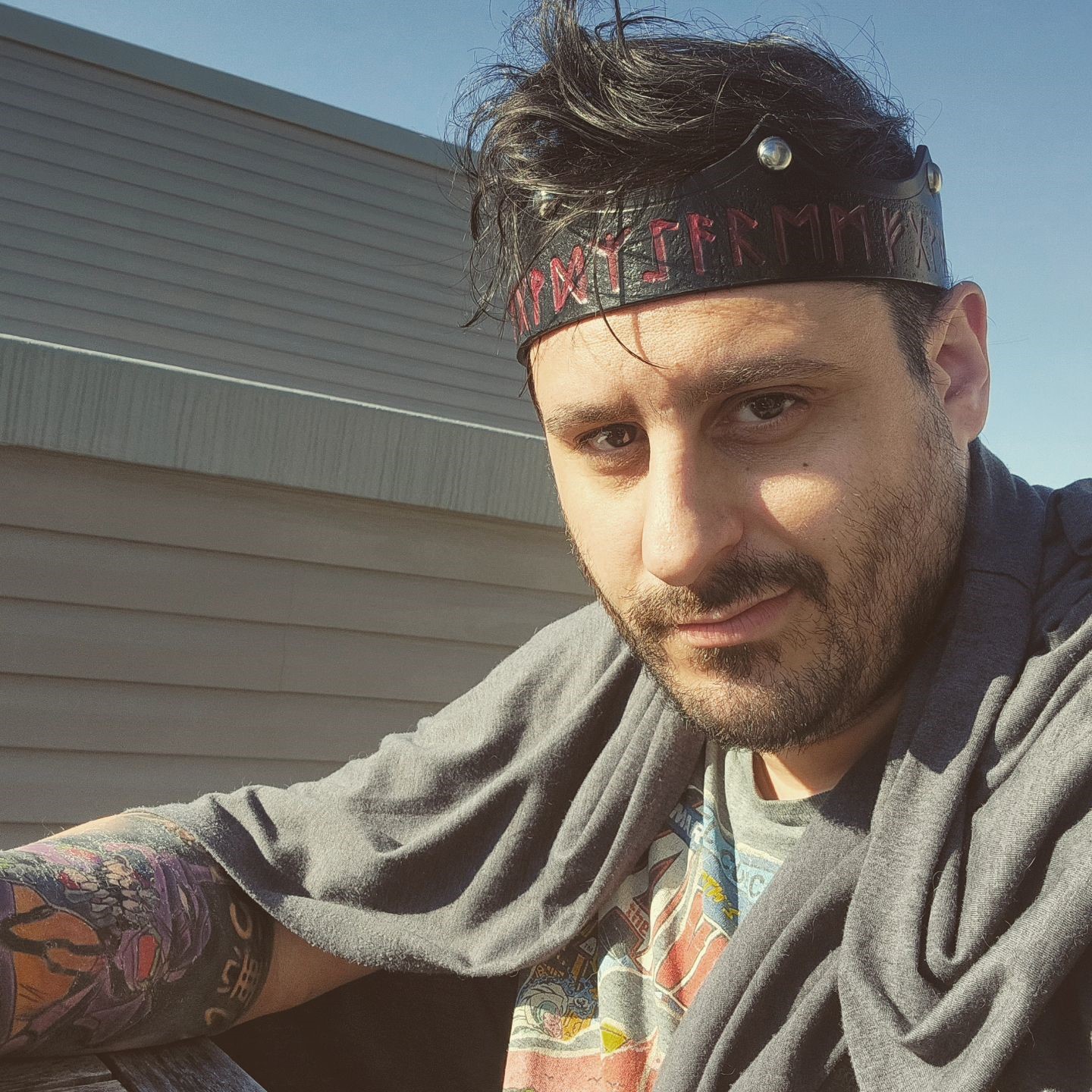
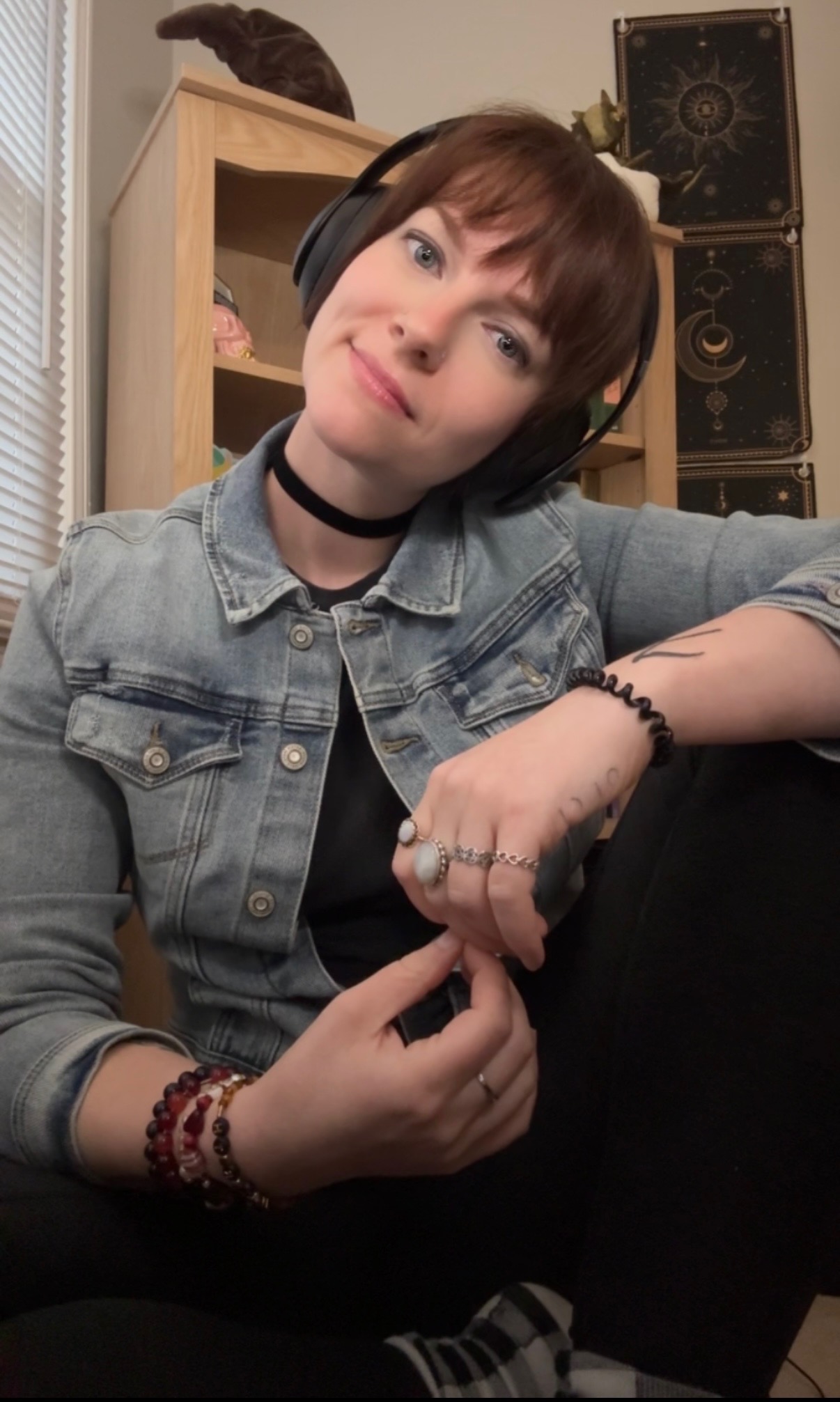
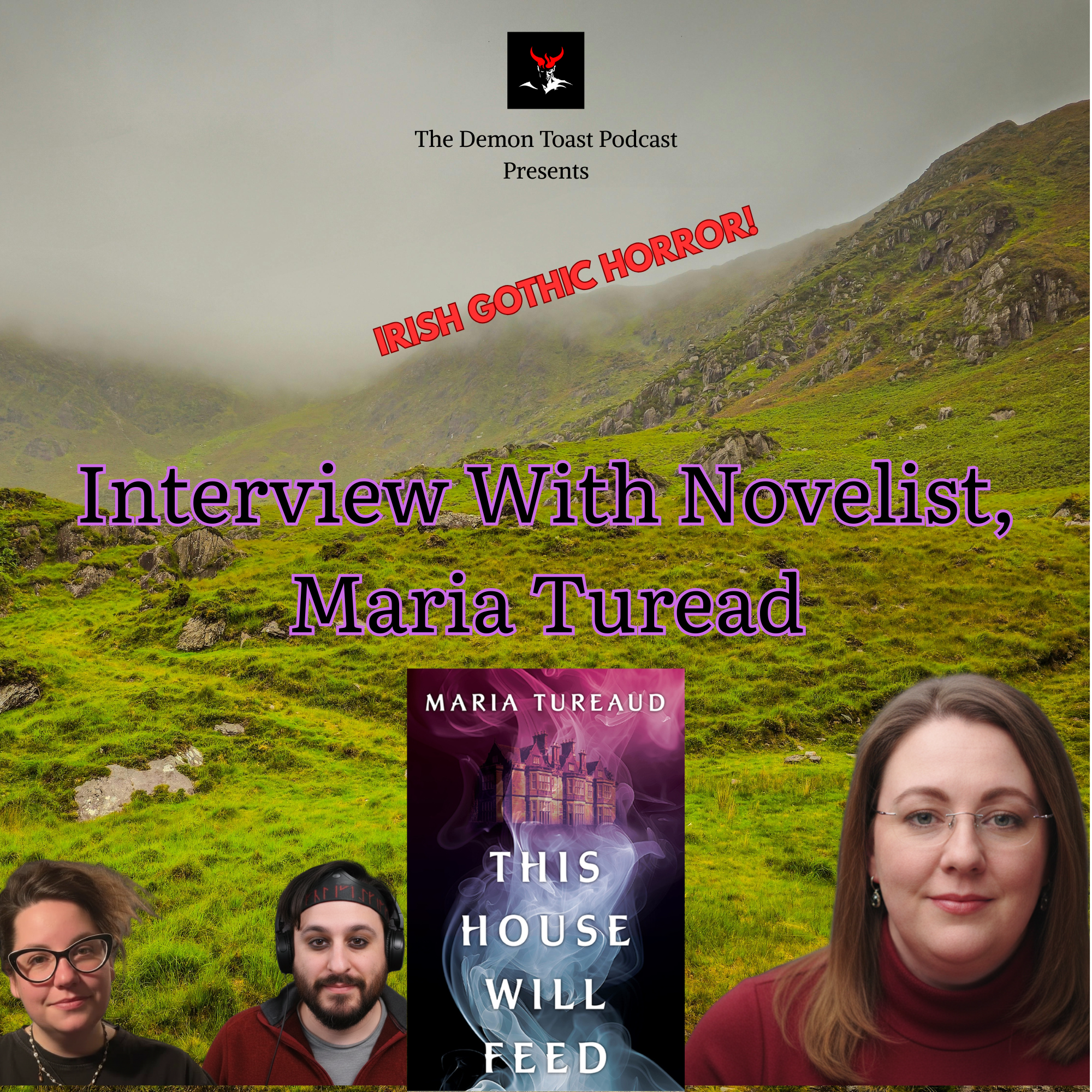
[00:00:01] Speaker A: All right. Hey, welcome back to the Dematose podcast. You know, where we talk about gothic and horrific literature and the people behind it. I'm your host, King Loki. That's old Norse for Daniel Sokolov, I think. And with me are my co host, Adrian. What's up?
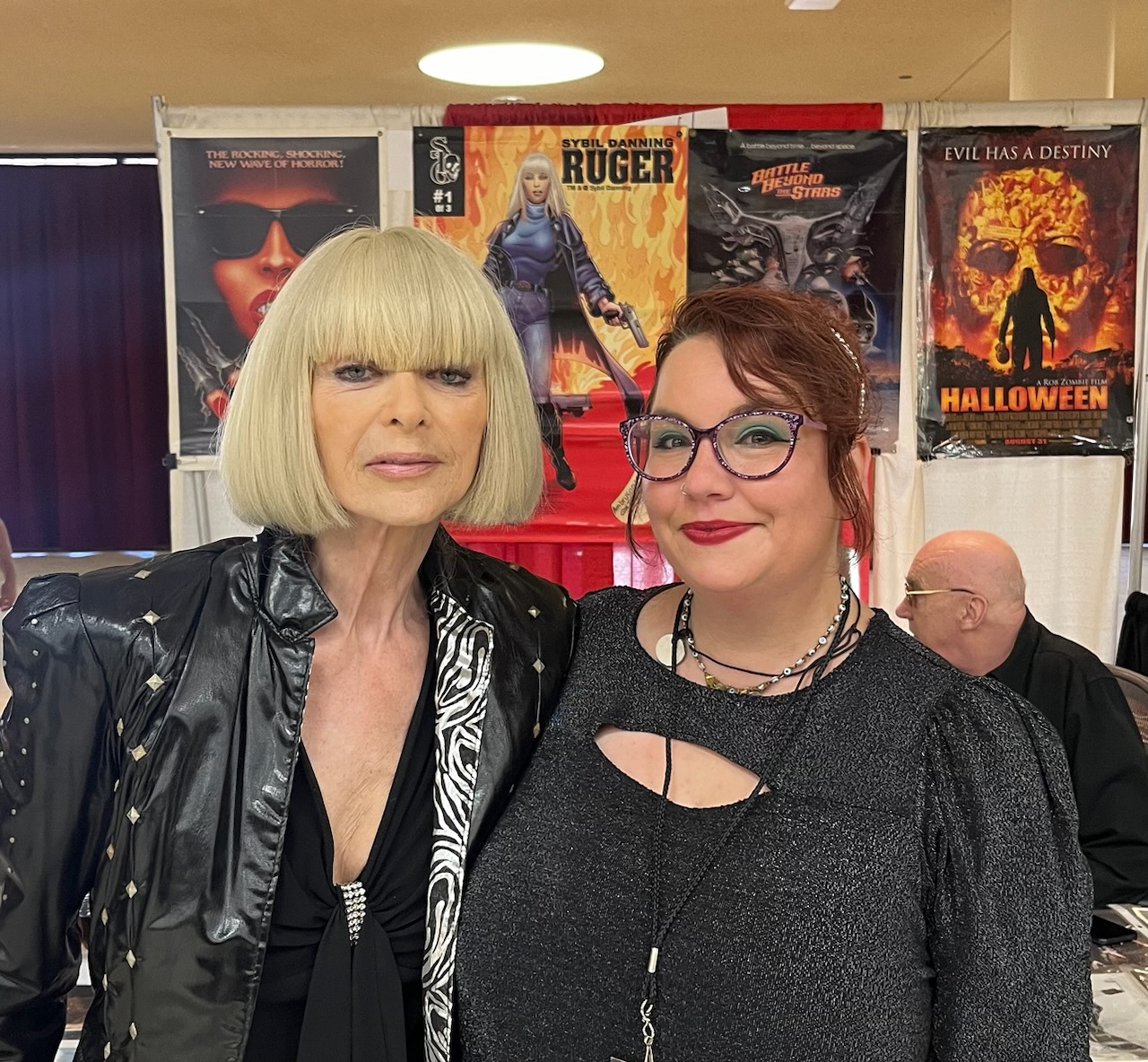
Ceiling painter, magic person and novelist Maria Tarrou with her hello new novel coming.
[00:00:26] Speaker B: Out when Tuesday, January 27th. Very exciting.
[00:00:31] Speaker A: Holy fuck. This house will feed an Irish themed gothic horror novel unlike anything I've read in a long time. I've not read Jane Eyre though, so you know, there you go. I know. Sad, sad. I'm a fraud. I'm a fake. Literature.
[00:00:45] Speaker B: No, no, you're not. Actually, Jane Eyre is one of my first gothic loves.
[00:00:51] Speaker C: Yeah, I was telling him the whole time I was reading this, I was like, this is like Jane Eyre, which is also my. It was one of my absolute like first favorites.
It's like Jane Eyre meets Moll Flanders meets the Wicker Man. It's like, that's like it, it's perfect.
[00:01:10] Speaker A: It's quite a blurb.
Seriously though. Well, we were talking about this because on the back of the book they compare it to the bog life, Mexican Gothic and like all these like newer books. And like, you know, me and Adrian, like, I mean she does read more modern stuff, but like we read a lot of older stuff. That's my thing. I'm an old man. I, you know, I sit and read, you know, Tolstoy, so.
[00:01:31] Speaker B: Absolutely.
[00:01:33] Speaker A: That being said, Maria, do you wanna, you wanna give us a synopsis of your book before we dive in, Tell you how great and why people.
[00:01:40] Speaker B: Sure.
So this household feed, first of all. Hi, I'm Maria Trow. I'm actually from Ireland. If you can't already tell from the way that I. I yippity yap. This houseful feed is a love story.
My people and my ancestors. It is set during the. What you would might know it as the Irish potato famine. We call it the Great Hunger. In the Irish language, it's ungirthamore.
And so the, the book is set between 1845 and 1849. And our protagonist is Maggie. And when we first meet Maggie, she has lost everything in her life and she is basically living on the state. She's. She's in a workhouse. But of course she gets this amazing opportunity, which sounds a little bit too good to be true, but when your other option is, you know, the only way you can leave the workhouse is by dying, basically she takes it, which is she has to impersonate the dead daughter of an aristocrat. And so she's whisked off to this crumbling old Gothic mansion in the burn in County Clare, where there's ghostly happenings, rumors of curses, and, like, the walls are whispering. And she basically has to confront some of the trauma that she has blocked out in order to basically solve this mystery. So, you know, the house is very much alive and wants to feed on her memories. So, yeah, that's kind of. That's where we're at. It is filled with Irish folklore.
It is written in Clare dialect. It's funny, a lot of people are saying it's historical Irish dialect, but it's not really, because I feel like my grandparents talk like that. So.
So, you know, there's. There's that as well. So the dialogue is in dialect, the prose is not. Generally, it's just written. So, yeah, that's basically it in a snapshot. So it's kind of scary. But I think greatest horror comes from the actual history that it's set in. And we have dual timeline. We have Maggie's present timeline, and then we have a past timeline that kind of showcases not only the history, but also how she wound up in the workhouse to begin with.
Yep.
[00:03:58] Speaker A: Yeah, yeah, yeah. It's dynamic stuff. I agree that a lot of. Because, like, Adrian was, like, telling me, like, it's not the Spoogleies and the Booglies, because we love monsters. We love ghosts. She loves.
[00:04:08] Speaker B: I'm monster ghost person as well. So, yes, you know, anything I write. Yeah, Anything that I write, the ghosts are never going to be front. Like, they're always going to be, like, the helpful, helpful type, you know, with a couple of jumps to gears, obviously, but, you know, which is in line.
[00:04:24] Speaker A: Which is in line, of course, with, you know, the Irish mythology and folklore.
[00:04:28] Speaker B: Absolutely. 100.
[00:04:29] Speaker A: It's a very complex otherworld there. I wanted to comment on your use of lingo, by the way, because, like, I was thinking about that because it was all. You called it clear language, as in not Irish. Right. And, like, made you decide to do that because, like, in my workshop, we talk a lot about dialect, whether it's someone trying to write, like, a black person or someone trying to just don't do it. If you don't know what you're doing, do not do it. You know, was it you, like, throwing your. Your readers a bone or was it you going, I don't know how to do this, or, you know, like.
[00:05:04] Speaker B: No, it was. It was literally throwing my readers a bone. If I had written the entire thing in dialogue, dialect. It would have been a disaster. It wouldn't have gotten anywhere. An editor would have been like, what is this gobbledygooks? You know, because I feel like, you know, it's interesting because Ireland. Ireland is the. The land of three languages, right? We have. We have English, which is, you know, the kings.
We have Hiberno English, which is how we speak English, which is basically. It uses the actual Irish language grammar structure. And then we talk, like, Irish or, you know, whatever. Whatever. It is. Like, the way we say things is very different. My husband.
I've been married for 19 years this year, and my husband will still be like, what. What was that? What are you saying? You know, he's like, what did you just say? Or my child, who is now 12, will be like, mom, speak American.
[00:05:55] Speaker A: That's awesome. Amazing.
[00:05:57] Speaker B: Yeah. So we have the king's English, we have Hiberno English, and then we have our actual mother tongue, which is Gaelge, which is a Celtic language.
So I wanted to make sure that the dial. The dialogue itself was in Hiberno English, because that's how I speak. That's how I speak to my family. And it's part of the authenticity of it. But I wanted to make sure that people knew what was going on.
So if people were confused by the dialect in the dialogue itself, I do apologize. But I promise it's all very accurate. And that's how we talk. And there's a lot of context clues in there as well, so you can kind of pick up what I'm putting down a lot.
[00:06:33] Speaker C: I didn't find it distracting or a problem, like, problematic at all. I thought it was.
It was fun and it was. It was. It was real for the characters.
[00:06:45] Speaker A: Yeah. It felt very authentic. I. I agree. I had no problem with it. I was wondering about that, though, because that was, like, my first thought. I was like, okay. Like, in a lot of movies, you see people talking, like, you know, they talking in English with German accents, and it's like, well, like, you know. Yeah. In a novel where you're reading it and you're. You're trying to comprehend what the people are saying and doing. Probably a good idea to make it readable.
[00:07:06] Speaker B: Exactly.
[00:07:07] Speaker A: I mean, I certainly appreciate it.
[00:07:08] Speaker B: My thought effect.
[00:07:09] Speaker C: Well, and I thought it was really nice that you had that, like, kind of glossary and, like, pronunciation guide and stuff in the back.
[00:07:16] Speaker B: Yeah.
[00:07:16] Speaker C: For people that did have issues with it, like, you can just go and look up how to. Like, you did that phenomenally.
[00:07:22] Speaker B: Good. Good. No, because you know, that's another thing. I see a lot of content on social media about, oh, how do you pronounce this Irish name? And, you know, they have people guessing. And what people don't realize is that's not English at all. And it's not even hiberno English. It is the Irish language, Goelga, which is a Celtic language. So it's like, yeah, it doesn't make sense. It does if you know the rules. Just like, maybe an Italian name wouldn't make sense, but it does when you know the rules, when you know how to pronounce something, you know? So I was like, even these names that I feel a lot of people might know, like, ifa, you know, even Fiona, like, everyone knows those names because they're very common. I figured I'd just put a little glossary at the back for these lesser known names just, you know, so that people kind of had an idea of how it was supposed to be so they weren't calling them crazy things.
[00:08:11] Speaker A: We're mispronouncing everything well, which is fine. I'll do that anyway. Yeah, no, and.
[00:08:16] Speaker B: Which is totally fine. I just like the little. Oh, is that how it's pronounced at the end, you know?
[00:08:20] Speaker A: Oh, yeah. I asked Adrian. I was like, how is the k luch pronounced? She's like, it's kylock. And I was like, thank you.
[00:08:27] Speaker B: She's like, God, didn't you read the glossary at the back?
[00:08:31] Speaker A: God, Alf, it's staying in. Don't cut that. All right.
Yeah. Alf does all our editing here, so. Oh, yeah, yeah, he's great. He's great. He cuts everything.
So.
[00:08:41] Speaker B: Yeah.
[00:08:41] Speaker A: Having said that, there's some really, like, raw and hardcore things in this book. We. We alluded to how, you know, the ghosts and ghouls are not. They're not the most horrific things in this book. This book has themes of cannibalism in it, for instance. And you say in your. Your little. Well, your author's note at the end, I didn't want to write this book. I now know why surviving generations didn't like to talk about it. And I was terrified I wouldn't be able to portray it in a respectful way that not only educates but also entertains.
[00:09:10] Speaker C: You did a fantastic job.
[00:09:11] Speaker A: Yeah, I mean, I was.
[00:09:12] Speaker C: You knocked it out of the park.
[00:09:14] Speaker B: I appreciate that a lot. It was. It was very difficult to wrap my head around it. I had been toying with this idea of maybe writing a book that set during the great hunger and. And what that would look like and, you know, every time I thought about it, I was like, well, it's either going to. It's either going to come across like a textbook, right? A nonfiction kind of textbook, or, I don't know, it'll be disrespectful. So it took a lot of time. This book, I think, took me. I wrote the first line in 2017, and I finished. I sent this book to my agent in.
I got 20, 24, I think it was really, like. It took a long time and, you know, was one of those things where I wasn't sure if I had hit, you know, because it's such a. It's such a knife, you know, a sword edge to try and balance on, because it needs to be respectful, because people don't talk about this at home. It's something that has affected the culture tremendously.
However, we just do not.
You just don't talk about it. There's, you know, we allude to it in small ways. Like, even growing up, by the way, we spent a lot of time in graveyards at home. It's just what we do. You go to mass on Sunday, and then you visit all the relatives in all the graveyards. That's what we do. Okay. Yeah. So we're hitting like, three graveyards after mass on Sunday.
But, you know, there are these. There are these unmarked pits in the graveyards, these huge mass graves. They're unmarked. We don't. You know, and it's. As a child, I was always very curious. I was like, you know, what is that? And, oh, that's where they dumped the bodies.
What do you mean they dumped the bodies? What were they dumping bodies for? But that was this. But that's what they were. They were the famine pits, and they're still there today. You know, small things like that, you know, little things you just don't, you know, when the elders clam up, that's the end of it. You know, you're not going to get anything else out of it. And then, you know, when we got to school, high school in particular, when we started doing, you know, that period of history, it was like, oh, we skipped straight from the act of Union in 1818, kind of went. And then the famine happened, and all the potatoes died, and a lot of people died and went to America and all the rest of it. And now we're going to move on to the Easter 1916 Rising. Like that was it. Gosh, we just don't talk about it. Nobody wants to talk about us. And to the point of where, when I finally told my mother that this was happening, that this was. You know, this was getting published after all that, because I had told her all the way up along that I was tinkering with this. And she said, I'm so proud of you. I won't read it, but I am so proud of you. So that's it, you know. Wonderful, wonderful. I'm so proud of you, but I won't read it. And that's kind of the reaction that I expect from anyone that's at least of that generation at home, you know?
[00:12:04] Speaker A: And is it just because it's such a painful thing to talk about or.
[00:12:07] Speaker B: Okay, yeah, it's extremely, like, if you think about it. Right.
My. My father is the youngest of seven. Eight.
Eight. Yeah. My father's the youngest of seven. Eight, maybe eight. I can't remember. But he's the baby, right?
[00:12:24] Speaker A: Yeah, yeah.
[00:12:25] Speaker B: Yeah, he's the baby. My grandfather died at the age of 94 in 2014, so he was actually alive during our War of Independence, which means his.
Which means his father was alive during the famine.
So if you think about it, it's not that long ago that this happened.
[00:12:45] Speaker A: I. You know, I grew up. I was raised Jewish. Of course, That's. That's my heritage and junk. And let me tell you, they never stopped talking about the Holocaust. I reached a point where I stopped reading the books. I'd had enough at a certain point. And it's so interesting how different cultures, like, choose to handle their.
[00:13:02] Speaker B: Yeah.
[00:13:02] Speaker A: Their trauma.
Ethnic trauma.
[00:13:06] Speaker B: I think what happened with the famine was. I mean, we were first invaded in 1166, so we had had centuries of this before this happened. And Oliver Cromwell destroyed the country in the mid-1600s. And I think after that, that's kind of the catalyst of what led up to the conditions that caused what happened. 1845. I think everyone was so downtrodden from what had happened in the 17th century that by the time this, you know, the famine came along, it was just whoever came out of it, whoever survived it, just said, we're alive.
We're alive, and we move on.
We're alive, and we move on. You know, and that. That was basically it.
But, yeah, it's just one of those things, like, you know, and it's funny, too, because that, like, permeates throughout everything that came after. And, you know, because we had our War of independence in 1922, and then we had a civil war, and my grandfather, it's like, he wouldn't talk about it.
Wouldn't talk about it. Like, I randomly Learned when He was like, 89 years old that. That he was in some auxiliary unit for World War II in Ireland. And they got word that the. The Germans had landed in some random little place that doesn't even have, like, it's. It's. It's called Kilmele. But he.
This random story just. And all it is is sheep, and the Germans have landed in Kilmele, and they all, like, hopped in a truck and went out and there were no Germans in Kilmele. But anyway.
But it was like. It was just this random thing. I was like, what do you mean? You. You were in some auxiliary unit in Ireland? I didn't even know we had. You know, it was like, oh. He was like, oh, yeah, yeah, yeah. We were. We were defending the country in case any Germans came over. And I was like, did she have guns? And he was like, no, but.
But, you know, it was just one of those random things. Like, he was 89. Right.
Never heard this story before. And then just randomly. Do you remember the time they thought the Germans landed in Kilmele? God, that was mad. And I was like, what. What are you talking about? What do you mean the Germans landed in Kilmele? Like, but, yeah, so things like that, like, we just don't talk about them. It's so bizarre. It's so bizarre. Like, if you really got someone going, you could probably unearth some serious skeletons in everyone's closet, you know?
[00:15:24] Speaker A: That's crazy.
[00:15:25] Speaker B: Yeah.
[00:15:26] Speaker A: Something. Oh, you know, Adrian, before I ask this question and take over again, do you want to ask a question?
[00:15:32] Speaker C: Actually, I'm enjoying listening to the stories right now.
[00:15:35] Speaker A: No, no, no.
[00:15:36] Speaker C: I'm going to tell you this book, like, it really, really affected me.
So that's.
[00:15:42] Speaker B: That's.
[00:15:42] Speaker C: That's. That's just what I want to say.
[00:15:44] Speaker A: You're a great storyteller. I was enjoying that, too. Very much. You should. You should. You should start a podcast. Why are. Why are you on my show?
[00:15:52] Speaker B: I don't think I could.
What. What you all do is so fantastic, and I just. I just don't think I can do. I will stick to. I'll stick to my. My typey types.
[00:16:02] Speaker C: You're winning.
[00:16:04] Speaker A: I mean, I'm a novelist, too, and you're a better novelist than me, so whatever.
[00:16:08] Speaker B: No, no, no, no, no.
[00:16:09] Speaker A: So I wanted to ask something very big. Okay. Because.
[00:16:11] Speaker B: Yeah.
[00:16:12] Speaker A: The first. First thing that struck me about your book was its conceit of young Irish girl full of trauma, has to go assimilate and pretend to be a proper roit.
Irish English lady, right?
[00:16:27] Speaker B: Yeah.
[00:16:28] Speaker A: And that, like, for someone who's trying to teach and show what that experience was like, that's fucking brilliant, like, because instantly I get to see what the Irish experience was like and what was expected of them if they wanted to break out of that. You know what I mean?
[00:16:44] Speaker B: Yeah, absolutely.
[00:16:46] Speaker A: Yeah. Do you want to do. Want to tell me a little about that?
Because this is something I heard about a lot when I was in yeshiva. Like, oh, you know, if you stop being religious, you're going to destroy our culture, right?
[00:16:58] Speaker B: Yeah, absolutely. No, it's.
It's interesting because, you know, we. We even see it in the past timeline with Maggie working in the big house. Like, she's the project.
She's Lady Grace's project.
And, you know, she doesn't speak with a savage tongue. Listen to her. She can speak English like we do, you know, so what we see there is the almost the ripping, the sundering, I suppose, of language from the person.
Like, when you take away that language, suddenly she's viewed as civilized. Right.
But we see the horror, like, the terrible conditions that Maggie's in in the beginning. And then it's almost like a code switching situation where Maggie's like, okay, now I've got to put the mantle back on, and I'm going to become Will, you know, for Lady Catherine, because I'm going to get my land and that's the end of it. So it's very much what I wanted to kind of, I guess, showcase with that is the sundering. The sundering of a people, the sundering of a nation. When you take away their language, when you beat them into submission, you inevitably destroy the very core of people and of what they stand for and who they are.
And it seems like it only took it, by the way. It only took. It took like, a generation and a half for English, for Irish to almost be eradicated on the island. Because when this event happened, people realized they needed to speak English in order to go to America or to get out of this country, to get out of Ireland. And there was a huge effort made in the 1920s to try and bring back the culture. The dancing was gone. The storytelling was almost eradicated, you know, and even to this day, it's very.
And now apologies to anyone from Ireland that's watching this. I do apologize. But I think after having moved to the States, I can appreciate the things that I've left behind in a way that I wasn't able to appreciate them when I was there in the country. Like, Very much growing up. Maria, you have to go learn fiddle, like traditional fiddle. I don't want to learn traditional fiddle. I want to learn the violin. I want to do like, symphony orchestra stuff. Like, very much anything traditional was kind of viewed a little bit as backwards almost. And I feel like people are still like, we learn the Irish language. We have to learn the Irish language. We learn it in school from the age of three up until 18.
And after 18, we go, oh, thank God, that's over with now. We don't ever have to talk. We don't ever have to speak that again.
And even when I was younger, I was sent to elocution lessons. Now, I thought everyone in the world went to elocution lessons. Elocution was the way that I. I could drop my own accent and speak in the Kings like to speak as if I'm very educated and, you know, very much educated, civilized. You will get farther in life if you go to elocution so that you can speak and enunciate as an American.
[00:19:53] Speaker A: Ain't nothing educated about speaking English or being American.
[00:19:56] Speaker B: No, absolutely. And it's just interesting. And the thing is, I don't know if anyone from Ireland is going to see this. And I do apologize. I'm not ragging on anyone or myself or the culture or anything. It's just so interesting that to this day it feels like there's this permeating idea that in order to be seen on the world stage, in order to be important on the world stage, we almost have to adopt the very things that we tried to, like, we have to drop the things that we try to take back and adopt this, you know, very. I don't know, it just. It bothers me a lot. And like I said, I think I didn't appreciate it until I moved here.
[00:20:38] Speaker C: I will say recently, for example, I'm a big horror movie nerd.
[00:20:43] Speaker B: Yeah.
[00:20:44] Speaker C: And you have films that come out now, like, have you seen Free Walker yet?
[00:20:48] Speaker B: No, I haven't.
[00:20:51] Speaker C: It's completely in Irish language. It is not English or fantastic. And it's beautiful and it uses like the folklore and stuff, but it's like.
It's magical. But, like, more things like that have been kind of like they have creeping in.
[00:21:08] Speaker B: There is a fantastic film that came out. Oh, God, I couldn't tell you. Maybe 2019. It's called Aracht A R R A C H T and it was on Amazon. It is about. It is set during the famine and it is in the Irish language. Now, of course there is English in it because what you see there is that the dynamic between the landlord and the middlemen and the land agent. So you see the Irish speaking Irish to the landmen and the landmen translating it then as. As they went. Went along.
[00:21:35] Speaker A: Hey.
[00:21:35] Speaker B: Yeah. So very cool. Very, very cool film.
[00:21:39] Speaker C: I will probably be watching that this week because I've just been so absorbed in your novel that, like, that's all I have.
[00:21:46] Speaker A: No, she locked in, man. She couldn't put it down. Seriously. Like. Like, I did my best to read the entire thing, but Adrian was in love.
[00:21:53] Speaker C: I was. I was literally texting him for the last, like, four days, just, like, completely enraptured with it. It's. It's beautiful and it's magical and it's tragic, and it made me cry in the most horrific but also beautiful ways. And anyone who's gone through grief and trauma, the way that you handle it with such grace, there's such a.
An understanding and a kindness to the way that you deal with it.
[00:22:22] Speaker A: Yeah. And I think we need to underscore that and highlight that because, again, our main character, the first thing we hear from her is that she's thinking about her brother's flesh and how she ate him. But it wasn't like some kind of, like, you know, Donner party situation. No, he. He died, and she ate him to stay alive. When he. When he visits her as a ghost, there's no malice from him. You know what I mean?
[00:22:45] Speaker B: He's hurt.
[00:22:46] Speaker A: He's there to help.
[00:22:48] Speaker B: He is there to help her. And, you know, he. He gave. He gave her that flesh. He wanted her to survive.
[00:22:55] Speaker C: Yes.
[00:22:55] Speaker B: He gave it to her. Just as, I guess. Look, I'm not a very religious person or anything, but, you know, flesh of God, flesh of Jesus, you know, very much, kind of.
[00:23:06] Speaker A: I'm glad. I'm glad you said it because I was going to make a mean joke.
[00:23:09] Speaker B: You know, I guess that's Irish as well, right? Catholicism. So might as well put the nod in there, you know, sacrifice.
[00:23:17] Speaker A: The Irish are, like, the only people, but the Irish are, like, the only people that go like, well, I'm Irish, so I'm Catholic.
[00:23:23] Speaker B: And.
[00:23:24] Speaker A: And it's kind of like how, like, people ask me, like, well, you're not. You're an atheist. Like, you're not Jewish. I'm like, well, I'm ethnically Jewish, but I've got a folk religion. And, like, we can't get away from our stupid religion, but, like, the Irish are the only other people that are like that. As far as I could tell.
[00:23:37] Speaker B: I Don't know. Something happened during COVID and, you know, Mass started going online.
My mother told me. She's like, you wouldn't find one arse in the seat on a Sunday anymore. There isn't a person in the church.
So obviously now that the pressure's off. You see, it was very much a community thing where you kind of the nosy neighbors and you didn't want to be seen not being at Mass because Nanny Nogi down the road would have everyone told that you weren't at mass by 12:30. Do you know what I mean? So. But when Covet happened, there was no pressure. So now nobody's going anymore.
[00:24:11] Speaker A: Dude, you're freaking great. I love you. You're amazing. No, I feel that. I feel that. And you know what? Like, when you're an oppressed minority, and I mean. And I mean, like, really oppressed, like, listen, my people got a. In America, you know, when you're oppressed, like, historically, systemically, you resist in any way you can. And if that means telling the Anglican Church this and being absolutely supposed to be Catholic and hanging out there, that's it.
[00:24:35] Speaker B: That's it. You know? And I feel like that's kind of maybe what it more is than a. We're so Christian. It's not like that. Oh, we love Jesus. I don't think it is that because, you know, even if you look at. Even if you look at, like, the things that we celebrate, there's stuff we celebrate that no other Catholics in the world. Girls celebrate. Like, we celebrate Saint Bridget. We're like, yay, let's all make a Saint. Bridget's cross. Meanwhile, Bridget is one of the triple goddess. She's like bab or something.
[00:25:03] Speaker A: Oh, that's right.
[00:25:04] Speaker B: Yeah. And it's like, how did she. I thought she. I thought she was a saint. And it's like, no, she's one of the old goddesses. But sure, we just slapped saint on the front of it so we could keep having fun on her day, you.
[00:25:14] Speaker A: Know, like, Maria, I have a stupid question for you.
[00:25:17] Speaker B: Yeah, yeah.
[00:25:18] Speaker A: You watch wwe?
[00:25:19] Speaker B: Yeah, yeah, yeah, yeah. You know.
[00:25:22] Speaker A: You know Lyra Valkyria, right?
[00:25:23] Speaker B: Yes.
[00:25:25] Speaker A: Yeah. She. She was dressed as the. As the Morgan for a few matches. It was pretty great.
[00:25:30] Speaker B: You know, Love that. Love that.
[00:25:31] Speaker A: Yeah, yeah.
[00:25:32] Speaker B: Not the Morgan, but Bab features heavily in my next book, so.
Oh, yeah, Beneath. Beneath.
[00:25:41] Speaker A: That's right.
You've got it. You've got a. You've got a teaser in the back, so.
[00:25:45] Speaker B: Woohoo.
[00:25:46] Speaker A: Okay. Adrian, did you want to ask anything before I.
[00:25:48] Speaker C: Well, I was asking her when her next book comes out, because I'm definitely going to grab.
I.
[00:25:55] Speaker B: As of right now, it is slated for. I think it's the same date into. In almost the same date in 2027.
But that could change. That could change. Obviously, these things change. So we'll say February 2027.
[00:26:12] Speaker A: Okay. So I guess your. Your writing process is kind of like really settled into a groove because you were working on this book for like 10 years. You're working on this household feed for, like 10 years, you know.
[00:26:20] Speaker B: Oh, I wrote Beneath it sleeps in three months. Done dusted. Here you go, have it.
[00:26:24] Speaker A: And I mean, I've been there. I've been there.
[00:26:27] Speaker B: Yeah, yeah. No, and like, the thing is, I. I started writing at the age of 15. Like, this is a. Anyone that. Anyone that's familiar with my story on social media knows that poor Maria was in the trenches for like two decades, you know, trying to. Trying to get agents and get things published and stuff. And so, you know, it. I've written books that have taken me a couple of weeks. I think the. The book that.
My middle grade debut, that came out in 2022, I wrote that book in six weeks. But, yeah, this household feed took a very, very long time. It was like. Yeah, it took a very, very long time. But you know what? I think I. I was able to give myself permission to just wr.
Sleep, lean into the horror, lean into the folklore, and kind of have fun with the fantasy element of it because the pressure was off my chest. There's no famine in this one. I can just, you know, write it the way I want to write it and have a bit of fun with it.
[00:27:23] Speaker A: Absolutely.
[00:27:24] Speaker B: Which I did.
[00:27:29] Speaker C: I was gonna say, I can definitely. I can definitely tell that this was like an emotional journey for you.
[00:27:34] Speaker B: It was. Yeah. Yeah. For sure.
[00:27:38] Speaker C: Part of it shows up in how well written it is.
[00:27:42] Speaker A: Yeah.
[00:27:42] Speaker C: Use some gorgeous lines in it. Like, it's. It's just one of the most beautiful, like, gut wrenching, but also kind books I've ever read.
[00:27:53] Speaker B: Thank you. Yeah. You know, Maggie's siblings. I chose the names of people that I have lost.
So I was really, like, getting into the headspace of, you know, how did I feel when that person passed away? You know, how did I feel about that person? And I just kind of amalgamated it all together. And just like, for a while there, I felt like I was Maggie and, you know, I. One of. One of. One of the worst situations. And this is going to sound so crazy because we all lose people and Ireland is one of the number. I don't know, it's in the top five countries of suicides. You know, people committing, you know, taking their own lives.
So by the time this one event happened, we'd already lost people. Like, it was like, oh, that happened. We have to go to another funeral. You know, this stuff happens. But when I was 17, it was. I think it was. It was five days, six days before my 18th birthday, my grandmother passed away. And for some reason, that death hit me so hard.
It took me more than 10 years to come out of that fog.
Like, any time I thought about her, it would just turn into this disaster of a.
And I just couldn't. I could not get over her death. And, like, it's. It's not like she was my primary caregiver or anything, but I went to her house every day after school for 17 years, you know, and I used her name as one of the siblings.
Siblings? Nancy. And I think the book is also. I have her in the dedication also.
[00:29:32] Speaker A: You do?
[00:29:33] Speaker B: Yeah. And. And my sister just had a baby and she just named her Nancy as well, so. But, yeah, it was just one of those things. And I was like.
It was almost as if I didn't know how to grieve it. I couldn't figure out how to grieve it or why.
Why this incident hit me so hard because, you know, I've lost other family members since. That should have hit me as hard. Like, I was. I was dreading these deaths because I thought, oh, my God, I'm going to. I'm going to go back into reverse, go back into the decline, you know, and it didn't happen like that. And just trying to figure out from my own standpoint, it was therapy. Writing Maggie was therapy because I was able to work through some of my own.
Why I. And I think a lot of it was, you just swallow it down, the funeral's over, and you get on with it. And that just wasn't enough for me at the time because I was only 17.
I was moving from high school into university.
There was a lot going on in my life at the time, and I just was not able to process it because I wasn't allowed to process it because I had to keep going. I had to go to university. There was a lot going on, you know, so. And, you know, that's a very different scenario to what poor Maggie is dealing with. But I think for certain, it was kind of like Maggie, also, for her own reasons, had to swallow it down. And how would that manifest if she was given the opportunity. And, like, there's times when I'm really angry about that, that I wasn't allowed to grieve. But it was nobody's fault. It was just this cultural thing that I knew I had to push through. Like, nobody said to me, you have to push through. It was just this cultural thing that I knew I had to do that, and I was angry with myself. So Maggie's angry with herself. You know, she's angry with everyone around her, but she's. I think Maggie's angry at her with herself also, and being able to acknowledge that allows her to grieve.
[00:31:35] Speaker A: You know, we're really big on the healing power of art around here, you know?
[00:31:39] Speaker B: Yeah.
[00:31:40] Speaker A: You know, what you can do with your pain. You know, write a story. Put your loved ones into the spirit of a character and express things that you desperately need to express. Exorcise demons and share that artifact with someone else. It's no small thing. And I think what you've done is really on a grander scale, really, because, yeah, there's your grandma. Right. But then there's also this horrific cultural trauma that people just don't talk about. And you dove headfirst into it like a warrior, you know.
[00:32:12] Speaker B: Yeah.
[00:32:13] Speaker A: You came out changed, and here we are.
[00:32:15] Speaker B: Yeah, absolutely.
We absolutely do. We absolutely do. It's. It's interesting, too, because I think what I resonate the most with when it comes to horror, especially with gothic horror, is the human aspect of us and how the horrific things that people do create the horror around us. Like, I. I don't know if you all loved the Walking Dead when that was on tv.
Huge fan of the Walking Dead, because for me, it wasn't about the zombies. It was about the human condition. It was about what's going to happen. You know, the way we. We kind of get in tune with our primal instinct and we have all this stuff going on. It's. The people were scarier in the Walking Dead than the zombies were.
[00:33:00] Speaker A: Yeah, we're.
[00:33:01] Speaker C: It was 28 days later. Like the original.
It was the humans that were actually the most terrifying.
[00:33:09] Speaker B: Yep.
[00:33:10] Speaker A: By the way. By the way, speaking of the Walking Dead, Robert Kirkman, we love you. Please come on the show and talk about Transformers with me. Like, please. I love your book to death. You're an incredible writer. Yeah, he. He wrote the Walking Dead. He wants me. This is just me being a lose.
[00:33:24] Speaker B: I love us. I love us.
[00:33:25] Speaker A: Yeah.
[00:33:25] Speaker B: Fan girl time.
[00:33:27] Speaker A: But no, you're.
You're right, though.
With Gothic horror, it is very much about, you Know, the, the personal, the individual's experience with the unknown, as it were. And the unknown is very frequently just more human.
[00:33:44] Speaker B: Right, exactly. And, like, that's one of the hallmarks of Gothic horror in particular, is the supernatural. Things are not actually supernatural after all. You know, we see that in Mexican Gothic. I'm sorry if this is a spoiler for anyone, but this is, this is, this is a hallmark of the genre. It is what it is.
We see it in Jane Eyre. The ghost isn't a ghost. It's his wife locked in the attic. Hello.
[00:34:07] Speaker C: Telling Dan about that. I was literally, like, I started the novel and was like, this is. This is like reading Jane Eyre but Irish. It's amazing.
[00:34:15] Speaker A: I think it's so funny that the, the big twist ending to Jane Eyre is the same twist ending to Ligia. Like, that's.
I, I. Oh, wait, sorry. It's a big twist ending to the Fall of the House of Usher. Like, that's, that's, that's so funny.
[00:34:27] Speaker B: Yeah. God completely stole that one.
[00:34:30] Speaker A: What a hack. What a fraud.
[00:34:32] Speaker B: Yeah, exactly. But, yeah, no, because it's always. It's the human condition. It's the terrible things that people do, and I think it just, it made sense. A lot of people are like, this is so bizarre that you wrote a Gothic in the middle of, like, Irish history.
And, like, what. What's happening? I'm like, I'm like, do you read Gothic? Do you know Irish history? It, like, goes hand in hand. You know, we, like, invented it.
[00:34:54] Speaker A: You know, people don't know what Gothic means. They think it means you dress like Beetlejuice and you start podcast, where you talk about dark poetry and you. And you write novels about demons. No, that's not what Gothic is. All right, Like, Gothic is a broad.
[00:35:06] Speaker B: Not from literature.
[00:35:08] Speaker A: Yeah, it's a broad thing. I mean, like, heck, I've got, you know, this little crocheted Moby Dick that one of my friends made for me because Moby Dick is a Gothic. It is.
[00:35:18] Speaker B: It sure is.
[00:35:18] Speaker A: That boat is a sure is. It's a scene of horror. And you even have a bironic hero in the name of Captain Ahab himself. I mean, he's like, dragon or something, you know?
[00:35:28] Speaker B: Yep. And, like, the bottom line with it is, you know, Gothic doesn't even have to be historical. You don't have to set something in a historical era. It helps so long as it helps. But, like, there was an incredible young adult book written a few years ago by Tiffany D. Jackson, one of my favorite authors, and it was Called White smoke. And that is very much modern. Where we have modern teens with modern issues. The main character has an addiction issue.
And we think, like, but it has everything. The house is a character, but the supernatural, then the supernatural elements are based in reality. And it just followed the formula. But here we were in like modern day city. It doesn't have to be historic.
[00:36:10] Speaker C: You know, things like crow too. Like, the crow is absolutely Gothic.
[00:36:15] Speaker B: 100%. 100%.
[00:36:17] Speaker A: Yeah, yeah.
[00:36:19] Speaker C: 90S. So it's not really modern anymore. But at the time.
[00:36:22] Speaker B: Listen, listen. Do you know how vomity I feel when people tell me that, like, historical fiction in middle grade now is like 1995? And I was like, excuse you.
[00:36:35] Speaker A: It's a period piece.
[00:36:37] Speaker B: Period piece.
[00:36:38] Speaker A: Captain Marvel was a period piece. Took place in the 90s, you know.
[00:36:42] Speaker B: Like, what the hell?
[00:36:43] Speaker A: I'm like, no, I'm not that old yet, you know?
[00:36:46] Speaker B: No, absolutely not.
[00:36:48] Speaker A: Like, hello, I had to rewind the v. The VHS tapes to take the blockbuster.
[00:36:52] Speaker B: So did I.
And you got a right talking to if it wasn't rewound when you brought it back.
[00:36:57] Speaker A: Rewind the what? To take where? What's rewind? What does that mean? What are you talking about, old man?
[00:37:03] Speaker C: You didn't rewind the VHS before.
[00:37:05] Speaker A: You were Jane. Just put your. Your finger on the screen and go and take it back.
[00:37:10] Speaker B: Me?
Yeah. But I'm like, what?
What? I didn't even. I didn't even rent anything.
[00:37:17] Speaker A: The hell yeah.
[00:37:20] Speaker B: I am. I am recording music off the radio. Years old. Like, with the, like you to wait and you to make sure the DJ wasn't, like, talking and you, like, ended the. The start of the song got cut off. And you're like, I've gotta wait another.
[00:37:35] Speaker C: Hour and a half for that song. Maybe. Possibly.
[00:37:38] Speaker B: Come on. Yeah, and then the goddamn DJ would start talking like a minute before the thing was ended. Like, it would talk over the song and I'm like, mother.
[00:37:46] Speaker C: Damn it.
[00:37:47] Speaker A: That's awesome dj, by the way.
[00:37:49] Speaker B: Yeah.
[00:37:49] Speaker A: So just to bring things back.
[00:37:50] Speaker C: And you had to hit.
[00:37:52] Speaker B: Yeah.
[00:37:55] Speaker A: Just to bring things back. Me and Adrian. Because Adrian read a lot more of the book than I did. She was telling me that there's like a theme of, like, vengeance versus revenge. Hey, do you want to talk about that for a second? Or.
[00:38:05] Speaker B: Maria, do you want to just go, adrian, shitty chat. No, you got.
[00:38:11] Speaker C: I literally am like, you're so funny.
[00:38:14] Speaker B: I'm like, chitty chat, y'. All. Yeah. So I think that there is a distinction between revenge and vengeance.
So Maggie has an opportunity near you know, there. Well, there's a situation as things ramp up where she has the option to take revenge and to take her. I. I'm afraid now because of spoilers.
[00:38:35] Speaker A: All right, don't. Well, don't go spoiling your book now. It's not even.
[00:38:38] Speaker B: I won't. I won't. Revenge is.
We'll put it this way. Revenge is something you feel like wanting to take. Revenge is something that you feel, but vengeance is like the destruction of your enemy completely. Okay.
You know, so if you want to. Like, if I feel that taking revenge, revenge is something mild in comparison to vengeance. Like. And I. This. The. The thing is, I. I feel like I can't even talk about it that much because it is going to spoil, like, the end of the book. But there is an opportunity for her to take revenge. Like, at the beginning of the book, she thinks she wants revenge, but by the end of the book, she needs vengeance. It's not just being able to get something back for what was lost. It is the need and the drive to destroy her enemies. So that's. That's definitely. Yeah, that's kind of where I went with that.
[00:39:33] Speaker A: Yeah. And there are repercussions.
[00:39:34] Speaker B: Kind of where I went with that. And the thing is, they're probably the same thing in, like, by dictionary terms, but each. You know, there's. I think they're different. They're not the same.
[00:39:43] Speaker A: Well, you.
[00:39:44] Speaker C: I love. Differentiated it. And I also loved how there comes a point where the idea of revenge becomes pleasure.
[00:39:53] Speaker B: Yes.
[00:39:54] Speaker C: And the cost of that as well. I thought that was so wise and poignant.
[00:40:01] Speaker B: Yeah. Yeah. Because there is. There's, you know, there's always. There's a give and take in every single situation.
And, you know, like, revenge is something that makes you feel good in the moment, but it won't make you feel better in the long. In the long run. And I feel like the overwhelming majority of people never get to enact vengeance, which is where the entire thing is buried. Like, it's gone. Like, I feel good. There's a weight lifted off my chest now, and I can move on with my life. Vengeance is the thing that wars are fought over. It's not a simple single act of petulance to feel good in the moment. And that's revenge for me for sure.
[00:40:44] Speaker A: Okay, so it's more destructive, is what you're saying.
[00:40:46] Speaker B: Destructive? It is complete. Like, I will destroy six generations of your line. You know, like, I watch. I watch a lot of. A lot of Chinese dramas and Korean dramas, and one of the Things in like, one of the, the punishments in like the Chinese historical dramas is like, it's not just like, oh, you're executed. Let's execute nine generations of your family.
[00:41:10] Speaker A: Oh my God.
[00:41:11] Speaker B: Like, like to me is like the old. That's vengeance. But of course, half those people were like, you know, set up and framed. I felt bad for everybody, but, you know, but yeah, that's what it's.
Yeah, it makes for great tv, you know. Nine generations of your family will be destroyed.
[00:41:28] Speaker A: Holy man.
[00:41:29] Speaker B: And I'm like, I'm like, how does that work? Because maybe you have three or four generations still living, but, like, surely there wouldn't be five more if you destroyed the first four generation.
[00:41:37] Speaker A: Yeah, like, do they like. Yeah, do they like breed them or something? Like, I don't.
[00:41:41] Speaker B: Yeah, like, let's. You could have a baby and then we'll kill that after that one as a baby. Like, it's just so bizarre. I don't know any. I'm sure it's very, it's. It's hyperbole, you know, not destroyed. But yeah, that's every time I'm like, oh, they're getting punished. Nine generations are going to be destroyed.
[00:41:57] Speaker A: Maybe it's like, you know, maybe it's like in a, you know, Alice in Wonderland where, you know, the Mock Turtle or the Griffin, whichever one it was, is like, yeah, she doesn't actually kill. The Queen of Hearts doesn't actually kill anyone. She just says that they just let him go, you know.
[00:42:11] Speaker B: Yeah, yeah.
[00:42:13] Speaker A: Divine punishment from the crazy stuff. So I self publish my books because I didn't want to look for an agent. I got real tired of it and I just wanted to write my next book. That's worked out for me to some extent, you know. Yeah. But you, on the other hand, found an incredible agent. I'm assuming your. Your publicist is fucking great. Kensington is fucking great.
Do you have any, any advice for people looking to publish traditionally?
[00:42:38] Speaker B: Yeah, I absolutely do. And you know, I. I'm also a freelance editor and I have been for 15 years. So, you know, I've seen the ins and outs, the uglies of the system.
And the bottom line is the only reason I stuck it out to get that agent to go traditional publishing is because the books that I write wouldn't do very well in indie. They wouldn't do very well if I self publish them.
Like, and that's the bottom line. Genres do better in the indie space than they will do in traditional. Like one that I always. Well, of course, no, this, this Is this is pretty pretty true Romance in particular does excellently in the self published space where you know, a publisher might only have one or two spots for the same genre, you know, on their list. So I think the important thing to know to, to know for trad publishing versus indie publishing is figure out where your genre you know. If you write something that's, that's more indie focused, go that route. And if you write something that needs a traditional route because it doesn't do well in indie, then go the traditional route. But I think one of the most important pieces of advice for trad publishing is only do what brings you joy.
Because this industry can destroy you. It can absolutely destroy you and it is not worth extinguishing the flame of your creativity if you know, if this thing does not bring you joy, what is the point in writing these incredible stories and everyone has an incredible story in them for it to never see the light of day. And your light is extinguishing every time you send a query out to an agent. So it will destroy you if you let it. Make sure that the genre you're writing is suited to trad versus indie. That's something every person has to decide for themselves. You have to really look at the market and figure out where you'd be best, best positioned. And do not do anything that takes your joy away because you are important, your stories are important.
And I stuck it out for 20 years before I found my agent. And that is only because my mother went to a psychic and that psychic told her that her daughter was going to be published. And my mother was like, well it's not the young one so it must be Maria. And that's it. So that's the only reason I stuck it out. And that is such a stupid reason to stick it out. But it's not stupid. I don't know. Sometimes I think it is because I allowed, I, I did not live my advice that I'm giving now and I allowed my light to die a few times throughout that journey. So just, you know, it's not the be all end all. There are so many people out there that have such a better experience going the self publishing route. And trad publishing is, is not like I have published with big five and I have published with mid sized publishers and everyone always goes for the big five. I've had a better experience with my mid sized publisher than you know, I, a lot of, a lot of people have said that. So don't, don't set these arbitrary like goals for yourself because depending on the product that you are, that you're creating, that goal post will change all the time. I have friends that started tradition and they're getting ready. Ready now to go hybrid. They're ready because they're. They're starting to write books now that do better in the indie space, and they're ready to do the hybrid thing, you know, so that's just. That's. That's how it is.
It's fantastic. But you have to understand and you have to really do the research to figure out where you fit.
[00:46:14] Speaker A: Can't agree more. Yeah, seriously. You know all that stuff I talked about, like, you know, writing being so important, like, if you're killing yourself just to publish a book, what do you. What are you doing? Go get a job at a warehouse, man.
[00:46:27] Speaker B: I know, I know, and it's awful. And from what I understand, querying right now is atrocious. And agents are only open for a week, a year now instead of being open all year round. And it's really hard. I have people really upset asking me, what do I do? And I'm. I don't know. I don't know what to do. I don't know. I don't know what I can do.
[00:46:45] Speaker A: Pray to Odin for a miracle.
[00:46:47] Speaker B: Absolutely. You know, sometimes that's all you can do.
[00:46:50] Speaker A: All you can do.
[00:46:51] Speaker B: Who do I gotta sacrifice around here?
[00:46:52] Speaker A: Got published.
[00:46:53] Speaker C: That's very appropriate for the book.
[00:46:55] Speaker B: Yeah. Who do I have to sacrifice around here to get a book deal? My God.
[00:47:00] Speaker A: Well, I'm happy you got published. I work with a lot of poets.
[00:47:02] Speaker B: Me too.
[00:47:03] Speaker A: And, like, that's not really, you know, an industry you want to be hunting for an agent for. I mean, you can, but you're so, like. I'm happy you did because your book deserves this kind of press. It's incredible. It's a wonderful book. I love it, and I intend to finish it before the year is out. I mean, it's the beginning of the year, so, you know, a real commitment there.
[00:47:20] Speaker B: Well, it's a tough, heavy read, so there's. There's no judgment here at all.
[00:47:24] Speaker A: I'm going through some stuff too, so.
[00:47:26] Speaker B: You know, then it's not. It's not the book for you right now, and that's okay. Put it down. Wait till you're in a better headspace. Wait for Halloween. Yay, man.
[00:47:34] Speaker A: You're too kind.
[00:47:34] Speaker B: It is Halloweeny time.
[00:47:38] Speaker C: It's one of the most beautiful, like, honest books I have read in a very long time. It really hit me in a whole bunch of different ways And I actually really want to thank you for writing.
Took you so long to write it.
But that it is one of the most beautiful, inspiring, and hopeful, despite all of. Despite everything. Like, it is now one of my favorite books. So, seriously, thank you for writing this.
[00:48:11] Speaker B: So, Maria, thank you for loving it.
[00:48:13] Speaker A: Yeah, Maria, where can people go to find more of your writing and where can they go to connect with you?
[00:48:19] Speaker B: So I have a website. It is Maria Tarreau.com. nice and easy. And I'm also on Instagram Ariaturow. I'm also on the platform formerly known as Twitter.
[00:48:31] Speaker A: Hey, bro. I don't go near that. Even as a marketing.
[00:48:34] Speaker B: I'm not on there. Listen, I work so hard. I have like tens of thousands of followers on there and nobody's there anymore. I go on there now and I. I like, send a little thing up for marketing, and it's like cricket.
[00:48:46] Speaker A: It's all Nazi.
[00:48:46] Speaker B: It's a complete graveyard.
[00:48:47] Speaker A: Nazis and robots. Yeah. It's all fake.
[00:48:50] Speaker B: No. So the reason I didn't deactivate is because I didn't want someone to take my handle. That's basically it. Priorities, priorities. So I'm. I'm mostly on Instagram. I'm trying the tick tock thing. It's real hit or miss, but I'm on. It's all Maria Tarot. So that's where I'm at.
[00:49:07] Speaker A: You got it. You gotta.
[00:49:08] Speaker B: You know, and yeah, that's it. You gotta hustle. And if anyone. If anyone has any kids that like to read. The Last Hope in Hopetown came out in 2022. Best middle grade of 2022 from the school Library Journal. It is a vampire story that's very much Stranger things and a little historical in there. Set in Pennsylvania, but it utilizes the folklore of the overtalk, which is the.
[00:49:34] Speaker C: Irish vampire fuck daughter is 14 and she would absolutely die over that. Also, I'm a huge vampire nerd, so I will die over that.
[00:49:44] Speaker A: I mean, I live in Philadelphia, so I mean, boom. Kind of interesting.
[00:49:48] Speaker B: It's like. Yeah, yeah. So the Last hope in Hopetown. Very much stranger things, but vampires, Adrian, fun times.
[00:49:55] Speaker A: Was. Was that vampire the one that was in that movie we watched with Mike? Yes, the Abertuck.
[00:50:00] Speaker C: The boys of County Hell, which was.
[00:50:02] Speaker B: Also an overtalk, is in that.
[00:50:05] Speaker C: Yes.
[00:50:05] Speaker B: Brilliant.
[00:50:05] Speaker A: Go watch it. It's great. It's delightful.
[00:50:08] Speaker B: Yeah, that's brilliant. The overtalk is having its moment and I'm really happy about this. Like, I. I don't even think, like. Because what people don't understand is Bram Stoker. Yeah, he wrote. Okay.
[00:50:22] Speaker A: In the Boys of Kelly, it's a prominent theme. Yeah.
[00:50:25] Speaker C: Yo, yo.
[00:50:25] Speaker B: Yeah.
[00:50:26] Speaker A: I tell Adrian we get a Dracula movie every week. Maybe Abrack can, you know, come out of the coffin a little more, you know.
[00:50:33] Speaker B: Absolutely. Because Bram Stoker based Dracula on four folklore tales in Killarney, County Kerry. And one of them is the Overtalk. The true story of John Drake. As true as we can, you know, from 1700s. But, you know, it's true. And that's the spoiler alert. That might be another book coming out after. Yeah. Anyway, so good times. I might be reclaiming Dracula for the Irish folklore that it was based on. I might be doing that eventually. Yeah.
[00:51:03] Speaker C: I think you might be my new, like, hero. I think. I think you are just, like, literally the coolest.
[00:51:10] Speaker B: Well, thanks. Appreciate it. I'm great at parties in Barmouth.
[00:51:15] Speaker A: So is there anything else you want to leave us with?
[00:51:18] Speaker B: I hope. I hope everyone enjoys it. It was a labor of love. This household feed was something I really threw myself into.
And I hope there's a lot in there. There's a lot of themes. Anyone who's been dealing with grief might find some semblance of. Of. Oh, what's the word I'm looking for? It's not hope, I guess, but maybe some healing.
[00:51:38] Speaker A: Solace.
[00:51:39] Speaker B: Catharsis.
Yeah, Solace catharsis.
I hope you love Maggie. You know, one of. One of the main motivators for me was having moved here to the United States with so many people claim.
Yeah. Claiming Irish heritage, as in, you know, oh, I'm part this. I. You know, the way everyone does that, and I love that. I love that we have. We have that over here. A lot of the majority of people had no idea about the culture they come from or the history.
And I imagine that most people that identify as Irish American, most of their families came over during the famine. So if for nothing else, I wanted to present this history that will connect with those people in a way that will be entertaining and not a textbook. So you can kind of see what your ancestors maybe went through a little bit. And so education and entertainment. Yay.
Yeah. So I hope everyone enjoys. And if you don't, that's okay. And do approach with caution. It is heavy.
And give yourself space and grace if it's not resonating and pick it up when it does.
[00:52:43] Speaker A: When does.
[00:52:43] Speaker B: That's very important.
[00:52:44] Speaker A: Yes. When does it come out again? Sorry.
[00:52:46] Speaker B: It is January 27th. Tuesday.
[00:52:51] Speaker A: I suck at. I suck at dates. All right. Yeah. So on that note.
[00:52:55] Speaker B: Exciting.
[00:52:55] Speaker A: Yeah. Get your copy on January 27th and follow Maria. She's fucking great. She's delightful. Let her know how much you love the book.
[00:53:03] Speaker B: I'm a goofball. Yeah, yeah, I'm a goofball.
[00:53:07] Speaker C: We love goofballs. We are not goofy.
[00:53:09] Speaker A: I've been playing with Transformers the whole time.
[00:53:11] Speaker B: Like, yeah, listen, I love that.
[00:53:14] Speaker A: I love that, you know, just the moving parts, you know, I've got this.
[00:53:18] Speaker B: Thing, it's like a ball. And you've got a. You got a match up. It's like a Rubik's Cube, but a ball.
[00:53:23] Speaker A: Co host Mike has one, too.
Hey, on that note, write poetry, make art, and love your demons of a Satanist.
[00:53:56] Speaker B: Sam sa.