Episode Transcript
[00:00:00] Speaker A: Hardcore. But I'm not quite that hardcore, you
[00:00:02] Speaker B: know, I have a problem.
[00:00:05] Speaker C: You also.
[00:00:06] Speaker B: I do have adhd. I call this my medicine because I don't have Adderall right now, because I don't have a doctor right now. So this is as close to Adderall as I can get. It's Celsius.
[00:00:16] Speaker A: Yeah. Morbius and Cthulhu here are trying to figure out what medicine they can use to bring back the giant Furby on my desk.
See, it's Halloween. It's the day after Halloween as we're recording this, so I had to break out the Morbius doll, which I.
[00:00:28] Speaker B: There were so many people last night while we were trick or treating, like, the K Pop Demon Hunters, like, soundtrack on their porches and stuff like that. I was like, this is amazing.
[00:00:38] Speaker C: I saw so many roomies, and it was adorable.
[00:00:43] Speaker B: I love that.
[00:00:44] Speaker C: So something weird happened to me yesterday, and it's the first time this has ever happened. A girl actually stole a print from me, and I watched her do it, and I just didn't say anything. Because she stole the K Pop Demon Hunter's print.
[00:01:00] Speaker A: Yeah.
[00:01:01] Speaker C: And it was like 12 or 13, and I was just like, you know, what if she needed it that bad?
[00:01:08] Speaker A: All right, Honest.
[00:01:13] Speaker C: Weird. I was like, almost in slow motion. Like, I. I watched her and I was standing by my booth and she, like, grabs it up, opens up her binder real quick, stuffs it in, and then walks away.
I was like, huh, okay. And it was like, second, but it felt like forever.
[00:01:31] Speaker A: You're a lot nicer than me. I watching, I would have, like.
I would, like, tripped her and been like, hey, you know that trip is going to cost you a few bucks, man.
[00:01:40] Speaker C: You know, I just. I remember what it was like growing up and not, like, having things or being able to get things and stuff like that. And, like, the shame of asking sometimes is horrible.
And I'm really good about giving stuff away. And if she had talked to me, that would have been different, too. But, like, I'm not gonna judge some kid or get trouble over something like that.
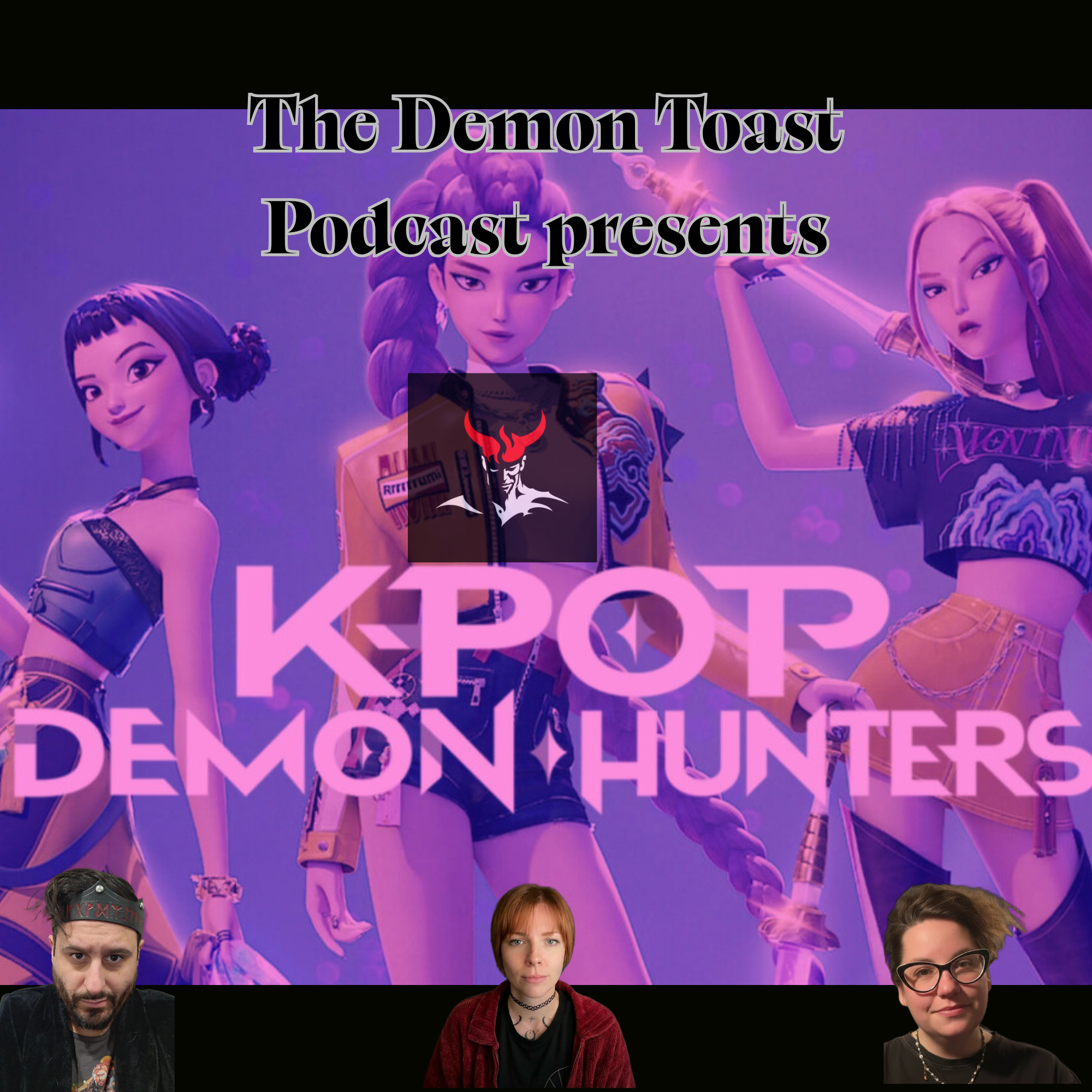
[00:01:59] Speaker A: Well, that being. That. That being said, this is Demon Toast, the podcast of, you know, Death Wish Poetry magazine. We discussed horrific and gothic literature and art, and we're talking about K Pop Demon Hunters. You know, last episode we recorded a few weeks ago. We're a little behind, but honestly, not too concerned about it because it's after Halloween and K Pop Demon Hunters is full of demons and monsters and, well, some heavy subjects. Which you talked about last time. Yeah, seriously, you Know, Adrian, honestly, considering this is trick or treat season, you know, a trick or treat or stealing your.
You know, a print. Not the worst thing that could have happened to you. You know, they.
[00:02:39] Speaker C: No. And K pop demon hunters like some of these.
[00:02:42] Speaker B: I guess you got a trick.
[00:02:45] Speaker A: Some of these little ghosties could be pretty nasty. You know, I've heard of some ghosties throwing eggs and throwing toilet paper into trees. I don't know who would do such a thing. I've never done anything like that personally.
[00:02:55] Speaker B: Never.
[00:02:55] Speaker C: Okay, we've now and wanted, like, did you do.
[00:03:00] Speaker A: I. I would never spray paint satanic and anti Christian and acab stuff on people's cars. I'm an upstanding citizen. We hear in addition to being great singers, we are also upstanding citizens here on the Demon Toast podcast.
[00:03:13] Speaker B: The requirements actually to be part of this.
[00:03:15] Speaker A: Oh, yeah.
[00:03:16] Speaker B: You know.
[00:03:17] Speaker A: Yeah. That was the first thing I asked you guys. I was like, you upsetting citizen. And you're like, yeah.
[00:03:20] Speaker B: Then the second thing was, are you a good singer?
[00:03:21] Speaker A: Because if not, are you a great singer?
[00:03:24] Speaker B: A great singer?
[00:03:25] Speaker A: Oh, yeah, yeah. Like, you know, if you can't sing like Cher or Amy Lee from Evanescence, I don't want you.
[00:03:31] Speaker B: Or like Rumi.
[00:03:33] Speaker A: Oh. Or like Roomie. Yeah, yeah, yeah.
[00:03:36] Speaker B: So no, actually, like, her voice is so incredible, all three of them, and it's really amazing.
[00:03:42] Speaker A: Yeah. And I think that it's interesting the. The range they. They have. I think we left off where they were writing take.
It was kind of uniting them, but it was taking them to a dark place. Right. But that first song, get it Done. Right. Totally different. And the big showstopper song, which they never actually get around to singing in full, golden, uplifting, beautiful.
[00:04:06] Speaker B: Yeah.
[00:04:07] Speaker A: So, yeah, I wanted to open up actually by just talking about, like, because you guys both have kids, right? And like, so do any of us like K Pop? Like, do we listen?
[00:04:16] Speaker B: Never did. Never did prior to this.
[00:04:18] Speaker A: Yeah.
[00:04:19] Speaker B: Nope. Have no experience of it. My oldest went through a little small K pop phase for a very small amount of time. So, like, I heard of the names of some of the very big groups, but I never really got around to like listening to it or getting into it.
[00:04:33] Speaker A: Yes. And yeah. Aid you. You too. It's not your perf. Like, you know, you like Nine Inch Nails and stuff like that.
[00:04:38] Speaker C: I do love me Nine Inch Nails, but I will tell you, I do listen to some blackpink and I listened to it before Morgan got obsessed with them, but now she's completely obsessed, so.
[00:04:49] Speaker A: So that's Where I want to go. I want to talk about your kids and their connection to this. Because like, I don't listen to K Pop, but I like things like this. I love animation, I like spooky animation and I like action. I like superheroes. So this appeals to me in a lot of ways. And contextually I really like the music. But you guys probably connect in the same way. But you also have kids, which is an added dimension. And this particular property, I think it's worth talking about that. So Adrian, do you want to talk about your child's love for K Pop Demon Hunters first?
[00:05:19] Speaker C: So apparently my daughter has, I guess before she showed it to me, she had watched it like four or five times and she wanted to show me her new favorite movie. And so we were sitting in my bed drawing because I was working on some stuff and she was drawing. Cause she likes to work on stuff and she's like, put a movie on. And so we put on K Pop Demon Hunters. The way my daughter like if any of the music plays anywhere and it does play places now, like she just like her little eyes get all bright as she starts singing and dancing. But really like when we were watching it, she. She found so much raising little girls is interesting. And a lot of times they feel like, you know, they're not enough or like just there's. There's a lot. And seeing things like K Pop Demon Hunters kind of, you know, where you have roomie who's kind of like an outsider at times and stuff like that. But like she makes these friends and she doesn't tell them the truth. I don't know. There's like so many different things for kids in it and my daughter's just obsessed with all of it and I feel like it has like, like some really positive things.
[00:06:29] Speaker A: Well, yeah, the whole outsider element for sure. Right. Yes.
Ca. Do you have. Do you have a similar experience with you? Because you also have super similar.
[00:06:38] Speaker B: Yeah. So I have three girls and a son. And age wise, my. My middle two are the ones that are like the key demographic for this movie. They're 12 and 9. And that's a. My daughter is the 12 year old and my son is 9.
[00:06:57] Speaker A: Like 9 to 14. Right. You know, that's.
[00:06:59] Speaker B: Yeah. And my oldest is just a little bit older than it, but she still enjoyed it and we'll sit down and like watch it with us. But really, I mean like the movie like for sure got its hooks into my 12 year old daughter because she is like the literal key demographic and it's all Those same themes of like loving this concept of like you can be whatever you are, you can be different or you can have flaws and you can still be accepted and all of that. And then, you know, my son loves it. The, the appeal is there for him as well. Like he loved the, the story, you know, like he loved the, the fighting scenes and the action portions of it. And I think as far as like the music itself goes, I think that age is also like really good for pop music. Like pop music is very appealing to that age demographic. You know, even my seven year old daughter loves the music and she will sit there and sing and dance to every single one of the songs they love. Sod. Course that one is incredibly catchy and all the things.
Yeah, take down all of that. So I mean it's, it's an incredible movie for kids. But what I love about it is that I think it's like no matter like what age you are at watching it, like there is like depth to this movie, to the themes. And I mean it was like really touching me as an adult thematically. I was like, it's about generational trauma, you know what I mean? I'm like sitting there like crying, meanwhile my 7 year old, it is like dancing to Soda Pop. And I'm like, it's enjoyable no matter what age you are, you know.
[00:08:27] Speaker C: Well, I watched it with my 70 year old mom and she loved it. And I'm going to tell you, finding movies for her is sometimes kind of difficult, you know, but she just absolutely like, she loved the music. She was crying at the end because it's emotional. It like it hit all of those like emotional things. So. Yeah, so even 70 year olds, like my mom's like, I've been listening to the soundtrack to K pop Demon Hunters today when she calls. Really cute.
[00:08:57] Speaker B: I love it.
[00:08:58] Speaker A: Yeah. Yeah, I would agree because like obviously like I, you know, I really love the, the, the central like theme of like pop music can be corporate and soulless. There's this theme of oppression and control versus what are, you know, our Huntrix girls are, are about, which is connection, identity, healing, friends, family, you know what I mean? And yeah, like that's the thing about Soda Pop. It's a sugary, sweet song that's about nothing. It's so cliche. It's so. But it's catchy. That's the point, you know?
So yeah, I think that, yeah, you're right. This is like, it's the kind of children's media that we don't get a lot of There aren't any forced jokes. The characters all have arcs to a degree. Right.
I think Zoe. Zoe even has a tiny arc with the. The alternative medicine guy where she sees that it's like a juice box. It's enough, you know, Zoe.
Yeah, right.
[00:09:57] Speaker C: Zoe's my fav.
[00:09:59] Speaker A: Yeah. I think we talked about the dichotomy between female superheroes and male ones last time, but, you know, should we focus on that for a minute? Did we cover that in great depth last time?
[00:10:09] Speaker B: Actually, I think we wanted to get deeper into it this time, especially exploring G character, because we haven't talked too much about Ginu to his character. So there's definitely stuff there to explore, I think.
[00:10:22] Speaker A: Let's talk about Ginu.
Okay. So Ginu is the leader of the Saja boys.
[00:10:29] Speaker B: Yes.
[00:10:29] Speaker A: He was. What? He was a busker. He was. He lived in, I want to say, feudal Korea.
[00:10:35] Speaker C: He played his.
[00:10:37] Speaker B: Yeah. When they did the flashbacks.
[00:10:40] Speaker A: Yeah. And he tells the sad, sad sob story to.
To Ruby about how he played his music, and he was really good, but he left his family behind ultimately to be a court musician, and that's why he went to the dark place with the. Ooh, what's the. What's the bad guy's name?
[00:11:01] Speaker B: It's Gima.
[00:11:03] Speaker C: Gimon.
[00:11:05] Speaker B: Yeah, the dark place, like, spelled guima, but you don't say the W. It's like.
[00:11:09] Speaker A: Yeah, yeah, we're gonna say.
Yeah, with Gima, who was made up for the movie. But anyway, so he tells her this whole story, and it turns out that, like, not actually true. Right.
[00:11:22] Speaker B: Yeah, he left some bits and pieces out to make himself a little bit. A little bit more empathetic to her, but then it turns out that he was. Yeah, the. It wasn't just that the family got left outside of the gates. It was that they were killed.
[00:11:39] Speaker A: Yeah, he. And he was responsible for it and didn't care.
[00:11:43] Speaker C: He left them.
[00:11:44] Speaker A: And all of it happened because he sold his soul to Gima in return for the usual Faustian bargain. Right. A nice place to sleep, some fame, but ultimately, his soul belongs to him. And the movie plays with the fact of, like, you know, he does want to help Rumi, but he has. He really has no choice because, you know, Gima tortures him when he thinks he can read his mind. He could see what he's doing, and he really has no choice. Or does he? Right. I mean, it's. He. I find him to be fairly complex.
[00:12:14] Speaker B: He is a very complex character. That's why I like complex, you know, morally gray character. I Mean, mostly he's a villain, but, like, then you get a little bit more backstory there. One of the things that I find interesting is that some. So Rumi has the patterns. She's half demon, apparently, for to our knowledge, you know, her father was a demon. And so she has the patterns. And then one of the things that it, like, comes out later on is Gino is surprised by the fact that Rumi doesn't have Gima's voice in her head, because all the other demons do. So apparently, if you are, like, full demon, he's. He's in your head, and he is able to psychologically terrorize you all day, all night, essentially. And so he made some, like, remark at some point about, like, well, you know how it is, like, you know what his voice is like. And she's like, what are you talking about? Kind of a thing. And he realizes, oh, she doesn't have his voice in her head. And I think that almost is like. That's like, a very interesting, like, point for Ginu because he's like, oh, I thought we were the same, but we're not.
There's just. Yeah, there's this, like, interesting dynamic that happens there. And meanwhile, you know, Rumi's very much consistently always trying to be like, I'm not like you. We're not the same. You know, trying to be, like, fully separate, when the reality is, like, there are some similarities, but there are also some differences between the two. Right. She's not full demon, and she hasn't been being terrorized by Kima the same way that he has.
[00:13:40] Speaker A: I mean, the thing with Ginu, though, is that when he sees Rumi, he's there to tempt her and, you know, cause hundreds to fall apart so that they can't do their golden.
Ooh, what's it called?
[00:13:54] Speaker B: The Hon Moon.
[00:13:56] Speaker A: They can't do their golden Han Moon. Right. That's basically the plot. But the thing is, is that when she says, I don't have. I've never had his. His voice in my head, there is this element of hope that he gets.
[00:14:07] Speaker B: Yes, exactly. And he realizes maybe we should help her. Like, maybe, like, there should be, like, a separation here almost.
[00:14:16] Speaker A: Yeah. And it's like, she's like, just help. Just help us win this big contest where they were going to do takedown. But she says, I don't like the energy of this. It's not working. You know, we need to inspire our fans, not make a violent, horrible diss track. It's. It's the principle of the thing, not the point of the thing for them,
[00:14:33] Speaker B: you know, also she's making a case to him. She's. She's appealing to his humanity, if there ever was any there left, you know, because, you know, we get this whole backstory. So, like, he was a human and then he turned into a demon. We don't know the backstory of all the rest of the demons. Are some of them demons from the start, born demons, always demons, or are some of them also humans turned demons? We don't necessarily know, but she's trying to appeal to this part of him and say, maybe there's still hope for you too. And if you're on this side of the honmoon when it closes, you know, then you can get his voice out of your head and you can be. Restore your humanity and all of that, essentially. And so a lot of his internal struggle is grappling with that hope or the belief of, is that even possible for me? Can I restore my humanity or not? You know, like, he doesn't ever come out and say that fully, but you can tell that that's like the struggle that he's having is like, what I know. Like, this is my current reality. This is what I know for sure. And then she's trying to tell me that there's this possibility, there's this hope for me. I don't know if I believe that. I don't know if. And it's not even so much I can tell that it's not even so much if he believes whether or not that's possible. It becomes more whether or not he deserves it. And you see him struggling with all that self loathing and all of that shame and all of that, you know,
[00:15:50] Speaker A: I think there's also an element of trust too, because, like, he's like, yeah, I can do this, or I can just stick with what I know. Right, exactly. Because to betray Gima, he has to make this leap of faith. And what if Huntrix can't pull it off? And yeah, I think you're right. There is this, like, self loathing and this element of like, I don't deserve this. You. I'm gonna do this. And I gotta say, my favorite song in the whole thing is the. The final song that the Saja boys sing after Huntrix have broken up.
[00:16:19] Speaker B: So good.
[00:16:20] Speaker A: It reminds me of.
Yeah, Pray for me, Pray for me now. And there's like Italian Maledictus eras. What is that? Evil Flame. D? Irae Days of wrath are coming. Something like that. I'll be your idol Keep you in check. Keeping you obsessed Play me on repeat in your head Anytime it hurts Play another verse. I could be your sanctuary yeah, it's so good. I'll love you when it all burns down. More than power, more than gold. You gave me your heart Now I'm here for your soul. But the real. The real kicker for me is when he says, listen, cuz, I'm preaching to the choir. Can I get the mic a little higher? Give me your desire I can be the star you rely on don't you know I'm here to save you? Now we've run in wild, yeah. I'm all your knee, I'm all you need I'm gonna be your idol. And it's like he's become the very thing that enslaved him, right? Kind of like Darth Vader, I hate to go here. Or Lancelot or something like that. A fallen hero. Like, he's become Gima. Like, all those people are there because they love him. And he's doing this satanic ritual, basically to consume their souls.
[00:17:26] Speaker B: It's harvesting. Yeah, fully. It's soul harvesting. Yeah.
[00:17:30] Speaker A: Mm.
[00:17:31] Speaker C: I would say that the whole way that Jinu's even able to be tortured is from his shame and guilt. Like, that is what Big Bad uses through the whole thing to keep him in check is with his shame and his guilt, which makes very human throughout the whole thing, even though he's making selfish choices and stuff like that, because he doesn't wanna remember his past.
But that's the great hold. And with Rumi at the beginning, her only shame is that she has these markings that she can't share with people, but she doesn't know, really.
Like, she doesn't have that, which is why she doesn't hear him in her head until she starts making decisions that are dishonest. And then that shame kind of hits her, you know?
[00:18:20] Speaker B: Well, yeah. I mean, they explicitly talk about that when, like, Kima is scheming with Gino, the whole thing. You have to find her shame, figure it out, because. And he's like, oh, I'll find it. I'll figure it out. You know, like, everybody has shame. And, like, that's. The whole scheme is once you unlock somebody's shame, now you can control them through this, you know, dark, you know, force, essentially. And then, like, towards the very end, that's. You start hearing the shameful thoughts of, like, it goes from character to character, and you hear each and every one of their inner shameful thoughts. Thoughts as they are being, you know, magnetically drawn towards this, your idol scene. You Know, with the. With the Saja Boys, when they sing that, and it's like everybody's being drawn there. And so you hear those thoughts, you know, of Mira and Zoe, and then even the. They're like their manager guy and a couple of other people. And then you assume that, like, everybody there in the audience probably has some inner shameful thought that's going on. And then you go to the Saja Boy experience, and it's like an analgesic. It's like they. They're. They, like, suit. They're, like, soothing that for you. And so they're bringing it surface. And then they're saying, and I'm the one that's gonna make you feel better. Like, just keep your eyes on me and I'll make you feel better. You know? And then that's, like how they, like, harvest your soul sort of a thing. And so that whole concept is so interesting when you put it in juxtaposition from how audiences feel when they're listening to the Hunt tricks and what the, I guess, like, purpose of, you know, their performances are in juxtaposition, right? Let's take the song golden, for example, right? Because that's very much like them. And it's. It's the exact opposite. It's like, to bring out the best feelings inside of people, and it's to, like, build them up and make them feel whole and complete in who they are and accepted and just as they are and all of that. And so it's like. That's very much like the theme is, you know, the darkness of the shame versus the. The light of being just allowed to just be yourself and. And loved just like that, you know?
[00:20:29] Speaker A: So, yeah, what you've described as a cycle of abuse that we all live through, right? So I'm gonna go here.
I've recently watched twice the. The hit film the Substance, right? When you see Demi Moore at the beginning and she's about to inject herself with this wonder drug that'll create a younger, hotter doppelganger of herself. She's looking at herself in the mirror, and she's naked, right? And the irony there is that she's gorgeous. Like, I don't care how old she is. Like, if I was a female and I was her age, I wouldn't look like that. You know, it's not just a full standard of beauty. It's like TV old, you know? And, like, as wonderful and enlightening as that movie is, it is part of a. It is very common, right? Like, you know, you watch whatever Show. Like there's some new dumb show with Kat Dennings and her dad. I think it's Tim Allen as her dad. It's some cringe sitcom. And like, that's the thing. It's like, that's a woman, right? And it's like they pick the most beautiful woman they could find, doll her up, and they put her on tv. That's every woman on TV for the most part. You know, your Ugly Betty's are a standout. That's the gimmick. It's an ugly person. You know, What I'm saying is everything gives you a false standard of beauty and they make you feel like you're not good enough because, you know, you're not built like. Like fucking Brad Pitt or I'm horribly out of date, you know. But you get what I'm saying. You're not built like a supermodel or a movie star. You're not built like any of these people you worship. You don't look like Chris Pratt. You don't look like Brie Larson. You don't look like any of them. So what do you do? Oh, you better buy this toothpaste. You better buy this makeup. They sell you the cure, as you just eloquently explained, you know, And I think that considering, like, because I. I really see corporatism and, like, false love being a strong theme in this movie. Like, it's so vicious and in fact. So the. The Sasha boys, they have this.
It's like a glow stick. It's a thing they do in K pop where you hold your. On your idols like sigil on a glow stick. Right?
It looks like a lion, but it also looks like I have here.
I probably butchered that. But it's Korean for goblin, you know, it looks like a lion, but when you turn it on, you see the Dokabe's face, which is brilliant.
[00:22:39] Speaker B: It's like a brilliant little piece of animation. For sure. That was smart.
[00:22:43] Speaker A: For sure. I would want to talk about some of the mythology unless we have anything else we want to say about, you know, the element, you know, exploitation so
[00:22:54] Speaker C: much because you could literally relate things like, I don't know, like the Backstreet Boys and how they were sure processed, basically, and how a lot of these K pop. I don't know if you guys have noticed, but a lot of K Pop stars die really young.
[00:23:09] Speaker A: Let's. Let's actually talk about that. We didn't get into that. So.
[00:23:12] Speaker C: Yeah.
[00:23:13] Speaker A: Did I mention Ultraman last time?
[00:23:15] Speaker C: No, no.
[00:23:16] Speaker A: So in Japan. I know. I Know this about Japan because I engage with a lot of Japanese media. I don't know a lot about Korea. I don't know a lot about K pop or J pop. But here's the thing. There was a show. Ultraman is this thing that never ends and never goes away. There's a new show every fucking year. So one. One year, they decide they're gonna cast this really popular, you know, male singer from a boy band, and he's gonna be Ultraman, and they're gonna have him sing and dance. And they get into filming and they get a call from his manager who's like, hey, we own him. We own his singing. You're not allowed. He's not allowed to sing and dance on your show. And that's the thing. Like K pop, J pop stars, and by extension, most likely, K pop stars also, they're told who they can date, what they can eat, how they can dress. It's in their contract.
And like, yeah, like, the stress is fucking unreal.
Drug abuse, alcohol abuse, depression, suicide. These are very common things. Adrian, did you want to elaborate?
[00:24:10] Speaker C: Well, I was. I mean, honestly, they don't really, like, per se, get into it in K pop Demon Hunters, but, like, into it at all.
[00:24:17] Speaker A: However, you could see the Gima dynamic as kind of a metaphor because.
[00:24:21] Speaker C: And that's.
[00:24:22] Speaker A: This is a kids movie, right?
Yeah, I think the metaphor is. I think it's effective. You know, it's cohesive. It's not like an avatar, the Last Airbender, where he's not allowed to kill the Fire Lord, so he just takes his powers away, like, let's out of here with that, you know?
[00:24:38] Speaker B: No, but I mean, like, they.
K pop stars are a product. Like they. Like they're. Once you step into that world, you are no longer a human being. You are a piece of property. You are owned by your management company, and you're a product. Your body, your voice, your likeness, everything about you is. Is. Belongs to them. And that's. I mean, obviously I would like to see that change. I would like there to be much more humanity in how that, you know, is for these young people, because I can't imagine the stress of that, you know? And I don't know, like you said, it is like the Gima, like, parallel is pretty strong there, because it's like, I'm sure they are promised fame, fortune, comfort, luxuries, all of those things. But at what cost?
[00:25:28] Speaker A: At what cost? And I. I do want to. I do want to underline this. It is different from pop stars in other Countries, like, yeah, we have our Taylor Swifts and our Katy Perry's and our.
I don't know, who's that girl that everyone. Everyone loves and hates?
[00:25:41] Speaker B: Sabrina Carpenter.
I don't know. I'm just throwing out pop stars.
[00:25:46] Speaker A: Take your pick. Take your pick. But, like, they do have managers a lot of times, you know, some of them are abused. It does happen. But by and large, they get to make their own choices. And they could just stop doing it if they want to in Korea and Japan. What'd you say?
[00:26:00] Speaker B: No, I said.
[00:26:01] Speaker C: Right.
[00:26:01] Speaker B: Yeah, you're exactly right.
[00:26:02] Speaker A: Right. Okay, okay. Cool, cool, cool. But like, yeah, like, in a lot of these countries, there is a stratified, systemic, like, apparatus that exists that snaps them up real young before they can make any real decisions and gets them to sign contracts. It's. It's a thing. It's not great. And, yeah, maybe it'll change, but, yeah, that's why, like, Huntrix is able to focus on what matters. I mean, like, I pulled up the lyrics to golden, which is their big fucking song that the whole movie centers around.
[00:26:29] Speaker C: Gotta be Golden.
[00:26:31] Speaker A: It's a good song, but, like, it's about. It's about shedding your mask and showing everyone who you are and being, you know, kind of a cliche thing. I feel so trite even saying that. But it's true, and it is very beautiful. I'm done hiding Now I'm shining Like I'm born to be our time no fears, no lies let's see. You know we're gonna be golden well, okay. We're glowing up with our voices Waited so long to break these walls down to wake up and feel like Meep Put these patterns all in the past now finally live like the girl they all see Right.
[00:27:02] Speaker B: Okay, I really want to talk about this. I actually have some things I want to say about this song. Because this song was written prior to the conclusion of the movie, right? So during the time when Rumi is still trying to hide the true, the truth of who she is, trying to hide her patterns and all of that. So, in a way, this song is beautiful as it is. And as much as I think it does, like, touch the masses and all of that contextually behind, pull behind the curtain, and you realize, like, there is an element of toxic positivity going on here where Rumi is still not fully embracing all of who she is. So, like, it's like the words are there, but the. The substance isn't right. Like, the packaging is really nice, but there's no real nutrients Inside of it. Juxtaposat against the song at the very end that she sings after everybody has seen who she is, and then they all sing it together. And that. What it sounds like. And that song to me, that's the real medicine. That's the real medicine right there. Because that song is about actual integration of your shadow self, your light self, all the pieces of who you are. Good, bad, ugly, everything in between. It's all allowed to be here, and it's all allowed to be loved. Whereas golden is very much like, here's our best, brightest, shiniest parts that are worthy of love versus, no, here's all of who we are, and it's still worthy of love. Like, we are allowed to be accepted just as we are. Marks, patterns and all, you know, scars and all.
[00:28:34] Speaker C: And this is why my daughter felt so impacted by this movie. Because, you know, that's.
[00:28:41] Speaker B: Yeah, yeah. And there's a reason why golden people. This is funny because, like, I'm also in, like, the music world and, like, the world of, like, singing and stuff like that. And I've been a music coach and all of these various things, and so. And I've heard a lot of people talking about the song Golden. It is incredibly difficult to sing, even for trained sopranos. Like, it is so high. And we are being asked to belt at a very, very, very high pitch.
And that's why you see Rumi struggling and her voice cracks and she's. She can't do it, essentially. And that is, like, it's by design. It's. It's to say that, like, you think about, like, what I just described about that song, and then you see Rumi failing to perform the song because it's. It's almost designed to, like. It's almost designed to be so impossible to actually belt that high pitched that even many of us trained singers are like, how, Like, I can't sing this note and belt it. Like, I could maybe get it in falsetto, but I can't belt it, you know? And it's just like. And I hear all these singers talking about this. Like, this is so hard. This song is really hard to sing. And I literally. That's the point. The point is we can't sustain that level of faking being okay when we're not okay.
[00:30:03] Speaker A: Yeah, yeah, I. Yeah, definitely.
[00:30:06] Speaker B: That's one of my big things, one of my big takeaways about the movie. Like, I just love how they use the music itself as a, like, narrative device, essentially. You know?
[00:30:16] Speaker C: You know, I. Oh, like ca. That is brilliant.
[00:30:21] Speaker A: I didn't realize that. Didn't realize that golden went that high. Because it does. It's very uplifting. You know, I was driving home from my grandmother's house and my grandmother has cancer. And I was listening to it and I broke down and cried because her voice goes so high, like at one point in that song. And it hit me, you know. Yeah, yeah, that's a great insight. And you can't present that perfection unless of course, you're derpy and sussy. Who are the little kitty cat?
[00:30:44] Speaker B: And oh, I love them so much.
[00:30:47] Speaker A: Hat wearing bird that follow Geno around, you know, they do it effortlessly.
[00:30:52] Speaker B: I love them so much.
[00:30:53] Speaker A: I'd like to point out that they're from a type of Korean art. There's one. There's a Korean place on south street, actually, and we saw it and I was like, hey, it's the kitty cat.
[00:31:01] Speaker C: Tiger, you know, idiot tiger.
[00:31:03] Speaker A: Idiot tiger. So it's called Minhwa. It's a type of folk art style. And they are a subset called Hojak do, which is specifically a tiger, a magpie and a pine tree, which are very common tropes. In Hojak do painting, the tiger always looks stupid and the magpie is mocking him. There's probably some connections of the three legged crow from Japan on the Yatagarasu. But something fascinating that I read was that Hojak do was very popular at a certain point because there was like an emperor or a king or a lord that everybody hated and there was like a political dimension to it. So it's a very old. I think it goes back to the 1400s by our reckoning.
Yeah, it is cool. I mean, it's stuff like that that makes this distinctly, despite being an American production, Korean. And I love that. You know, it's almost. It's almost like when Kung Fu Panda came out, like China had like a government commission, like to investigate how America could make a movie that was so authentically Chinese. It's. It's on that level. Although in this case, there were Korean people working on it. It's no mystery, you know.
Yeah, Kim Jong Un's not gonna have to look into it, you know, Filthy pig dog. Americans ripping off on culture.
What'd you say, bro?
[00:32:23] Speaker C: I said maybe he'll find another unicorn
[00:32:25] Speaker A: in a cave or he'll play like a perfect game of golf. You know, everything all in one, yo. Yeah, he doesn't do as much wacky stuff as his dad used to do, you know, Kim Jong Il was like my favorite dictator. Anyway, I'm all Right. We're not gonna. We're not gonna go there.
[00:32:38] Speaker B: That's crazy. My favorite dictator.
I'm dead.
[00:32:42] Speaker A: Look, look, he made. He kidnapped a Japanese film. Film maker. Make like a communist version of Godzilla at gunpoint. Like, that's up.
Like that's a level of genius anyway. So. Yeah, yeah, I just. I do want to highlight the fact that like, this movie plays with a lot of things. Like, that's a big one. And I appreciate your insight into golden there Ca. Because, like, listening to. To. I've been hooked on Manson's dopat recently. Right. And it's a song about a performer. Let me read this here.
Him fail to see the tragic. Turn it into magic. We all know the hat is wearing me, you know, and it's like at a certain point playing into a nasty character that's off his first album. The hat is still wearing him, you know? And like, yeah, I think that Gnu does. He does flirt with betraying Gima, but it's just not who he is. And yeah, at the end, he has moved to deal the final blow back to Gima, destroying himself in the process. But it kind of comes at the last minute, you know, and for him, it's too little, too late. His soul shatters. And I think he goes into Rumi. Like she carries that little bit of goodness he had. Yes, I think so.
[00:33:50] Speaker B: Right. Yeah, that's. Yeah, it's a slightly open to interpretation, but that's how I took it as well.
[00:33:56] Speaker A: Yes, we talked about the Geosang Saja, which are the grim reapers. Right. We talked about their nori guy, their horsehair hats, which I need. It's called a GOT hat. I need one.
[00:34:07] Speaker B: You know what those hats are? Is that what they're called? The type of hats that they wear?
[00:34:10] Speaker A: Yeah, those cool hats.
[00:34:12] Speaker B: Yeah, those things are.
[00:34:13] Speaker A: They're made from.
They're made from horse hair.
[00:34:18] Speaker C: The actually real Korean mythology as well. It is the border between the other world and our world.
And so that strengthen.
[00:34:32] Speaker A: Okay, that's cool. That's very neat. Did you have anything else about Korean mythology?
[00:34:36] Speaker C: Actually, you covered most of it.
[00:34:38] Speaker A: Oh, I'm sorry.
[00:34:39] Speaker C: No, it's okay. I'm just glad that someone else knows this stuff.
[00:34:43] Speaker A: Yeah. Well, here's the thing. This is a movie that took nine years to make. It was a labor of love. It's weird that Sony's making all the good animated movies. They had their Puss in Boots movie, which is fucking great. If you guys haven't seen it, go watch Puss in Boots in the last Wish. Yeah, it's great, isn't it?
[00:34:57] Speaker B: I've seen it. Yeah.
[00:34:58] Speaker A: Yeah.
[00:34:58] Speaker B: I'm.
[00:34:58] Speaker C: The daughter turned to me when we were in the theater watching that, and she's like, mom, you're the ridiculous puppy. And I was like, oh, no.
Yeah, yeah.
Oh, like, telling this, like, really tragic story. Like, it's the most hilarious thing they've ever heard. And they're like, no, that's sad.
[00:35:16] Speaker A: Yeah, yeah.
[00:35:18] Speaker C: Also me, honey. It's me and you for show.
[00:35:22] Speaker A: It's one of those movies I went to see. I was like, oh, it's one of Justin's animated movies. And then he starts singing and I'm like, oh, no, it's great.
Maybe we'll talk about that in the future. But like, yeah, they had that. They had the. The two Spider verse movies, which are the best Spider man movies easily.
[00:35:36] Speaker C: I mean, agree.
[00:35:36] Speaker B: Oh, my God, So good. Also, I want to say, and I don't think I'm spoiling anything, so I don't have anything specific to say, but I will say that I have a little bit of insider information from a very, very good source. Keep your eyes, everybody. Eyes peeled. At some point, probably next year, you might start seeing some announcements about this hunt. Trix, right? These three girls are. Are not even. They were just hired for this movie. They're actually putting them on tour because of how successful. Because of how successful this film was and this music is. They were like, yeah, we're sending you on tour. So this film started fully fictional and now these girls are actively being turned into a real K pop group. Which is interesting because they're all from here. They're all Korean. Yes. But like, you know what I mean, like, it's like an American K pop group.
[00:36:35] Speaker A: So this movie went full metalocalypse, right?
[00:36:37] Speaker B: We're like, yes, yes.
[00:36:39] Speaker A: Cool. Like, Death Block's a real band now. I mean.
[00:36:41] Speaker C: Yeah. Yeah, cool.
[00:36:43] Speaker A: Hey, I'd see them. I mean, not if the tickets over a hundred dollars, but you know, the
[00:36:46] Speaker C: tickets are totally gonna be over 100. Because every mommy.
[00:36:49] Speaker B: Because they know that every mom their kids are gonna be.
[00:36:52] Speaker C: Every mommy I have to go.
[00:36:54] Speaker B: And we're just gonna be like, okay,
[00:36:56] Speaker C: like, seriously, it's gonna be me and you. Our daughters are gonna be like, mom,
[00:37:03] Speaker B: this is. This is my 12 year old I'm talking about. And I told you those stories about her earlier off, you know, whatever mic or whatever, she gonna look at me. Those tickets could be 500. And you know, I'm gonna pay it because this little kid's gonna look at me and be like, mommy, how could
[00:37:17] Speaker A: I say she's a sweetie? Yeah.
[00:37:19] Speaker C: The fact, you know, it's so powerful and it's gonna mean so much. Like, there's no. There's no defense against that. There's none.
[00:37:27] Speaker B: It's.
[00:37:27] Speaker A: Well, that's cool. I was wondering about that element of the movie too, because, like, Golden, I think the version we hear all the time was sung by a K Pop group. And there was also Takedown, which was sung by a K pop group, a different K Pop group. So I was kind of like. I kept asking Justin. He didn't know. He's my animation guy who does the singing. He's like, I don't know. So, yeah, I guess most of the singing in the movie is actually done by. Because I know that gnu. That one song. His voice actor is a singer. His name is.
He was in another movie where he sang that. That song that plays when Jinu and Rumi are together. That's from his movie, you know, So I. I didn't realize that they actually did the singing. So that's. That's really cool. I'm glad to hear it. Good for them.
[00:38:12] Speaker B: Yeah. Yeah, exactly.
Their voice actors, they specifically hired them. They made sure that they could, say, sing as well. And so, like, yeah, these three women are now gonna be.
Congratulations. You did such a good job. You're now a K pop group and we're putting you on tour. Like, could you imagine?
[00:38:30] Speaker C: Game over, man.
[00:38:32] Speaker A: Crazy, man.
[00:38:33] Speaker B: It's crazy.
[00:38:34] Speaker C: There is.
[00:38:34] Speaker B: I'm excited.
[00:38:34] Speaker C: I want.
[00:38:35] Speaker B: I'm excited.
[00:38:35] Speaker A: I hope they put on, like, a fun show, like a Mona Martha or Guar does, or like demons come out and they kill them while they're singing.
[00:38:41] Speaker B: Because I'm. I'm imagining. I'm sure they're gonna have a huge production budget there. There's no way they're gonna spare expenses. It's gonna be good. It's gonna be great.
[00:38:50] Speaker C: I mean, the girl that played Mira actually showed up in a sleeping bag to an event like her character. It was really cute.
[00:38:59] Speaker B: Obsessed. I love it.
[00:39:00] Speaker A: Let's. Let's. Let's gently. Before we were done, let's talk about the female superhero thing. So this appeal. This is appealing to little girls in a way that female superhero comics don't. Right.
As a purveyor of, you know, American comic books, I can tell you right now that most female superheroes have a few things in common. You know, mainly their waistline and their. Their bust size, you know?
[00:39:23] Speaker B: Yes.
[00:39:24] Speaker A: And that's pretty unfortunate, you know, Jenny Sparks in the early 2000s. And in the 90s and 2000s, she broke new ground by having small breasts, you know, and by dressing in band T shirts. It was. I remember being so embarrassed when I was reading it. I was like, something different about her, and I was like, you know, so there's that. Right? There's also the fact that, like. So there's an arc where Thor is unworthy of Mjolnir, and his girlfriend Jane Foster lifts Mjolnir because she has cancer. And she gets up in the morning and she's overcome all this stuff, like she's worthy and she lifts. Mjolnir becomes a female Thor, and she has that idealized body type. And I.
There isn't much different from her and Thor. And I don't know if that's a good thing or a bad thing. I. I'm not the best at talking about, like, feminist issues. Right. But it still remains that, like the she Hulk comic book, it broke new grounds when it made her. When it made her unsexy and more like the regular Hulk, you know, and that's the key thing. Female superheroes are generally written for a male gaze, by which I mean they're overly sexualized. And that's largely the point, even when they are given good character arcs and beats. Yeah, there's lots. So the new 52, it was meant to be a big, you know, slit new slate for all the characters. They all got number ones. Even the ones that never get new number ones. Wonder Woman, issue one. What. What do you think she's doing?
Take a wild guess.
[00:40:49] Speaker B: I can't.
[00:40:50] Speaker A: She wakes up naked in bed and stretches, you know. You see it?
Yeah. Yeah. Catwoman. Adrian, take a wild fucking guess what happens in issue one of Catwoman.
[00:40:59] Speaker C: She wakes up and she's half naked.
[00:41:02] Speaker A: No, no, no. You were. You were so close. No, she's. She's. She's engaged in hot, aggressive sex with Batman. Yeah. Now, meanwhile, in Batman Number one, he's. Bruce Wayne is in his suit. He's talking to one of his robins. They're infiltrating a thing. Superman number one, he's. You know, he's. He's doing his reporting as Clark Kent, you know, Swamp Thing. He's on the run from the spookety book it is. He's on his motorcycle. You know, every female superhero is like this Red Hood in the Outlaws. Here's Starfire. She's naked in the pool. Jason Todd comes in, and I don't know who the other Red Hood character. I don't I didn't read the book. I just read it. I just read, like, about the first issue. She's having sex with both of them. And that's like, this is a consistent thing. You know, they're not always that sexualized, but that's usually a huge component of it. K Pop Demon Hunter. They're not doing cheesecake poses. They're not wearing skanky outfits. They do dress sexy. They are. They are attractive. Like, the director wanted them to be like, you know, overweight and belching and stuff like that was. That is one of them, to be overweight and belching and stuff like that. But that was kind of overruled. Right, but we see them eating. We see them. I mean, not.
[00:42:10] Speaker B: They do. They are very humanized. Yeah, I mean that. I mean, like, female superhero type characters written by a female are so different than when they're written by a man. Right. And they knew who their audience was and they knew that they wanted to humanize these young women. And so while, like, I, you know, like you pointed out, while they are, you know, conventionally attractive in their own unique ways, they are very human. And I would say their attractiveness isn't the most interesting thing about them. It's not the important aspect of who they are. It's just like an aside. It's like they happen to be cute, but that's not really what makes them who they are.
[00:42:54] Speaker A: Yeah, like, like, like, like, like Thor's always drawn as this super attractive, like, 6 foot 8 guy. But you're obsessed with Mjolnir and the things he's talking about. Same thing with our K Pop Demon Hunter characters. They have cool magic weapons. Adrian, go right ahead. I cut you off.
[00:43:09] Speaker C: It's okay. So a lot of their costuming is based off of blackpink costumes.
Like the band. If you watch any of their music videos, you can literally see, like, oh, my God, she's dressed literally. Like Rumi must have watched like a hundred, like lots of it.
But also, so especially at the end, like during their transformation scenes, you know, where they pull out their weapons and stuff like that. It is very similar to things like Sailor Moon. I know. We're comparing them to superheroes. Which Sailor Moon, kind of Sailor Moon to superhero.
It's so Sailor Moon. Like, it's that super magical girl thing that you've got going on. But they did it in such a powerful way. Like Sailor Moon back when I was a kid, like, she would whine and cry and she's really obnoxious. Like all of the Time. She makes mistakes. She's ridiculous and she cries literally all of the time. But then she still, like, saves the day. Right, okay.
[00:44:12] Speaker B: Yeah. One of the things that I find interesting about their characters is that it. And to me, I prefer this. Right. Okay.
[00:44:19] Speaker A: So.
[00:44:20] Speaker B: So if we're. If we're on, like, the spectrum, right, of, like, overly sexualized and, you know, like that level of female superhero, it's just about, like, your body and your boobs and your sexual, you know, attractiveness to the male gaze on the other end of the spectrum, which is what you were referring to earlier, like, making them, like, fat and unattractive and belchy and whatever. Like, to me, that still isn't good or correct as far as.
Because that's making it. That's like. It's. It's. It's like the opposite. It's like the opposing, you know, archetype. And that's not real. It becomes a gimmick. Yeah, exactly. So I actually like what they've done with these characters because to me, this speaks more to, like, real feminism, which is that you can be cute and pretty and attractive, and that doesn't take away from your virtues and your skills and your characteristics of, like, the depth of who you are as a human. Like, just because you're a woman who happens to be cute, who happens to wear mascara. Like, they even have a line in that opening song, how it's done. What. What do they say? I actually pulled the lyrics up heels, nails, blade, mascara fit check for my napalm era, please.
[00:45:35] Speaker A: Like, that is so good.
[00:45:38] Speaker B: Your crown. To me, that is basically everything we're talking about right now, which is that, like, you can be a beautiful woman and a badass, period. Like, it's both. You don't have to choose. You don't have to be one or the other.
[00:45:52] Speaker A: Absolutely. Absolutely. Absolutely. They really do nail it wonderfully. I wanted to highlight, like, this other comic book called Faith. I didn't read it, but it was, like, written as a conventional superhero comic, but the main character was fat and she wore, like, a cape. And again, it's.
It's just. You've taken it too far, you know, maybe. And now maybe Faith is, like, you know, comic about body positivity. And it is really well done. But when I would see it next to all the other ones, like, I was just like, okay, you're doing a thing. I don't know. You know, it becomes a gimmick. And, yeah, I think that they rode the line in a really neat way. And I think they. They Hit the mark. And that's why I think a lot of little girls are watching this and enjoying it because, yeah, they. They. These are characters that like to look attractive. They like to express their emotions, they like to eat, they like to go out, they like to do things, they like to talk about boys, but they also kick ass. And all those things are perfectly balanced, as all things should be, right? To quote another superhero property. So, yeah. And Adrian, bringing up Sailor Moon as it. As maybe the, er, K Pop Demon Hunters. Totally apt. I mean, you know, we could probably talk about magical girl stuff in the future. I mean, my friend Chris keeps tugging me to do it because he's fucking annoying and he likes all that stuff. Stuff.
[00:47:07] Speaker C: It's a complicated.
[00:47:09] Speaker A: He's a complicate. He's a complicated figure. Yeah, yeah, for sure, for sure. Yeah, I think he did, actually. When we did the Slender man video, there was that video of the Slender man killing him. Remember that, Adrian? We played it during the show.
[00:47:20] Speaker C: Yeah, yeah.
[00:47:22] Speaker A: He's like, don't you stab me, bro. Don't stab me, bro.
[00:47:25] Speaker C: Yeah, all right, all right.
[00:47:27] Speaker A: Maybe I'll come back from the dead to talk about magical modica or whatever. The Madoka magic or whatever.
Yeah. So anything else to say before we wrap up?
[00:47:37] Speaker C: Kpop Demon Hunter.
[00:47:38] Speaker B: I feel good. I feel like I got everything off my chest that I wanted to say.
[00:47:41] Speaker A: Yeah, it's a great movie. You know, K Pop Demon Hunters is delightful. It's very empowering for not just little girls, but, I mean, I was fucking empowered watching it. I'm hardly a little girl, so, you know, I'm a big girl. No Joshua side. It's a great movie. It's got great music, great action, great characters, wonderful themes. And if you don't like K Pop, you don't need to like K Pop, because I don't like K Pop either, but I love this movie.
[00:48:01] Speaker B: Exactly. Don't let it stop you. Don't let it stop you. This movie is so good.
[00:48:04] Speaker A: Yeah. The hype is real. And, you know, this being spooky season, I don't give a if we're a day after Halloween when this is recording, when you listen to this, when you hear it, it's still spooky season for us here at the Demon Toast Podcast,
[00:48:15] Speaker B: you know, so all year round, always.
[00:48:18] Speaker A: Yeah. I don't care if Rudolph's on the radio. Rudolph, he's a. If that's conformist. I hate Rudolph the Red Nose Reindeer, you know?
[00:48:27] Speaker B: Hate it too.
I got everything about Rudolph.
[00:48:32] Speaker A: Good.
Yeah. Oh, okay. I Guess. I guess you could lead Santa's reindeer. Whatever. Yeah, weirdo. Yeah, exactly. Rudolph. He's a. He's a sellout anyway. Yeah. So, you know Adrian is the chairperson and founder of the Horror Film Art Society. I probably said that wrong.
[00:48:53] Speaker C: Horror film, you did it right.
[00:48:56] Speaker A: You know, you got too many words. Horror Film Art Society of Amarillo. Every month there's a movie picked and you can submit art and writing related to that movie and be in their art, their live art shows, and also their magazine, which is called Goblin Crypt, which I am also an editor of. So, Adrian, you want to talk about it?
[00:49:16] Speaker C: Well, literally. Thank God Dan is our editor because, let's be honest, I'm a little.
But no, it should be really fun. We need your submissions. I believe this next month here in November, it's going to be the film Dangerous Animals about the shark and the serial killer. That's a line right there. So, yeah. Come on, guys.
[00:49:36] Speaker A: Yeah, so do. Check that out, the links below. CA question, quick question.
You submitted to Death Wish under a different name. Are we keeping that separate from you here?
Yeah, no, no, no.
[00:49:48] Speaker B: We can talk about that. We can talk about that. Yeah, that's fine.
[00:49:51] Speaker A: Oh, okay. I can say that you published under Millie rose.
[00:49:53] Speaker B: Yeah, yeah. 100%. Yeah.
[00:49:55] Speaker A: I'm just making sure.
[00:49:56] Speaker B: It's my alter ego. Yeah. It's my poetry alter ego, but everybody knows that it's me. It's like an open secret, you know, one of those things.
[00:50:04] Speaker A: It's like King Loki. Yeah, got it.
[00:50:06] Speaker B: Exactly. It's moniker. It's basically a moniker.
[00:50:09] Speaker A: What. What's. What's DA short for, by the way?
[00:50:11] Speaker B: Carol Ann. Like the girls, older guys. My parents literally named me after that.
That movie came out earlier in the year when they were pregnant with me and they were like, I like that name. I'm named after a horror film character.
[00:50:22] Speaker C: Yeah.
[00:50:23] Speaker A: That's fantastic. I mean, Adrian's daughter's middle name is Danger, so, you know, Obsessed.
[00:50:27] Speaker B: I love it.
[00:50:28] Speaker A: So, yeah, CA, of course has a website. We do link it below every time, but it is called Embracing Divergence. Ca, you want to talk about it?
[00:50:38] Speaker B: Yeah, I'm just like a spiritual and creative coach. I'm here to help make your dreams come true, basically, as you are. If you are a writer or a musician or creative or an entrepreneur of any kind. My specialty is helping you get there essentially and be the most authentic, like in line version of yourself so that you can create the best, like art or product or whatever it is you're trying to create. Yeah, that's that's my specialty. That's what I do. So definitely check that out.
[00:51:09] Speaker A: Yeah. And CA is also in our. Our, you know, our fall edition of Death Wish poetry magazine, Crossroads. And she published under her. Her moniker, Millie Rose, wonderful poem called Anathema. It's beautiful. It's very good. Do check out our magazine. It's only $10 for the physical edition, 5 for the PDF. So, you know, spooky, morbid erotic writing throughout it. We have short stories, we have art, we have poetry. And, yeah, I'm, of course, King Loki. I edit Death Wish Poetry magazine and run this show, demonlandbooks. Com, Deathwishpoetry. Com. That's all I've got for you. Yeah. Write poetry, make art, love your demons, obviously.
[00:51:47] Speaker B: Period.