Episode Transcript
[00:00:00] Speaker A: Okay. Yeah. I'm still mad about last week when we didn't get to talk about Ghost Rider, you know, I mean, there's an angel in Ghost Rider, you know, Dan.
[00:00:09] Speaker B: Will always be mad about Ghost Rider. Guys, let's just give it to him.
[00:00:13] Speaker C: Does it make it worse? I. I haven't seen either Ghost Rider movies.
[00:00:22] Speaker A: Nicholas Cage is Ghost Rider. Like, come on.
[00:00:24] Speaker B: Neither the guys who Directed Crank at.
[00:00:27] Speaker A: Crank 2, High Voltage Directed Ghost Rider 2, Spirit of Venge and that speaks.
[00:00:33] Speaker B: You're right, Dan. You're right. I'm wrong. You're totally right.
[00:00:36] Speaker A: I know I am.
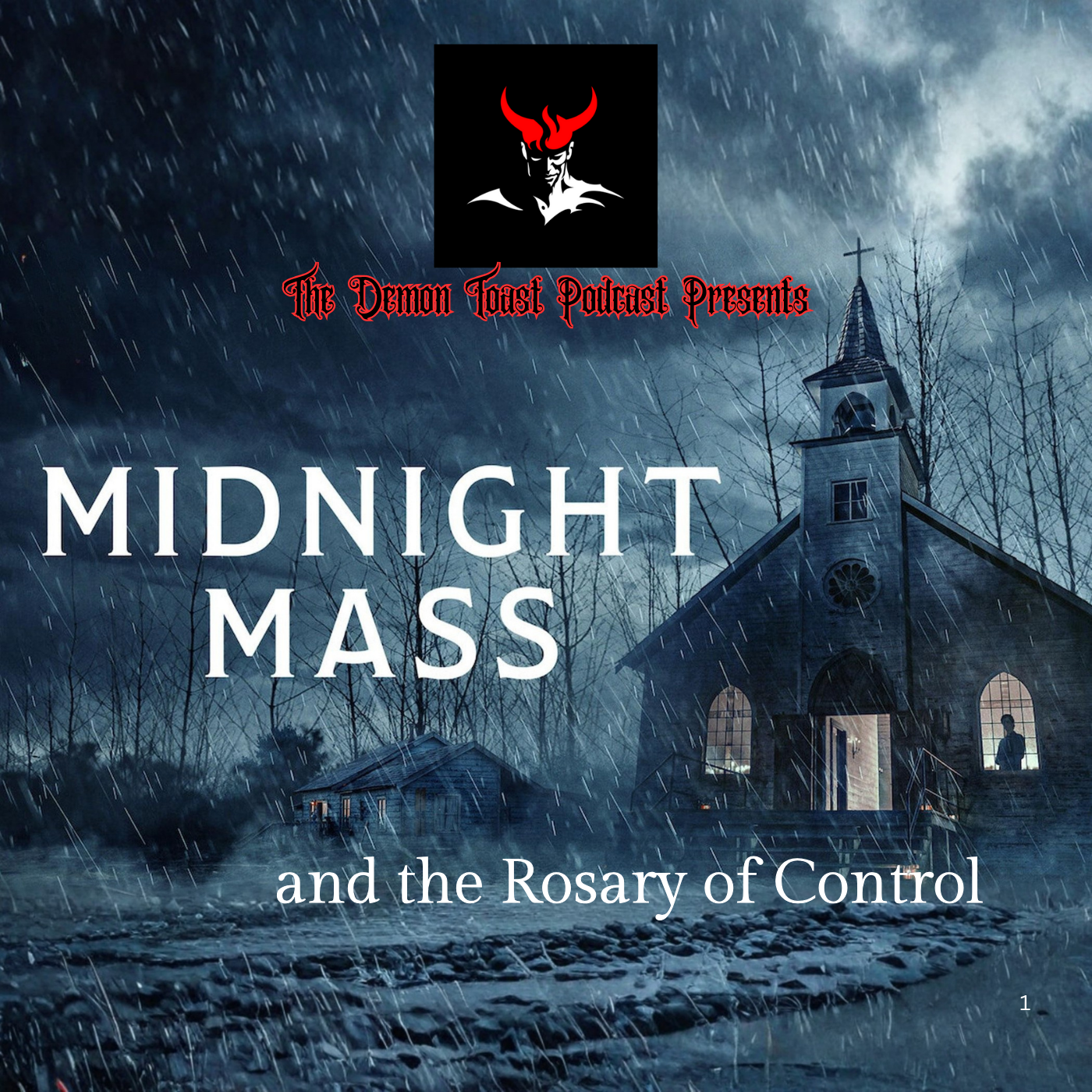
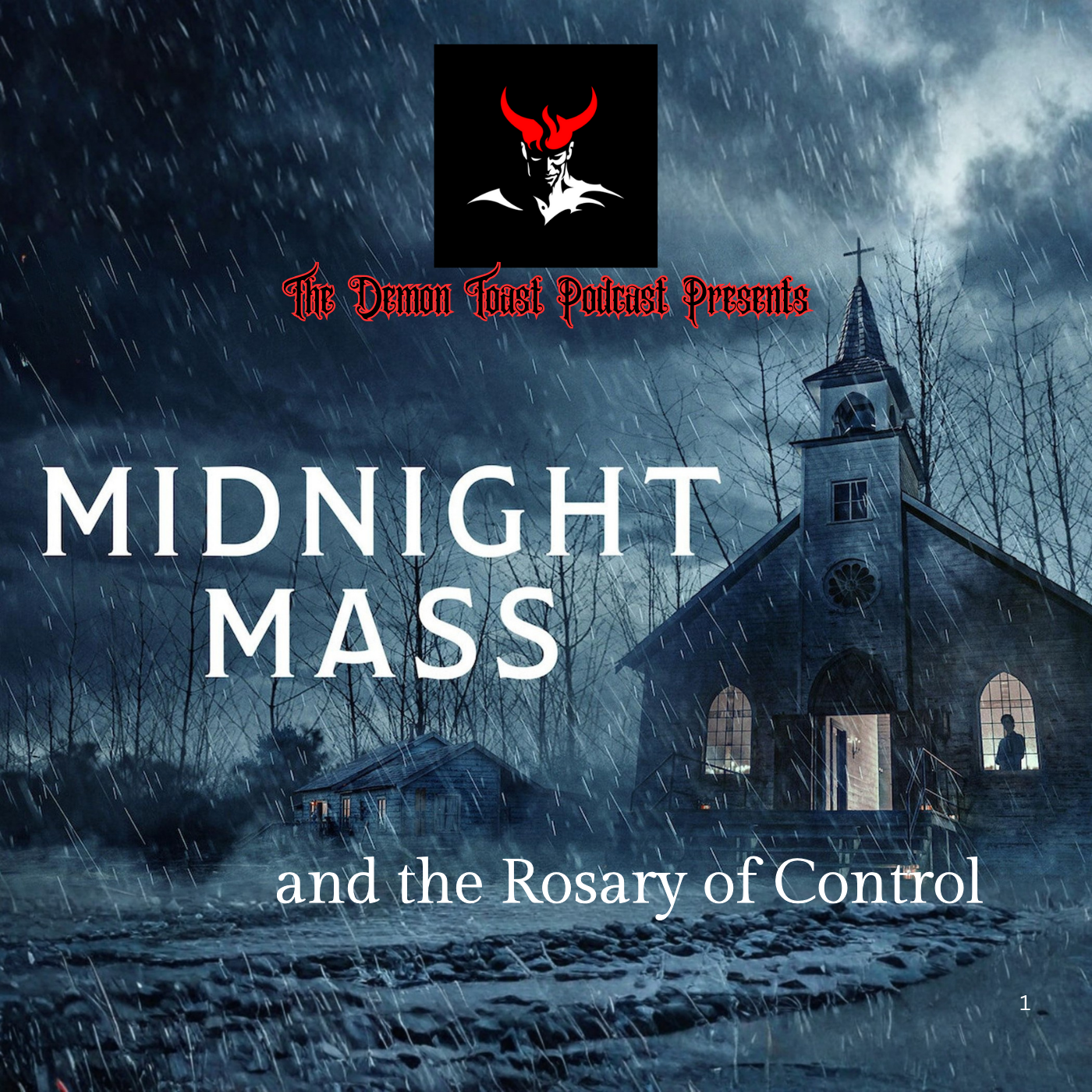
You know, it's a shame they never made that Morbius movie. Speaking of vampires, let's talk about Midnight Mass. So.
[00:00:43] Speaker C: Yes.
What a transition.
[00:00:46] Speaker B: Don't get me started.
Don't get me started.
[00:00:49] Speaker A: Yeah. Morbius is not a vampire. Technically, but.
[00:00:52] Speaker C: Technically, yeah.
[00:00:54] Speaker A: Welcome to Demon Toast, the very professional podcast from. From, you know, official podcast of Death Wish Poetry magazine, the very professional magazine that I edit, unfortunately.
[00:01:06] Speaker B: Let's see if we can add the word professional in there, like, five more times before he gives it up.
[00:01:11] Speaker A: Guys, the more I say professional, the more professional it is, you see. So, yeah, I'm King Loki, as you know or don't know or know. Now, that's Old Norse for Daniel Sokoloff. With me is my co host, Adrian, filling in for Ca.
Ca was filling in for Adrian last.
[00:01:28] Speaker B: Time we switched roles. Ca is the best. Guys. I know. I'm gonna miss her, too.
[00:01:35] Speaker A: It's like Shazam. Like, you know, Ca. Like Adrian. And she becomes Adrian.
[00:01:41] Speaker C: Yeah.
[00:01:43] Speaker B: Ca can do way better than me. I'm just saying, she could be an infinite, infinitely cooler person than I will ever hope to be.
[00:01:52] Speaker A: You know, we'll flesh this idea out, you know, further in the future. But, yeah, we also have Mike as our special guest. Mike is great. He's a brilliant poet. We published him at Death Wish. He wrote. He's the writer of the Porchlight, a book of poetry I really fucking love. It's really good.
And, Mike, how you doing?
[00:02:08] Speaker C: I'm doing good.
Halfway through my second week of school, so I'm surviving teenagers.
[00:02:17] Speaker B: Oh, dude, I'm so sorry. I'm so sorry.
[00:02:21] Speaker C: Hey, I'm surviving. I've got a folklore class this semester, so I'm excited to teach that.
[00:02:26] Speaker A: So Adrian's jealous.
[00:02:29] Speaker B: I would love to take your folklore class. You know how that's. Actually.
This is like. You guys don't even know.
Mike is phenomenal, especially when it comes to Irish folklore and stuff like that. We've already had him on the podcast. He. He's magic.
[00:02:45] Speaker C: Oh, thank you. It helps. That kind of look like a leprechaun too. But.
[00:02:51] Speaker B: Then you have to do the lep in the hood song. Le in the Hood do no good. We talked about this last time. I don't forget.
[00:02:58] Speaker A: Leprechaun in the Hood is a classic.
[00:02:59] Speaker C: We were just talking off. Off air about sinners too. So now I've got a rocky road to Dublin in my head, but, oh, my God. But yes. So midnight mass.
[00:03:13] Speaker A: Midnight mass. So, yeah, let's talk about midnight mass, though. All kayfabe, all fun aside, all funny aside. You know, obviously we all have our own religious trauma. You know, I come from an orthodox Jewish, you know, background.
Mike is a recovering Catholic. And Adrian, I've been.
[00:03:37] Speaker B: Over, around, sideways and through with religion, so I've had a taste of lots of different things.
[00:03:45] Speaker A: Yeah, true. So I'll. I'll start us off with this. This, you know, excerpt from an essay by Zosia millman published on bustle.com and it's about the angel that we see in the show as we learn through the monsignor's backstory. During a trip to Israel, he was attacked by a creature he believes to be an angel who restored him to be a younger and apparently immortal version of himself. He becomes convinced that he's been chosen to enact God's will and that by drinking the angel's blood, he will be absolved from sin, similar to the way that Catholicism teaches that by taking communion, consuming the body and blood of Christ, your sins will be forgiven.
Believing that he owes it to his parish to bring the powers back to the island, Father Paul begins sharing the angel's blood with the unwitting members of his church, healing their respective ailments and inciting other apparent miracles, such as making his.
His aging girlfriend younger than her daughter. So tell us about the angel, Adrian.
[00:04:53] Speaker B: Okay, well, since you asked, Daniel, I will say the angel actually takes a lot of, like, vampiric folklore. You know, you have the bat wings, you have the weird decaying, like, creature that can't go out in the sun.
Obviously it's very old school textbook, which I find kind of refreshing because you don't see a lot of like, the full, like, honestly, he's got like a lot of Nosferatu vibes, but that's like a whole other story that I have notes on.
But yeah, but also they use it as like a fallen angel, obviously, but they kind of based some of, like, the way that his wings look and stuff. It's like Pilgrim's Progress.
If you look at the paintings that Edward Burne Jones did for that particular printing of Pilgrim's Progress. Like, you see these angels and their hunchback, and they have these weird wings, and they look just like it.
[00:06:01] Speaker A: Okay, that is a very, very, very interesting thing to note. I appreciate that very much. I'd like to talk about the angel's wings. The angel is, of course, just a, you know, ageless vampire lord of some sort. He has huge, monstrous bat wings, and he seems to understand what's going on. I wonder if this scam is his idea. I don't know. I'm not sure. He seems complicit.
[00:06:26] Speaker B: Yeah, I mean, obviously he's complicit. I think he's the instigator in some ways. But just letting humanity do what humanity is going to do with it. So it's like, do you think he.
[00:06:38] Speaker A: Told Pruitt, like, bring me to your island, and we will turn everyone into vampires because I am an angel of, like. Do you think that happened?
[00:06:48] Speaker B: That a word to Pruitt? What I really.
[00:06:50] Speaker A: That's what I'm saying.
[00:06:52] Speaker B: Yeah. He didn't say anything to Pruitt. Pruitt literally found it all in.
[00:06:58] Speaker A: Yeah, yeah, yeah. Exactly.
[00:06:59] Speaker B: Yeah. He. He wanted to paint himself as a hero for his cowardice. So he's like, oh, I've become younger. I'm gonna make everyone else on the island Yeager, because this is my flock. These are my people.
And, yes, the girlfriend was a big part of it, but it was more than that. He literally, like, he wanted to be the one to save everyone.
[00:07:21] Speaker C: Well, and what I was gonna. I just realized as we were talking is just how creepy and also just how comfortable the vampire is with just easing into, like, these.
The, like, human attire from time to time. Like, for instance, when he's given the hat and the jacket that Riley sees out in the storm, that, hey, think.
[00:07:43] Speaker A: It'S the old priest.
[00:07:44] Speaker C: Yeah, they think he's the old priest. And then when he comes back when Pruitt's losing his mind from the craving, he's like, lord, closer to thee, blah, blah, blah, like, babbling. And then the vampire comes in. He's like, oh, thank you. He just does the.
Just walks over wordlessly.
[00:07:58] Speaker A: Horrifying.
[00:07:59] Speaker C: Yeah. And then when they just put him in the robe, like, that was. Everyone else was like, the robe that was.
[00:08:05] Speaker B: Oh, my God.
[00:08:07] Speaker C: Yeah.
[00:08:08] Speaker A: So that sequence where he's talking to Riley and our vampire friend comes in and it takes it. It. Well, Riley comes back, right? And the vampire turns and sees him and just takes him down and starts drinking from his jugular.
The way. The way his wings frame Riley's body is so it was very unsettling to me. I was never molested, but that's the vibe I got from it. And I felt gross both times I watched the show, watching that, you know, and I wonder if it's perhaps a metaphor for, you know, molestation by a priest. You know what I mean?
[00:08:45] Speaker B: I'm definitely sure there are bits and pieces of there that are commentary about that without flat out saying it.
[00:08:52] Speaker A: Without flat out saying it. Because, I mean, like, religion. Religion forcing itself down your throat and people, you know, the way Riley just kind of goes to church because his father wants him to so badly.
It's shades of that, you know. But the point where the vampire holds him down and drinks his blood is just. It is pretty horrific. It's pretty gruesome. And I love the Pilgrim's Progress line you just drew. That's brilliant. I think that that right there is a clincher, right?
[00:09:20] Speaker B: That's literally watching it and being familiar with Edward Grundrum's and the Paraphylites. Like, that's literally where they borrowed this bees from. And it's beautiful and horrifying all at the same time.
[00:09:33] Speaker A: Do the angels have bat wings in that printing?
[00:09:36] Speaker B: They have feathers, but they still look like bat wings. They have the weird talons and stuff on them. They're very strange. You've never seen any of his work?
[00:09:45] Speaker A: No, I'm very familiar with Pilgrim's Progress for obvious reasons. You know, I mean, I studied literature in college, so I will send you.
[00:09:53] Speaker B: Some of the pictures that I'm talking about.
[00:09:55] Speaker A: Yeah, I'll flash it up on the YouTube version. Yeah, for sure. That's really cool.
[00:10:01] Speaker B: Yeah, that was. That was in my notes because that was one of those, like, art references. I couldn't let go.
[00:10:07] Speaker A: So, Adrian and Mike, you both know folklore. Tell me what this vampire is taking inspiration from besides for Pilgrim's Progress and possibly Gustave de Rais, because Satan has the bat wings in the Gustave de Ray paradise.
[00:10:25] Speaker C: You know, I would say that's probably the most obvious inspiration is the. I'm almost picturing like the Paradise Lost art depictions, you know, falling and the bat like wings.
[00:10:39] Speaker A: Yes.
[00:10:39] Speaker C: Clearly it's supposed to be a stand in. And when you factor that into the Catholicism, makes it even more twisted that this priest is so convinced that like, yes, it's an angel of the Lord. Look at him. And they were terrified I'm like, I don't think we're supposed to be that terrified. And also, technically, if you want to talk about biblically accurate angels, that's a whole nother thing. But.
But, like, I've just. You can see on the congregation right there. Yeah, you can see from the congregation when they introduced the angel, that that might have been the first time that they're going, oh, what the actual fuck? Like, what is that?
[00:11:20] Speaker A: So let's talk about that, though. I want to. I really, like, am fascinated by this show's treatment of Catholicism. Right. Like, in the last episode, we talked about the true horrific gothic nature of Catholicism. Right. Like, yeah, I mentioned the monks called skulls in that weird belfry. Not belfry. You know, the catacombs where the walls are just made from the skulls of monks and, like, drinking the. The blood and eating the flesh of your. Your. Your dead deity. And the. The. The fetishization of Jesus's death and suffering.
And, like, yeah, like, we have a vampire, a gruesome, horrific vampire as an angel of God, and he's horrific. And they say in the show that whenever an angel appears, and this is true, at least in the Old Testament, I don't know the New Testament at all, they always say, be not afraid. Fear not, because there's reason to fear. An angel is standing for you. Right. And we think of, you know, Adrian, if I use the term wrong, yell at me. The pre Raphaelite artists, the Renaissance artists with their beautiful.
The buddy Celli angels with their. Their lovely, lovely, youthful faces and their pretty wings. And that's not what the Bible is doing. Even before Ezekiel, you know?
[00:12:41] Speaker B: Okay. I did want to add one thing about the vampire, like, aesthetic and everything like that, because they did also heavily borrow from Nosferatu, especially when he's wearing the hat and everything else. Like, he's kind of like a biblical strigoi, if that makes any sense.
[00:12:59] Speaker A: Ah, that is a good way to put it. And tying into Nosferatu, there's the cool scene where he's drinking Eren's blood.
[00:13:06] Speaker B: Exactly.
[00:13:07] Speaker A: She. She pulls his head down because she's stabbing his wings. And just like. Just like Nina. Nina, who pulls Nosferatu's head down while she. Well, while the sun comes up.
[00:13:17] Speaker B: Thank you. Thank you. Yes. And she's, like, cutting his wings because he's too distracted because that's his weakness. It's beautiful.
[00:13:26] Speaker C: I did have a friend talk about that specific scene with Eren and be like, why do I find this hot?
I'm like, you know, what it does, because he, like, the vampire is, like, gasping and, like, making these noises. And again, he tries to pull away and pulls the head closer.
[00:13:42] Speaker A: It's very Anne Rice. Like, when the vampires drink blood, it's almost orgasmic for them. In her books, you know, even before.
[00:13:48] Speaker B: That, I mean, you have Nosferatu when she literally clenches his leg. And that's from the twenties.
[00:13:53] Speaker A: True, true.
[00:13:54] Speaker B: So it's like. It's just like it. That's just vampires right there. They're trying to make it as vampiric as possible for a moment and give sex appeal.
[00:14:05] Speaker A: Vampires. Vampires are like lizards in a way, right? Like, lizards experience the world through their mouth. When something looks interesting, they take a bite out of it. You know, vampires, all they do is drink blood.
[00:14:20] Speaker C: So just picturing vampires as just giant babies now. Like, I. I don't know. Is it good? Is it. Just sticks it in.
Don't like that.
[00:14:28] Speaker B: I mean, with Midnight Mass, let's be honest, the vampire was just, like, an incidental thing, and the real horror came from the humans and what they did with it.
[00:14:44] Speaker C: Yeah, yeah.
[00:14:45] Speaker A: Because the vampire couldn't have done anything. I mean, he was in that cave for, like, what, like, 2,000 years? 3,000 years, right? Like, I guess it wasn't 2,000 years. I mean, he was. He was hiding in an old, dilapidated church. And by the way, correct me if I'm wrong, but the way they. They showed the church, it looked like a cake. I guess it was a cave. It was a cave behind a church. It reminded me of depictions of Jesus's tomb. Is there something there?
[00:15:13] Speaker B: They make a lot of analogies about that in the show, actually.
[00:15:17] Speaker A: So they do show. And correct me again, because I have never been a Catholic. They. They show what I think are the Stations of the Cross, specifically when Pruitt is confessing, or are they in the form of Stations of.
[00:15:31] Speaker C: In the style of.
[00:15:32] Speaker A: Yeah, through its story.
But it's in the sty, Right. So there's. There's a carving or an etching or an. Or a bronze thing of the vampire's blood coming out of his vein. But it looks like Mr. Jesus's arm on the cross.
[00:15:47] Speaker C: It does, yes.
[00:15:49] Speaker B: And then. And it's done from wood, which is actually special because you're following vampire mythology.
Those paintings were done from wood. And then the wood starts to bleed while Pruitt is telling the story.
So it looks like it's literally coming out of the thing. It's very awesome.
[00:16:06] Speaker A: I'm just going to say it is very awesome. Yeah.
[00:16:09] Speaker B: Very awesome.
[00:16:12] Speaker C: Like, I know they had to introduce the vampire in some mysterious way, but, like, I'm just real curious about the vampire's backstory of, like, how the hell it wound up in that cave thing, how long it's been there, Because I can't imagine it was going out too often in the middle of the, like, Middle Eastern desert.
Like.
Like, how did it get there? I want to know about it. But it.
[00:16:40] Speaker A: But I wonder if it's like. I wonder if it's like, Lestat or Akasha and Enkil from the An Rice, where they just sleep for hundreds of years at a time, you know? Like, that is a good question, though. Like, did it have a little culture behind that church? You know, like, hey, Mike, you know. You know, hey, Mike Flanagan, you wanna. You want to do a little Marvel action? You want to do a little prequel? You know.
[00:17:08] Speaker B: He did this movie before he made Midnight Mass called Hush, and it has his wife, Katie Seagal, but if you look at what book she pulls from the shelves, it's called Midnight Mass.
And he's referencing a show that he was working on before he ever made it, Midnight Mass.
[00:17:30] Speaker A: He wanted it to be a novel. And then he was like, this could be a movie, and nobody cared. Nobody wanted it. And then he. You know, he struck it big with Netflix with haunting a Pill house and haunting a blind manor. And he was like, hey, I got this weird idea for a thing about a vampire. It takes over a little island, literally.
[00:17:46] Speaker B: I think this was one of his greatest love projects because he literally references it, like, so many years before he ever hit it big on Netflix. If you watch Hush, it's streaming on Tubi.
It's a home invasion film about.
No, it's way cooler. And actually, you get to see Betty get it in, like, the first five seconds, but you actually, dad.
[00:18:09] Speaker C: Oh, okay.
[00:18:10] Speaker A: Yeah.
[00:18:11] Speaker B: And then it has Katey Seagal, who is married to him.
[00:18:15] Speaker A: So for those of you who don't know, because you're like me and you have facial blindness, that is Aaron Green, the teacher lady, who is pregnant and then isn't pregnant because of the magic vampire blood. Yeah.
[00:18:30] Speaker C: I just do love how Mike Flanagan is pulling, like, a Adam Sandler or like, a Tim Burton thing where he's just got his collection of his favorite actors. He just keeps recycling over and over in all his movies and show.
[00:18:42] Speaker A: Pretty cool.
[00:18:44] Speaker B: He has some of the best people working for him, though. Like Henry Thomas in Midnight Mass. I mean, we know him from Eliot.
[00:18:53] Speaker C: Yeah.
[00:18:54] Speaker B: But all grown up as the dad in Midnight Mass.
Like, his whole thing where he sits there and he's like, look, Monsignor Pruitt wanted me to talk to you. And he's like, I presented you. I feel this kind of way. It started before you even did this horrible thing. And he's like, I don't like that.
Like, that is the part. Cry.
[00:19:17] Speaker A: Wait, so the dad played E.T. like, is that what you just said?
[00:19:19] Speaker B: Honey, that was Elliot. That was the little boy with E.T. that's Henry Thomas.
[00:19:23] Speaker A: The old man is E.T.
i mean, Elliot.
[00:19:27] Speaker C: Yes.
Riley's dad, though.
[00:19:32] Speaker A: Am I old, or is that movie just old?
[00:19:35] Speaker B: Don't even.
[00:19:37] Speaker C: Yeah.
[00:19:40] Speaker B: Everyone in this room.
[00:19:46] Speaker C: Actually, funnily enough, my friend Luca, who's been on the show, too, he met Henry Thomas at.
At like, a con recently, and he was so ecstatic and so cool.
But, yeah, no, I. I love Henry Thomas.
[00:20:02] Speaker B: Nice to him. I just need to know for, like, pretty sure.
[00:20:05] Speaker C: I'm sure it was good. Like, he got a picture and all that good stuff, but. And Katie Seagal. Oh, my God. Like, she. I mean, not just Midnight Mass, but, like, all the shows she's been in, Hill House and all that. Just.
[00:20:19] Speaker B: She does all of the Mike Flanagan stuff because they've been, like. They've been married for a while, and I love that. Mike Flanagan is not attractive. He is not an attractive dude, but. But his brain is so brilliant. She literally talks about, like, wanting to crawl into his skin and just live there.
It's amazing. They're creepy, but, like, they're the good kind of creepy.
[00:20:42] Speaker C: Exactly.
Yes. It's a delicate balance there with the creep, but. No.
Yeah. I just love all that.
Do we want to talk about. My brain is bouncing all around. It's like the end of the day. Do we want to talk about our favorite character, the much Sheriff.
Sharif.
Sharif.
[00:21:06] Speaker B: Thank you, Joe, for calling him Sharif. That was really cute.
[00:21:11] Speaker A: Yeah, it was. It was. It was. It was.
[00:21:13] Speaker C: Yeah.
[00:21:14] Speaker A: So let's talk about. Let's talk about Hasan.
He was my favorite character, Per. Well, I really liked Riley, but. And we'll talk about the burning bush in a minute. But, you know, I. I think it's.
[00:21:26] Speaker B: A. Rao Cooley is incredibly, ridiculously attractive. So I'm just.
[00:21:32] Speaker C: Oh, yeah.
[00:21:34] Speaker B: That.
The Rao Cooley who plays Hassan is in. I am all in.
[00:21:39] Speaker C: I'm just saying that I'll say this look in particular, like that what he had in Bly Manor with the mustache. That's fine. But, like, the. The salt and pepper beard and everything this time around, just.
Yeah, I was like, yeah, that's hot.
[00:21:53] Speaker A: Yes.
Yeah, I, I wanted to talk about him being a Muslim. Of course we have. So I have an article from.
It was actually published by the University of Chicago's Divinity School. I don't know, it's on their website. But the writer is Sahar Gunkor, so what he says is.
Against this backdrop of disappointing depictions of Muslims, Mike Flanagan's Midnight Mass comes as a breath of fresh air. Prior to this miniseries, Flanagan already had an impressive record of exploring heavy themes like grief and trauma through horror, making the best of a genre which has always pushed boundaries and yet is rarely engaged directly with the exhausted political themes of Muslim centered television.
Midnight Mass is a meditation on horror and religion.
The careful rendering of religious themes in Midnight Mass is refreshing enough, but Flanagan's real surprise is to offer us one of the most compelling depictions of Muslim life on screen. Through the character of Hasan, the Muslim sheriff, and his son Ali.
We see Islam as a faith that goes beyond the performative examples of positive Muslim representation in this series. Faith depends on seen and unseen truths rooted in both the social and the transcendental.
Yet some of the island community treat the Muslim characters intimate faith as suspicious.
It goes on for some bit, but I wanted to talk about the exchange he has with Ali where Ali is like, I want to go to the church, there's miracles happening and I want to check it out. And the dad is so, like, resistant.
Not because, like, he really has a giant problem with his son dropping Islam per se, more so because he doesn't know what's going on over there. He knows that they, that the islanders don't really like him or trust him.
And also because he converted for his wife, which he says, you know, in the show.
And he has this wonderful sequence where Aaron tries to, tries to report Riley as a missing person. And she's like, you gotta check on that church, there's something going on. And he's like, listen, listen, I became a cop and it wasn't easy for me. They had me spying on mosques. They had me doing all this stuff. They were promoting us after 9, 11. And then they were like, wait a.
[00:24:12] Speaker C: Minute.
[00:24:17] Speaker A: All these Muslims are in positions of power now. We promoted them to spy on other Muslims, but maybe that was the plan all along and that's why he came to the island. He's like, they will never trust me.
And like, that's the thing. Like, he describes himself as a Muslim, but more so because even if he was a Christian, they would probably look at him weird because of his ethnicity.
And like, you know, in the last episode, we talked about how him and the son, like, they pray at the end, and it's more so a thing that they do together, but, like, because he's othered, he. His faith carries currency for him, and it's something he shares with his son. Right.
And I just. I love how this show is not written from a place of anger, it's written from a place of love. Right.
Because we have this. This. This obvious metaphor. We have this hideous vampire as. As a. As a true motif of religious control and domination.
But then you have stupidity.
And Stupidity, yes. And you have Bev as the arbitrator of that.
[00:25:23] Speaker C: Right.
[00:25:23] Speaker A: But, like, you know, you have characters like Eren, who we said in the last episode how she had this beautiful depiction of what she thinks heaven looks like.
[00:25:31] Speaker C: Yeah.
[00:25:33] Speaker A: Yes, go ahead.
[00:25:34] Speaker C: Sorry. And so add brain. So the Eren thing in particular, like, the very heartfelt, heartbreaking moment where after she loses the baby, she's talking with Riley about, you know, their childhoods and what they think, what happens after death. And she asks Riley if he'll pray with her. And he. He doesn't believe in it, but he's willing to put that aside to.
To sit with her. And that's, you know, again, the power of this show is not just the horror, but the heart in it and the humanity of it. But like you said with the sheriff, it's fascinating that he. Yeah, he. He could have just as easily have been like, I don't trust those weird Christians over there. And that. That would have been the end of it. But it's like, no, I. You know, I don't discourage my son from exploring other religions.
You know, it's actually fascinating. You know, Jesus is a key figure in our holy book, but, like, it really. What I think I fell in love with him was when Eren is sitting down with them to report the missing person thing and that whole story of his with the becoming a cop and the death of his wife, and he winds up on the island and he's like, he. And despite, you know, whatever I do, like, I. I stay quiet. I don't. I don't make any waves. And still Bev Keane. And some people look at me like I'm Osama bin fucking Laden. And, like, I was like, oh, my, my, dude.
[00:27:00] Speaker A: Oh.
At the end, Bev's. Bev's intolerance comes out in full force when she has full power. Like when she catches him trying to, you know, light the church on fire and thwart her evil plans.
She calls him a terrorist. Typical terrorist. Look at you.
One of them calls him a towel head to towel head. Yes. Yeah.
[00:27:19] Speaker C: And he. She also says because he's shot and he's bleeding, she's like, oh, I bet you want some. She's like, no, it's. It's dirty blood or unclean blood. And I'm like, what the fuck, man?
[00:27:30] Speaker A: She is a monster.
[00:27:32] Speaker B: She's the actual monster in the entire show.
[00:27:36] Speaker A: I mean, the vampire's pretty bad. I mean, for the vampire, but she's pretty fucking bad.
[00:27:43] Speaker B: Like, let's be honest, the vampire is just a thing. It's just a creature doing what it does. What everyone else takes from that creature and what they do with it.
Like, the human part of it is horrific.
[00:28:01] Speaker A: Yeah, the vampire.
Yeah. I see the vampire as an animal. Right? Like, I wonder. I wonder if he's even truly complicit. Like, he seems to have an understanding, but I don't think he speaks English. I think that it's very. Like, there's, like, stands.
[00:28:17] Speaker B: But he literally sits there and just waits for people to make their choices. Like, he's like. When he's in the robe and he's standing at the church, he doesn't kill a single fucking person. He just stands there and watches everyone do what they're going to do. Lets them choices.
[00:28:34] Speaker A: Okay, so, yes, it is a vampire. Vampire is a very. Right. It's a very, like, modern kind of idea. But I'm one wondering, right, if this is kind of a retelling of, like, classic stories about the devil.
It is like a. Like. Like a medieval morality play almost, right?
[00:28:53] Speaker C: Yeah, absolutely. I could see that.
[00:28:56] Speaker B: You definitely have Pruitt as a Faust type character.
You know what I mean? Like, he's. He makes a deal with the devil and like, for love, and it goes wrong. It's literally like the story of Faust right there. You also have ties to different.
I mean, obviously Stephen King novels, because it's Mike Flanagan, and we all know how Flanagan does with Stephen King, but no, there's like a whole bunch of analogies there.
I will say that my favorite part of Hasan's character was when he is talking to his son. But he's also like, I'm not gonna stop you from finding God, but I'm going to tell you that this isn't how God works.
[00:29:44] Speaker A: And he's right, right, right, right. That takes me right back to where I was trying to get to, and I got distracted. Yeah, fair enough. He talks about his wife and how she died from. Was it. Was it pancreatic? Cancer.
[00:29:55] Speaker B: Pancreatic cancer.
[00:29:55] Speaker A: And he's like, yeah, he made the. He made the little girl walk, but your mother wasted away.
[00:30:00] Speaker B: It doesn't make sense. And he's like, nothing. Like, this actually happens. It always comes at a cost. So he knows that it's wrong and he's. Aaron knows. Aaron knew when they were in the fucking school. And they're talking and she's like, I didn't agree with that at all. And then Riley comes and visits her, and she's the only one that actually has seen. Seen the horrors that it caused, by the way. Can I just say something? Because I didn't get to be part of first episode the way they do that, where he, like, makes amends with his ghost and all the horrible things, and he's in the boat and he gets to see the sunrise with the ghost and she's not horrific anymore. And it's beautiful. And then it straight cuts to Aaron screaming because his body's on fire.
That is cinematic genius. I'm just gonna say it was beautiful.
[00:30:54] Speaker A: It was. It was really good. It was very beautiful. I love everything with Erin and Riley. Riley's my favorite character.
Do you guys see Riley as a self insert for Mike? I said it last episode. But do you think that he's a self insert for Mike Flanagan? Do you think that there's some element of that?
[00:31:10] Speaker B: 100%, yeah. His whole quest for truth and understanding and also acceptance. Acceptance and also, like, the guilt and all of that that comes with it. I think you're 100% right.
[00:31:25] Speaker C: And that's. That's something, too, that I may have alluded to in the first part, but unfortunately, you know, one of the cornerstones of Catholicism is the guilt. Like, the running joke is like the Catholic guilt. It just never fucking leaves. And, you know, with. In Riley's case, there's the guilt and the shame of. Specifically of his drinking and what of the death he caused. And he has to live with that. And again, when he has that, like, heart to heart with Pruitt after he's been turned, and he says, like, I feel jealous because Pruitt doesn't feel remorse after what happened with Joe. And he's like, I wish I could feel that. Like, I wish I didn't have this stain upon me. And he's living with that, which, I mean, it is up, like, no doubt, but, like, it's something he will never be able to grow past because that guilt is just so ingrained in himself and also just the belief system in general for all of that. It's fucked. So fucked.
[00:32:28] Speaker B: So I have a weird question for both of you guys.
What do you guys think about the importance of dreams in this show?
[00:32:41] Speaker A: Well, the show does deal with a lot of intangibles, right? I mean, you know, there's. There's Eren's musings about heaven, and that's juxtaposed with Bev and the priest's earthly concept of paradise, where they just live forever and drink blood and. Yeah, we have dreams, right. Riley has his dreams where he sees the girl that he killed, you know, accidentally.
[00:33:05] Speaker C: Until. Until he says that it changed like, that my dream was different this time. I wasn't out alone on the water. And when he really explains that, too, that's beautiful as well. He's like, but this time you were with me, Aaron. You were in the boat with me.
[00:33:19] Speaker A: Yes.
[00:33:20] Speaker C: And which.
Can I also just say, like, I went into this show being like, oh, Riley is like, the main character. Cool.
And then the fucking burning bush thing, and I'm like, I don't think it's coming back from that now. It's about everyone else.
[00:33:37] Speaker A: Don't come back from incinerating in the sun. Also, what a way to show someone you're a vampire and show them, like, you're fucked. You got to get out of here.
[00:33:45] Speaker C: Without a doubt. Like, no, like, oh, maybe it's this or maybe it's that, like, you literally burst into flame thing with his dad.
[00:33:52] Speaker B: Telling him that his dad, like, thought he raised him wrong and everything like that.
But he decided to go out with taking in any blood, like, without killing anybody. Right. He made that decision to show the truth so she could go decide either to save herself or save everybody else. And then the dad at the end makes that decision to, like, not drink blood. And he and his wife are singing out there. Like, it's a testament to, like, the father son thing where his dad did, like, he did teach him correctly. He made moral decisions that are better than almost everyone on the island.
[00:34:30] Speaker C: Yeah. And it had nothing to do with religion. That was the thing. It was religion.
[00:34:34] Speaker A: Yeah, exactly.
[00:34:35] Speaker B: It had nothing to do. That was literally just what was right.
And his dad kind of did the same thing with the hunger and the addiction at the end. It was beautiful.
[00:34:48] Speaker A: By the way they were singing at the end. Nearer My God to Thee.
What's.
I know that that song is.
It's in A Night to Remember, the old Titanic movie. That's what they're singing as the ship goes down. Is there more to that? More significance there? I don't you know, I understand it's a Catholic thing.
[00:35:05] Speaker C: I don't. It's been, it's been a while. I think if I was just going off of, like, dusting off that shelf and looking at face value, I'd say it's both in the literal sense of, you know, I'm. I'm going on to heaven, hopefully.
But, like, I think in that scene, it's. It, like, yes, the song choice is intentional. It's a church hymn. But it's about the fact that they've all come together, that they're all singing it, that they are united as the community, that they should have been all along, really.
[00:35:40] Speaker A: So Catholicism is very musical in nature. In fact, an old, old, old medieval depictions of heaven. The angels are always holding trumpets. They're playing music. Right. They're singing. They're described as having heavenly choirs.
Right. Catholicism is just very fixated on their musical.
I want to say heritage, but it's just its traditions of, like, music, liturgy, you know, and all that stuff, all those hymns. So, like, yeah, I think at the end when all the people kind of realize that they've been.
And things are bad, but they kind of have this moment of like, we've been duped, but we have each other and we're all going to die together and they're singing you're my God to thee. You know what I mean? Like, yeah.
[00:36:24] Speaker C: And again, yeah. The only person who, who isn't a part of that is Bev fucking Keen. Because she's the worst.
[00:36:31] Speaker B: Like, save herself and she waited too late. You would think that bitch would have been in the trunk of a car, like five second.
[00:36:38] Speaker A: She's like a Disney villain. She's very sinister. She's very dumb.
[00:36:43] Speaker C: And honestly, that. That might be a biblical reference as well, because I was trying to find it after I rewatched it. But I believe, again, little sidetrack. In my previous Catholic phase, I also read the Left behind series and got a little.
A little gung ho for Jesus.
But when they talk about Revelations and the wrath of the Lamb, this big earthquake, there's a reference in Revelation where they say something like, there will be those who will be trying to hide their face from God and will try to dig or hide in the caves and stuff. Judgment is coming and she ain't ready.
[00:37:19] Speaker A: She ain't ready.
[00:37:20] Speaker C: The rest of them were willing to face that with grace and acceptance and fuck that bitch.
[00:37:28] Speaker A: Dignity. Most importantly, yeah, she's probably one of.
[00:37:32] Speaker B: The most hateful characters I've ever seen on screen. I Don't think I've hated a character the way I hate Bev Keane in a hot minute. And it's saying something because I can hate me some characters.
[00:37:46] Speaker A: Samuel Jackson's character in Django Unchained, he's pretty bad.
[00:37:51] Speaker B: Not Bev Keane bad.
Bev Keane, literally, you're right. No. Bev King got an entire town killed.
[00:38:04] Speaker C: And to be fair, like, this started with like, we were talking last in part one about like, her descent from being just obnoxious and self righteous into full on just crazy. But like, this started with the, With Joe's dog. That was like, he tried to snap at me just now and then. She poisoned the same dog without it.
[00:38:23] Speaker B: She was literally a villain from the beginning.
[00:38:28] Speaker C: And like, everyone's watching this dog die. And granted, nobody really liked Joe for obvious reasons, but nobody wanted to watch a dog die.
[00:38:36] Speaker A: Yeah, nobody. Can't nobody like Joe. He was, he was the. He was the. He was the hobo. But like, Andy. Yeah, nobody wants.
[00:38:43] Speaker B: Yeah, but like, actually like Joe's character.
[00:38:46] Speaker A: Well, we like Joe's character, but he's a pariah to them. He's.
[00:38:50] Speaker B: He is, he is. And. And I will say that the only person that really saw him there was Husher.
[00:39:00] Speaker A: Right?
[00:39:00] Speaker B: Yeah. Shareef, as Joe called him. That's extremely appropriate in that reference.
[00:39:08] Speaker A: Yeah.
[00:39:08] Speaker C: And. And their relationship too was like, yeah, it would be easy to write him off as Joe is just an. And he's a pain in the sheriff's ass because he has to put him in solitary or, you know, put him in a cell, you know, every other night or something when he gets drunk. But like, there's, there's part of that montage during one of the scenes, the church coming together where he literally wakes up and he just brings Joe his coffee and they're just sitting in the cell together. Just.
[00:39:35] Speaker B: It's. It's guilt. It that Joe's whole problem was guilt also, but not on a religious level.
It was personal guilt. You know what I mean?
[00:39:46] Speaker A: That's the thing. Like, like that's how the show chooses to explore salvation. Because you have that wonderful sequence where Joe is in the grocery store and he sees he's. He's gonna buy the beer. He wants it so bad he's staring at it and then he's like.
[00:40:03] Speaker B: And he goes, Hassan saved him from it. Hasan was like, let me stand it right there.
Yep. Yeah.
[00:40:11] Speaker C: He says, what kind of night am I going to have? Something like that.
[00:40:15] Speaker B: Yes, that's exactly it. I have one more question for you guys.
What do you think is going to happen to the kids at the end.
[00:40:27] Speaker C: That. Well.
[00:40:30] Speaker A: Hopefully the foster system isn't too bad.
[00:40:34] Speaker B: That's not even what I'm talking about. Mike knows what I'm talking about.
[00:40:39] Speaker C: So she's paralyzed again and the entire town is dead. There's no boats left. There's no phone. There's. I think there's the hope that the mainland will come check on them eventually, but there's no shelter. There's nothing.
[00:40:54] Speaker A: It was my assumption that. That the boy knew to row towards the mainland, though.
[00:40:58] Speaker C: I mean, but it's like 20 miles away, I think, or something like that.
[00:41:02] Speaker A: They said it was like 15 miles.
[00:41:04] Speaker C: 15 miles? Yeah.
[00:41:04] Speaker A: That's a lot. That's a lot. Yeah.
[00:41:08] Speaker C: And you're hoping you're going in the right direction because eventually just going to start, like, veering off.
[00:41:14] Speaker A: Isn't there a ferry that comes every day or.
[00:41:16] Speaker B: No, honey, they closed the ferry down. That's why the ferry wasn't there that day.
[00:41:22] Speaker C: And that's why they destroyed the boats, because ultimately they had a plan that they were going to take the boats and go to the mainland and start.
[00:41:30] Speaker A: Right. Right.
Well, I. I don't know. I don't think the show wants you to. It's trying to end on a high note. I don't think the children are meant to be dead. You know.
[00:41:41] Speaker C: It'S blood. Yeah.
[00:41:43] Speaker B: I mean, both of the kids have ingested lots of vampire blood.
So if they don't make it, are they gonna come back?
[00:41:54] Speaker A: No, because the girl, she can't feel her legs at the end. Implying that the enzyme is run its course in her because she, you know, that. That was my read on it.
[00:42:06] Speaker C: But yeah, I. I would. I would agree with that. Because if it had been present enough to make a difference.
I can see your theory that, like, oh, if they. If they did wind up dying, then maybe they'd come back. But.
[00:42:22] Speaker A: That. That would go so against what the show is doing. Doing, though, because they are the ones. They're the last two at the end of the world. Right. They are the. They survived the wreckage of the town and they can live their lives now with this. Having gone through this horrible thing and seen Mike. What do you got?
[00:42:38] Speaker C: Sorry. Yeah, sorry, I just had that light bulb moment. Yes.
So we just did all those biblical references. I think the last episode is called Revelation or something like that. So the whole town is destroyed, and you have a boy and a girl left, a man and a woman.
Literal Adam and Eve.
[00:43:01] Speaker B: Yep.
[00:43:02] Speaker C: I just realized that I am so slow I don't know.
[00:43:04] Speaker B: Thank you. Thank you for giving it to me. I appreciate it. That's all I wanted. That was the reason I asked the question.
[00:43:11] Speaker A: And there you have it. Neon Genesis Evangelion. A New Genesis, you know, as it were.
[00:43:16] Speaker B: Misato.
[00:43:18] Speaker A: Yeah, well, I'm just playing because it's New Genesis, you know, whatever.
But like. Yeah, that's the idea. It's like, you know, after all this horrible stuff, all this iniquity, all this evil. Right.
[00:43:31] Speaker C: All.
[00:43:31] Speaker A: It's all wiped away. And yeah, they're. I. I think they're meant to have a new start, though. I don't think they're meant. You're meant to think it's the end of the plague dogs where they drown. I mean, you know.
[00:43:40] Speaker C: Yeah, yeah.
[00:43:42] Speaker A: Do recommend the plague dogs, but Trigger war warning.
That said.
So Midnight mass. A meditation on religious control fanaticism.
Good old fashioned evil.
Really interesting take on vampires. Any closing thoughts?
[00:44:04] Speaker B: I honestly feel like the show is also about hope without all of the religious consciousness connotations.
[00:44:11] Speaker A: Yes, I agree.
[00:44:12] Speaker C: Like, yeah, absolutely.
[00:44:14] Speaker B: That's my ending for it.
[00:44:16] Speaker C: Yeah. And that's. That's what I find. The. The beauty in it. And like Riley's like, approach to like he. He calls out, you know, like the. The whole AA is built on this like religious template and higher power. Yeah, exactly. So it's like trying to find this way around like. No, we like. It's about personal responsibility and like the science of it, but there's still some beauty in that.
And then Eren's meditation at the end, you know, the.
I had to save the quote.
She says, I am the cosmos dreaming of itself.
It's like I always forget this. And then I started again, which seems to be like a hint at like whether it's like a little reincarnation or the whole like, I am stardust. And then I become, you know, I die, then I get reborn in.
[00:45:07] Speaker A: There is. There is a lot of that. There is a lot of that. There's the bit where Riley talks about how the stars to him are just bonfires in the sky that, you know, ancient man seeing other bonfires in the darkness was like, we're not alone. Those bonfires up there, they must be from people who are fantastic. They're so.
[00:45:24] Speaker B: Well, and when the vampires see lights, that's what they see, right?
[00:45:30] Speaker A: They see this glory in the sky, right?
[00:45:33] Speaker B: And in every light, it's got something magic.
[00:45:38] Speaker C: And that's beautiful too. Honestly.
[00:45:40] Speaker A: My point is that Riley. Riley's very rational and Eren is more existential she's more. I'm gonna say it. She's more spiritual, you know, but not.
[00:45:49] Speaker C: In the same way as like the rest.
[00:45:53] Speaker A: Not spiritual in the way that Father Pruitt and his crazy cadre of.
[00:45:58] Speaker B: She's the right kind of spirit. Spiritual. Like.
[00:46:00] Speaker C: Yes.
[00:46:01] Speaker B: I think religion is bad. I don't think spiritualism is.
Like, it depends on how you use that. But honestly, like, that's humans grossness.
[00:46:15] Speaker A: So I'm gonna just point out that my. One of my favorite characters is that Hagrid guy.
The. The guy with the beard. Not Joe. The other one. The one. The one who Bev bullies into burning the houses.
[00:46:28] Speaker B: Scrug. I think his name is Scrugg. Scrugg.
[00:46:33] Speaker A: Is it Scrugg?
[00:46:35] Speaker B: Mike knows who I'm talking. It's.
[00:46:37] Speaker C: Yes, something like that.
[00:46:40] Speaker A: Yeah, I felt. I felt a lot of pity for him because he had. He had very kind eyes. And yeah, he really wanted to be doing the right thing.
And the whole thing just bothered him. It made him sad. He. He apologized to the one person when they.
[00:46:58] Speaker C: Yeah, Sturge. Sturge is the island.
Yeah. No, I. I did like him too. Like, there were. There are a couple moments where he was clearly just the. The. The minion, the henchman of Bev and all the rest of this. As was the mayor. The mayor got like drawn in pretty quickly.
But.
But no, I. Like, he did have such like, haggard energy about him. This big dude who's just trying to do right. And like, he's the one who's like, yeah, I turned my friend. He was nice to me. But then he ate his entire family and that sucked. And why are we turning him away, Bev? Oh man, I'm sorry.
[00:47:37] Speaker A: And yeah, yeah, he's like, let's like that guy. He's like, let's. He's like, come on, let's go for a walk.
[00:47:43] Speaker B: You know he does it with the other kid.
Yeah, he and the other kid go for the walk.
[00:47:50] Speaker C: Do they.
[00:47:52] Speaker A: It was that guy that ate his family.
[00:47:54] Speaker B: No, he goes for the walk at the end with the other kid.
[00:47:59] Speaker A: That's a different scene.
[00:47:59] Speaker B: Yeah, yeah, yeah, yeah. It's the very ending. And he's like, let's go for a walk. He's like, I did things that. He's like, I think I ate my family. And he's like, yeah, I've done things I have. I wasn't proud of also.
And like, I feel really bad about it. He's like, do you want to go for a walk? And so they go walk for the sunrise.
[00:48:20] Speaker C: Yeah.
[00:48:21] Speaker B: And then he invites the guy that he bit also.
[00:48:25] Speaker A: He does. He does. It's. It's wonderful. It's wonderful stuff. It's really. It's really sweet. And, you know, I will say that I have a lot of sympathy towards, like, religious people who are maybe stuck, you know, like, yeah, you have your Charlie Kirk. You have your. You have your assholes who, like, you know, spew their. Their hypocrisy and their evil, Right? But then you have a lot of people who just, you know, they were born into it, or maybe they really believe and they don't understand why the world is so cruel. And, you know, they don't really look too deeply into it. And I feel bad for those people because those are the people I end up talking to at recovering from religion because they can't talk to their priests, so they come talk to us atheists, you know, and this show has a lot of empathy for religious people, and there's a lot of them out there.
[00:49:17] Speaker B: Like I said, religion itself is really awful.
But feeling some kind of way, like spiritualism, I don't always think it's bad.
I know lots of spiritual people that aren't religious, that don't join the cult.
[00:49:33] Speaker A: We've got some of them on our show. I mean, CS and Brittany are. You know, they dabble in spirituality, and Britney is a fucking medium, you know, Like.
[00:49:42] Speaker B: Yeah, like, I'm not one to judge, is what I'm saying. Like, I'm not gonna judge someone because they're spiritualist. Like, I think spiritualism, there's beauty.
It's what you.
[00:49:53] Speaker A: It's what you do with it, you know, it's how you take it, you know, that's how rational you are, you know, And I think that's a good place to leave it, honestly. Mike Flanagan is a very, very, very good writer. He's an incredible director.
He has a lot of sensitivity. And even his works that I do not like. I'm not a fan of the Haunting of Bly Manor. I'm not a fan of the Life of Chuck, but I acknowledge their artistic merit. And I think that there's a lot of.
I don't want to say humanity. I don't like. That's too general for. For my taste.
[00:50:20] Speaker B: He tells me I use that word entirely too much.
He's not wrong. I do, guys, I'm wrong.
[00:50:27] Speaker A: It's too general. It's. Too. Well, you're not wrong. It's just too general. I think that you can be more expressive, but I think there's a Lot of empathy in his work. And I think that he's very good. Much like Stephen King. I mean, you know, obviously there's something in Stephen King that he appreciates. You know, Stephen King is really good at teasing out those human elements in his characters, you know, And Mike. Mike Flanagan, all his work is like that. So looking forward to Clayface. He. He's directing a Batman, you know, spin off movie called Clayface.
Not directing, writing. Writing. Sorry. He's writing a Batman spin off movie called Clayface. So maybe that'll be great. I don't know.
[00:51:02] Speaker B: I mean, I think David Dastmalkian's in that one, too. So I'm here for it.
He's my TV boyfriend. It's fine.
David Dysmalkian. You need to call me.
[00:51:14] Speaker C: Yeah, come on the show, Dave.
[00:51:19] Speaker A: All right. Well, I think that's. That's where we are. Any. Anything else to say? Anything else to say about Mike Flanagan or Midnight Mass?
[00:51:28] Speaker C: Nah. No. I mean, I've had a blast being on here. It's. If you. I mean, if you gotten to this point, you've hopefully watched the show anyway, but if you haven't, like, go watch it. It's really well done. And it's almost. It's almost. I consider September spooky season at this point. So it's.
Yeah, get. Get into it.
[00:51:49] Speaker A: If Christmas starts the day after Halloween, then we can have spooky season now, for fuck's sake.
[00:51:53] Speaker C: Yeah, exactly.
[00:51:55] Speaker A: So, yeah, yeah, by the time this airs, submissions will be. You know what? Yeah, we are recording this in September, but I think this will go up sometime in October. Oh, fuck. That's not very good. Whatever. I agree. Spooky season should go on forever. All year.
That's our talk about Midnight Mass.
I am King Loki. That's old Norse for Daniel Sokolov.
Come check out Death Wish Poetry magazine. We're probably closed for submissions, but there's a lot of good stuff to read there. And you can buy our physical editions, so. Support independent artists.
What else, what else? What else? Read my books. Demonlandbooks.com. hire me at Nightcap Writing Services.
I'll edit your book.
I can give you writing coaching. I'm very articulate, clearly. Also, Adrian is our cover artist, so hire her to, you know, make your fucking book covers come to life. That's. That's. That Mike is, of course, a brilliant poet. He wrote the Porch Light. Mike, you want to shill anything else? You want to plug anything else?
[00:52:56] Speaker C: Just thinking, if folks are ever in the Manchester, New Hampshire area, Islam Free or Die is our weekly open mic on Thursday nights at Stark Brewing. I'm one of the organizers there, and it's a lot of fun. So if you're ever coming through New England, there's a bunch of sites, but we're obviously the best. Clearly not biased.
Yeah. And it's a fun time. So check out poetry, slam poetry, and support your artists. Because art is important in this time.
[00:53:27] Speaker A: Yeah, I mean, like, you know, Adrian says, spirituality. I say art, make art. You know, there's nothing more transformative. There's nothing more. There's no purer form of salvation, in my viewpoint, than making art. Writing, poetry, painting, singing, speaking.
Whatever, man, whatever. You're just sculpting. Whatever you're doing.
Transmute that trauma, that pain, that suffering into art and show us what you're going through, Adrian. Speaking of which, least.
Last but not least, Adrian is of course a brilliant, brilliant painter in her own right.
Adrienne, do you want to tell us about the Horror Film Art Society?
[00:54:07] Speaker B: I don't know what month this is going to show at, so I do this Horror Month. I do the horror film. Our society. It's awesome.
I choose movies. Or October is going to be super special.
Yeah. No, dude. Like, we watch movies, we make art. If you're interested in that, come join us.
[00:54:30] Speaker A: Link below. Link below. If you make art, you can paint something inspired by the movie that Adrian has chosen, and your art will be spotlighted. It's very cool. You don't have to be in the area either. You can send it in. It'll be very cool. So do check that out. Anything else, Adrian?
[00:54:48] Speaker B: No, that's it.
[00:54:50] Speaker C: Okay.
[00:54:50] Speaker A: Yeah. With that.