Episode Transcript
[00:00:00] Speaker A: All right, welcome to a show.
We're here to talk about a very spooky show film, movie thing that features a very spooky angel.
I'm of course talking about Ghost Rider, Spirit of Vengeance, which features Zarathos.
We're not talking about Nicolas Cage movie. I guess we better talk about Midnight Mass then.
[00:00:25] Speaker B: Another time.
[00:00:25] Speaker C: I guess our only other option. Yeah.
[00:00:30] Speaker A: There aren't too many spooky angels and things.
[00:00:32] Speaker B: So I mean for real, that. That was a creative choice and that was. Yeah, we'll get into it. I'm sure we will get into it.
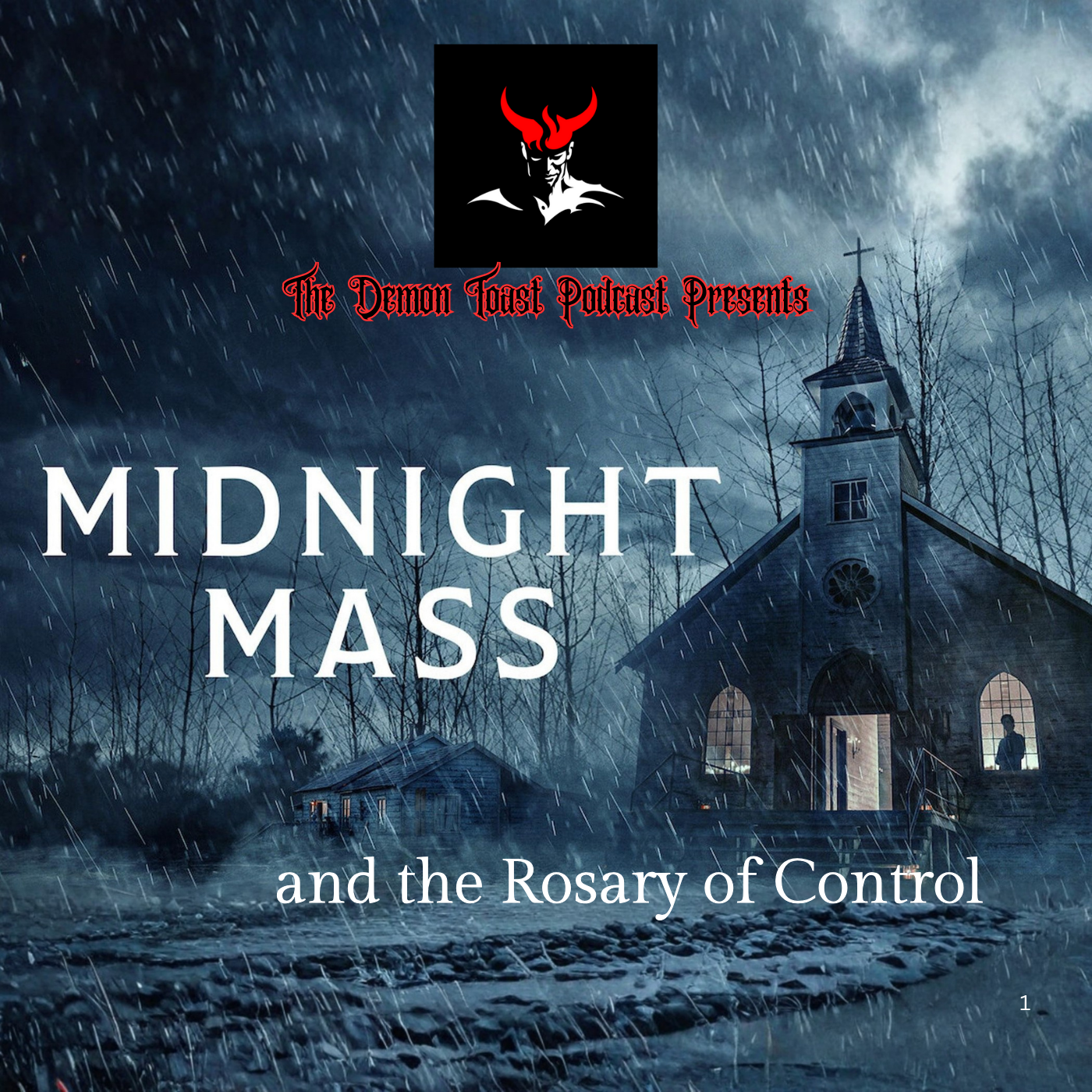
[00:00:40] Speaker A: We will get into it. So this is Demon Toast. We talk about gothic and horrific literature. This is of course the podcast of Death Wish Poetry magazine. I'm King Loki and with me is my co host, Ca.
And of course.
Yep. And of course my.
Our well, brilliant poet Mike Linehan, who has been published in our magazine, of course, and has been on the show and stuff. So yeah, we all have our own religious trauma which of course feeds into Midnight Mass. Catholicism is so morbid, its plague riddled, blood soaked roots run very deep.
And that's what this show plays into. You know, the whole ritual of eating Mr. Jesus's body and drinking his blood.
The.
The skulls of monks in those weird catacombs in Italy.
Crusaders. Awful, right? All this talk about like death and redemption.
Mike Flanagan basically gives us a parable. You know, Midnight Mass is a show that's of course on Netflix. I think it was his, his third show. Right. This is the. This follows the Haunting of Bly Manor and the Haunting of Hill House.
[00:01:51] Speaker B: Right. I believe. Yeah, I believe that was the order.
[00:01:55] Speaker A: Well, I've got the order wrong. It was the Haunting of Hill House and the Haunting of Bly Manor and then Midnight Mass came out. And I think this is his best work, his most expansive, his most dark, his most captivating.
You know, it's set on this tiny island. Where is it? Is it in Maine? Where is it? I'm a little dumb.
[00:02:14] Speaker B: Remember? I admit, coming from New England, I was really hoping it was like supposed to be Mame. But I think, I think it's meant to be, you know, purposely ambiguous to kind of.
[00:02:27] Speaker C: Yeah, I don't think they ever fully specify.
[00:02:29] Speaker A: Yeah, I don't think so either.
It's kind of like a parable. You know, we have this tiny island, we have a couple people living on it. We have an old drunk who lives kind of like a hermit and out of his little trailer. His name is Joe. He has a little dog that he loves. There is A sheriff who is a. I wrote down non practicing Muslim. Although that does change. He converted for his wife. He lives with his little son Ali. He is the sheriff of the island.
We speculate. We talked a little bit before the show. We think that he was probably elected on the mainland because these, these, these Catholic motherfuckers would not vote for a Muslim.
[00:03:09] Speaker B: No. Oh God, no.
[00:03:10] Speaker C: For sure. Yeah.
[00:03:13] Speaker A: Our main character is a guy named Riley who seems to be in his late 20s, early 30s.
[00:03:21] Speaker B: Yeah, I would say something like that. Yeah, I'd say probably a little bit more in the 30s category. But maybe I'm just thinking of.
Why can't I think of his not girlfriend's name who's also like.
[00:03:33] Speaker A: Aaron.
[00:03:34] Speaker B: Yes, Aaron.
[00:03:36] Speaker A: Yeah, Aaron Green.
[00:03:38] Speaker B: Yes, yes, exactly.
[00:03:41] Speaker A: He has a troubled history.
When he goes to bed at night, he sees a girl whom he hit with a car. Something, something happened. He spent some time in jail over that. He's now back home on Mike Flanagan's island of Catholic harmony, let's call it. Right.
Yeah, Everyone goes to church all the time.
They're very church centric. It's very. I find it to be very creepy as someone coming from the Jewish religion. I mean, Judaism's creepy too, but Catholicism scares me. Tell us about this.
[00:04:14] Speaker C: You know, I mean, it's super scary. So as a recovered Catholic myself who was brought into the church, I was brought into Catholicism.
Not from birth, actually. That's. There's a lot of like, personal backstory there that I won't go into. But I was brought in as a child. I was six when I was become. I was made to become Catholic, basically.
And, you know, because also still there was no consent involved.
And so there I was, you know, going to Catholic school, being raised Catholic, going to church every Sunday, going to Catholic school and elementary school and all of that.
So, yeah, I mean, as a. And like it just went on and did the youth group thing and all of that. Then I went to this like extremely like culty Catholic university after I went to my actual undergrad at like a regular school. It was still a Catholic school, but one of those Catholic in name only.
But then for postgraduate I moved to Ohio and I went to this school, super, super culty Catholic school called Franciscan University, if anybody's ever heard of that. I'm sorry for your traumas because, like, you don't come out of that place normal, actually.
So anyways, the point is, and I've been saying this for a very long time, like, Catholicism is really creepy.
They like literally worship and like Deify death and suffering in a way that I don't think any other even sect of Christianity really does. I mean, I was six, seven years old and staring at a crucifix of a bloody, you know, blood dripping down his body. Man hung above my bed every night. Like, it's really weird, you know, and we were taught our whole life growing up, you know, like, you know, to like, honor our suffering, that suffering was a good thing because it brought us closer to Jesus and it made us, you know, relate to him and his sufferings. Anyways, I am going on and on basically just to agree with you that Catholicism is very death centric, very culty.
Even the more mild variations of Catholicism, when you really break it down, are pretty culty. And the fact that every single Sunday is a blood ritual where you're quite literally drinking blood and eating flesh, that's. I remember bringing this up when I was in religious education class. I would say, isn't that cannibalism? Isn't that wrong? Like, isn't that not good?
And they were just like, well, it's different because it's Jesus.
[00:06:58] Speaker A: It's God.
[00:06:59] Speaker C: Yeah, okay.
[00:07:00] Speaker A: It's the Jesus.
[00:07:01] Speaker B: If I may interject for a moment, part of it is to do, unfortunately, the. Well, actually.
So just to clarify. So I was double checking it, so the sheriff's name is Sheriff Hassan Shabazz or something. So the guy who keeps calling him sheriff is.
[00:07:20] Speaker A: He's being racist.
[00:07:21] Speaker B: Yeah, but like, they're also friendly, so who knows? And the thing with the girl and Riley was that he was drunk driving and that they hit the car and that's how she died.
But. But yeah, on the issue of Catholicism, as I've mentioned in my poetry and a couple of times on this podcast now, also a recovering Catholic, just there's. Yeah, there's. There's a lot to unpack.
Yeah, Just literally looking at the corpse of Jesus every Sunday and there's glorifying not only death, but, like the misery and that, like, everything happens for a reason and something will come. Good will come out of the suffering, which I think factors into the show for sure. But also I think something that's very important to note too is what I put in my notes here is not only the Catholicism, but just like small town or like island culture. So it's such a small community that it is built around this church. Like, if there wasn't a religion, I think there'd be some other social construct that would unify them. But because, you know, it's pretty standard to have A church. And especially the girl who is paralyzed like she's going to church every day because. Partially because her parents and some sort of comfort to find in the religion. But like the show really shows just how it can be twisted so easily to this fanaticism.
[00:08:56] Speaker A: Yeah. And I think that that's an interesting thing to bring up because there's a wonderful part where Riley and Eren, the. They're sitting and they're talking about what they think happens when you die. Right.
[00:09:06] Speaker C: One of my favorite scenes of the whole series. Yeah. It's so good.
[00:09:11] Speaker A: It's gorgeous. Yeah. And I took Riley's description of his last moments as Flanagan's personal testimony. I think he's in many ways a self insert for Mr. Flanagan because he is also a recovering Catholic himself.
Feel free to correct me if I'm wrong, Case.
[00:09:28] Speaker B: And also he's had. I think he's sober now, but he has also struggled with alcoholism. Something like that.
[00:09:34] Speaker A: Yeah. Which is the feminist, so.
[00:09:38] Speaker B: Very much so.
Yeah. No, I love that. I also loved Eren's. When it circles back at the end and Eren has kind of like a reprise of Full.
[00:09:48] Speaker C: Full body Chill.
[00:09:51] Speaker B: Yeah. As someone who doesn't know where he is spiritually, like it. It fit like just the fine line between like being scientific and spiritual that like just makes it like so cool.
But no, their relationship I love too.
[00:10:05] Speaker C: I did too.
[00:10:05] Speaker A: Yeah. What I liked about I Did too is very. Is very lovely and the, the beats of this are very tragic. But my point is that, you know, when she talks about heaven and God, it's very abstract and beautiful. You know, it's not a horrifying be winged angel hiding in the darkness. You know, and that kind of reminded me because we, we were talking in a workshop last night about the new Jerusalem that's described in Revelation. It's on earth. You know, heaven's not like a construct in, in the Bible. It just. It just isn't. You know, they talk about the kingdom of God or whatever, but like Jesus is going to come back to the earth and they're going to live on the earth.
[00:10:41] Speaker B: Yeah, exactly.
[00:10:43] Speaker A: Yeah. Like that's fascinating really. You know, and like that's. That's the fun thing. Like, you know, we are going to spoil the show. So this is your one and only warning. Go watch the fucking show. If you haven't watched it, we are going to talk about it. Because the themes are. Demand that we talk. We talk about the specifics, but exactly the conceit of. Yeah, exactly. Like the conceit of a priest bringing an ageless, horrifying vampire lord who does not speak to a small island and declaring him to be an angel of God giving everlasting life.
It's not that far off. Like, it's not that far fetched. Like, the only real thing the show asks you to accept is that these motherfuckers haven't heard of a vampire before or ever seen, like, a single movie, you know? And like, if you could. I was able. I was like, whatever this is. This is metaphor. It's fine, you know?
[00:11:34] Speaker B: Yeah, yeah, sorry.
Yeah, absolutely. And it's. And the Father Pruitt, or Monsignor Pruitt is a fascinating character because, like, another side track about me is when I was in high school, I had a couple friends who were considering going into the seminary. At one point, there was a rumor going around that I was going to become a priest. So people kept asking me. I'm like, oh, no, that doesn't seem like me. But it did get me thinking, like, oh, in another universe, what would it have been like? Or something. So seeing this man who is like, I'd like go back and forth because, like, he's the one who starts all this, but he, as we discussed in our chat, he's not. He's not even really the force behind what goes wrong here. He, like, he's very much delusional and blinded by his faith. But in his. In his heart, he is trying to do good.
But at some point, he gets a little too fire and brimstone. And then the. I forget her name. The. The girlfriend. Well, the ex girlfriend.
[00:12:44] Speaker A: Mildred. Mildred, sorry, Mildred.
[00:12:45] Speaker B: Where she just storms out. She's like, I don't want you going back to that church. That's not the man.
[00:12:50] Speaker A: He declares to them that they. He declares to them that they are the army of God, that. That Jesus brought. Not this, not peace, but the sword, you know, and much will be asked of them. They will do great things. And she's. She's hard. She's like, what the. Is he talking?
[00:13:07] Speaker B: Yeah, yeah, exactly.
[00:13:08] Speaker C: So that whole entire.
I mean. Yeah. Again, spoilers. So make sure you've watched it. Yeah, so the. That whole. His whole entire character I found really, really interesting because, like, we, you know, you watch the show in a linear fashion. But this was my third time actually watching the whole series, but I hadn't seen it in a while, so it felt new. Ish again. But I remembered some of it. But when you watch the whole thing again, like, with the knowledge that.
Which is. Doesn't come out until the last episode. His main motivation for fucking all of this, for bringing this psycho angel vampire demon thing was because he loved a woman.
And the irony and the hypocrisy of the fact that here he was in this priestly role where you're supposed to be celibate and all this shit, and it turns out he had had a love affair with a woman and a child with her, and that child was now grown and. And, you know, they never came clean to her about it and all of that, but, like, he loved her, the daughter, you know, from afar, and he loved his lover, his former lover, from afar all of those years. And. And he wanted them to be able to have eternal life together.
So once he. Because he be. He got the vampire treatment, if you will, over in the Holy Land, I guess, is when all of this happened. He had wandered off into a cave, st. Stumbled upon this vampire angel thing, which then turned him into.
It's weird because, like, they don't turn into what he is, but they do turn into some variation of vampire, you know, like when you get the treatment, I guess.
[00:14:58] Speaker A: I think that guy. Yeah, I think that guy is like the. The prime vampire. He's something else, right?
[00:15:04] Speaker C: Yeah, right, exactly.
[00:15:05] Speaker B: Vampire lore always gets, like, very tricky going on, like who. Who dies when they get bit, who gets turned when they get bit. And do you need.
[00:15:14] Speaker A: Well, in this one. In this one.
[00:15:16] Speaker B: Yeah.
[00:15:17] Speaker A: In this one, they have the dark trick from the Anne Rice where they drink your blood and then they spit it back to you through their wrist. That's how you get turned into a vampire.
[00:15:25] Speaker B: And that kind of. That happens in Dracula, too. So.
[00:15:29] Speaker C: Right. That's how you get turned rather than just killed, because if you don't drink it, then you would just end up dying. So anyways, he gets this treatment all of a sudden, you know, reverses back to his healthy, youthful self and is like, oh, my God, I want to go do this to Mildred.
So that way, you know, we can live together happily ever after. And I'm just sitting.
[00:15:53] Speaker B: Rewind the clock.
[00:15:54] Speaker C: Wow, you really. You really did all that for.
For. Instead of just leave the priesthood.
[00:16:03] Speaker B: Yeah.
[00:16:05] Speaker C: Like, it's pretty wild. It's pretty. It's pretty out there.
[00:16:08] Speaker B: Back ass words. Yeah.
[00:16:10] Speaker D: So he.
[00:16:11] Speaker A: He strikes me as a very weak man. Mike, what do you want to say?
[00:16:13] Speaker B: I was going to say, so there's two things about Pruitt. One is something I truly loved was his conversations with Riley in their little makeshift a meeting. And then after Riley is turned and that intense back and Forth.
Which I'm still conflicted about. When he's like, oh, when I said, I.
I, you know, killed Joe and I told you that, what did you feel? He's like, disgusted. And it's like, no, what did you feel? It's like angry. It's like, no, you. We were gonna be honest. What did you feel?
[00:16:42] Speaker A: Lying to me.
[00:16:43] Speaker B: Yeah, he said, jealous, like, to not have that guilt. And I'm like, oh, that. That hit me. But, like, also, it's still up. It's still so up. Like, ah.
But, ah, man, there's just so much to unpack with him too. But also, can we just straight up say the. The. Was it Good Friday or Easter when they gave. When the Great Turning? That was some straight up Jonestown. Just.
[00:17:11] Speaker A: That was Easter. Yeah. Yeah. That was the big. That was the big thing.
[00:17:14] Speaker B: It was insane.
[00:17:18] Speaker A: They lock the doors.
[00:17:20] Speaker C: So scary.
[00:17:21] Speaker A: It's. It's pretty. It's pretty raw.
So there was something I noticed about that that I really liked metaphorically. You know, I'm like, I. I volunteer for Recovering from Religion. And a lot of the stuff I talk about is. I talk to clients about is, you know, how they are ostracized from their family. And not everyone drank the blood.
The people who didn't drink it were attacked and forced. Forced to turn, you know, and that. That made me think about how people get targeted by their families. They get ostracized for not falling in line and doing the religious rituals and doing all the stuff. You know what I mean?
It was pretty upsetting to watch that because there was. There was no escape either. You know what I mean? A lot of people have to live with their families. They have to do these things.
[00:18:11] Speaker B: And it was very harrowing in particular for, again, the girl who is in the wheelchair, I forget with their parents saying, like, no, no, no, honey, it's. It'll be over soon. As they're, like, actively, like, dying and like all this shit, I'm like, oh, my God.
[00:18:24] Speaker A: It was like a Jonestown thing.
[00:18:26] Speaker B: Yeah, it was right, Because. Oh, my God.
[00:18:27] Speaker C: Yeah. What they. They had brought out, you know, if. For anybody who hasn't seen it a little while, this is the scene we're talking about where they bring out the cups of poison inside the church, and they want everybody to basically poison themselves. And then if you had been drinking, if you had been taking the Eucharist every Sunday, they had been dosing that with the vampire blood. And so the. The process was supposed to be that if you had been drinking enough of that you would resurrect. You would come back and, you know, come back as a vampire because, you know, you would temporarily die, but then the vampire blood would bring you back to vampire life, basically.
So that was, like, the process that was supposed to happen.
But, you know, of course, they.
As we know, like, as it got started, it's incredibly horrific to sit there and watch people die from poison. I think it was like, rat poison or something, right?
Same thing that the dog got killed with. And so, yeah, there were people who just didn't want to do it. You know, they got spooked or they were just, like, suddenly, like, you know, the scales fall off and they're like, oh, I'm in a cult. I don't want to do this anymore. You know? And it's like, well, yeah, doors are locked. And, yeah, it got horrific, obviously. Absolutely horrific. That's definitely one of those scenes where if you don't have a strong stomach, like, look away.
[00:19:54] Speaker B: We agree that the real villain, though, isn't Pruitt, isn't the vampire. It's fucking Bev.
[00:20:02] Speaker C: Bev.
Bev.
[00:20:04] Speaker B: My notes just said, God, I hate. I hate her. Just.
[00:20:08] Speaker A: Oh, my God. She is. She's really good at quoting the Bible out of context to justify her psychopathy, you know, literal.
[00:20:15] Speaker B: I forget what we called it, like, like, cherry picking or, like, Christianity, just, like, picking whatever you want and seeing what sticks. I'm like, oh, my God. And I. The main comparisons I was making when I was watching the show, I was like, all right, so again, if we're looking at, you know, Mike Flanagan being a Stephen King, you know, fan, you know, it's got the Salem lot. Salem's lot vibes for sure.
It's got a little bit of Jaws with the whole, like, Sheriff being like, hey, maybe we shouldn't do this thing. And the mayor's like, nah, I'll be fine. We're all fine. Come to church. And then we've bought the Mist, and Bev Keane is that crazy lady from the mist. 100%.
[00:20:54] Speaker A: Just the crazy religious lady.
[00:20:56] Speaker B: Yeah. And then when they have the Jonestown shit, she's the one hiding in the back. She doesn't even, like, die like the rest. They wind up shooting her.
[00:21:04] Speaker C: Oh, God. Exactly.
[00:21:08] Speaker A: And there's this chilling. There's this chilling line during that scene. Why fight for a few minutes when there's a heaven, you know?
[00:21:14] Speaker B: Yeah.
Oh, I hate her so fucking much.
[00:21:18] Speaker A: Yeah.
[00:21:19] Speaker C: Yeah.
[00:21:19] Speaker B: And then when everyone.
[00:21:20] Speaker C: The constant Bible quoting was.
It was interesting because if you like.
I mean, the show, it's all Flanagan's are kind of like a slow unraveling. And same thing with, like, character development itself with Flanagan. So her character in particular, you know, starts off with, you know. Oh, she's, you know, you can tell she's like, definitely very holier than thou and whatever, but mostly benign. But just maybe just a little bit, you know, prejudice and just stays in her own bubble.
[00:21:54] Speaker A: Yeah.
[00:21:55] Speaker C: And then as time goes on, that ramps up and by the end by, like the final episode, it's almost as if she's pulling a scripture out every sentence. It's like it starts off like every now and then, you know, she might quote something to maybe, like, boost people's, you know, energy or, like, justify something. But then, like, as the. As the episodes go on, basically what you're watching unfold is like, her slipping further and further into religious psychosis, which is exactly what we see happen with her and some of the other islanders, you know, basically slipping into full religious psychosis and her none so much as her for sure. You know, I mean, the fact that when she walks in after Monsignor had killed and in me eaten and it was disgusting. That, like, horrific scene of the body of he killed.
Thank you. I don't know. I can remember. And Bev walks in on it, and instead of being horrified, she just immediately.
[00:23:05] Speaker A: She's like, immediately, like, oh, okay.
[00:23:08] Speaker C: She goes, okay, okay, and just accepts it and just is like, all right, let's start integrating this. And then she. She really does start being. Coming. The one who, like, really pushes this very in, like, intense sort of like, saviorism role onto Monsignor Pruitt. You know how she starts, like, gassing him up and she's like, you're the chosen one and you're special in all of this stuff. Stuff. And it was really her, like, she really was the orchestrator of this, like, the level that it got taken to.
[00:23:41] Speaker A: It's funny how good she is, you know? Oh, babies.
[00:23:45] Speaker D: Oh, hey, guys.
[00:23:49] Speaker B: Hello.
[00:23:51] Speaker D: It's been forever since I've seen your wonderful smiling face.
[00:23:55] Speaker A: Wow, here we are.
A wild Adrian appeared.
[00:24:00] Speaker D: I am definitely.
[00:24:02] Speaker C: Oh, my God. Look who's here.
[00:24:06] Speaker D: I know, guys, it's been a day.
[00:24:09] Speaker B: I hear you.
[00:24:11] Speaker D: With everything.
[00:24:14] Speaker C: To roll you right in. I basically just got done talking about how Bev had basically demonstrated a full slip into religious psychosis and how she was the one who really kind of like, orchestrated the whole.
It. How intense it got was really. She is the one to blame.
[00:24:31] Speaker D: Yes. Oh, it's all them.
[00:24:33] Speaker A: So, like, at the end, there's this wonderful exchange where fucking Pruitt finally finds his backbone and is like, this was supposed to be about God. And she's busy, like, you know, babbling about how the church is Noah's Ark and all this shit. The fire from Revelation is going to consume the town. And he's like, this was supposed to be about God, not about all this, whatever. And she turns on a fucking dime and throws him under the bus.
She calls him a scribe. It says in the Bible that there will be scribes and liars and priests who lie. And this is after she made him dress like Dr. Strange at his first midnight mass with his. His pointed cassock, his red, hellish red cassock on an Easter, you know.
[00:25:13] Speaker B: Yeah.
[00:25:13] Speaker A: No, not Easter. Good Friday. Good Friday. Sorry, I'm not a Christian. I forget. I was never a Christian.
[00:25:19] Speaker B: That's fine. What got me too, is like, even the mundane that was happening before it all, when crazy was again.
He's not my favorite character, but God, the fucking sheriff, like, gets put through so much shit. And like, when he's sitting in that town meeting thing and he's being like, yeah, I'm not super comfortable with they're giving out the Bible. And she's like, well, it's okay. We know that you don't follow Jesus. He's like, no, we believe Jesus is like. And he like, educates her. And she's like, wow, you learn something new every day. And I, you know, the. The Quran is just full with all of this murder and stuff like that. And he's just going to, what the fuck? Like, I know.
[00:25:56] Speaker A: Well, he's also like, do you see the point here? You don't want me talking about the Quran to your kids. And she's like, thanks for sharing anyway.
[00:26:05] Speaker B: Yeah, exactly.
[00:26:06] Speaker A: Yeah. She reminds me of a lot of Rebbetsons. I was around, like, rabbi's wives. Like, they're all like that too. They have that look to them. So I was getting triggered to watching her despite never going to a Catholic school.
[00:26:16] Speaker D: Like, I hate that she literally has an excuse for. For everything that she does. And she thinks everything that she does is entirely justified by some verse, even if she's taking it completely out of context and using it to suit her own purposes, which is like, her context.
[00:26:34] Speaker B: Yeah, yeah. Oh, and Riley's mom. Riley's mom turns that after on her immediately saying like, yeah, you know, Bev say, made some comment about, you know, Riley being a murderer. It's like, oh, mother of murderer or something. And she's like, yes. And God Loved him. Why does that offend you so much that he loved him just as much as he loved.
[00:26:56] Speaker D: As much as he loved.
[00:26:57] Speaker C: Just as much as he loves you.
Yes.
Yes.
That was so powerful. I loved that. Well, and Riley's mom is a good example, like, Riley's mom and I guess his. Her. His dad, too. Like, neither of them took the poison at the end. Like, they didn't want to take it to that level. They really were just like, oh, we just thought we were, like, trying to be good people and trying to be religious or whatever. And then as soon as they saw that it was turning into something horrific, they were some of the people that stepped to the side of the church and tried to. Tried to escape and tried to not, you know, participate, but then, you know, ended up getting spit and just, you know, all of that, and so woke up as vampires, but neither of them ever did vampire shit. They never went and attacked anybody. They never drink any more blood. They never hurt anybody. And it's interesting.
[00:27:54] Speaker A: There's a very powerful line. He says, I forget who. Who he says it to, but he says, I think he says it to his wife. He says, yeah, all the blood is mine. I didn't bite anybody. And she's like, me too. And he's like, you know, it's funny, I thought that they couldn't control themselves, but I feel the hunger. It hurts.
And I still haven't attacked anybody. I choose not to. And, like, I thought that was really compelling. Not just as, like, you know, a former religious person, very religious person, but as a man, too. You know what I mean? Like, we all have a choice, and we all make decisions in what we do do, especially with the privilege that we have and the religious burden we think we have. Right? Because as Jews, we all think that we're. We're. We're engaged in Tikon Olam, which is saving the world. Right.
And that could take a lot of forms, such as advocating for Israel or, you know, being, you know.
[00:28:55] Speaker D: It'S fine.
[00:28:57] Speaker A: Joining the IDF and killing Palestinians. Like, you know, or. Or throwing your gay son out on the street. Right, Like.
[00:29:04] Speaker C: Right, you know, exactly.
[00:29:06] Speaker B: Oh, and the thing with the vampirism in the show, too, was. Yes. One is, you could see the parallels with, like, addiction and the, like, how much sovereignty and, like, personal responsibility you have. And it's like, oh, I feel the urge, but I'm not feeding. Like, I can choose not to, to some extent.
And that's interesting, but, like, how they.
I forget the doctor's name on the island. How they.
[00:29:29] Speaker A: Sarah.
[00:29:29] Speaker B: Sarah. How she, like, scientifically explains all of this. It felt very much like I Am Legend, where it's like it had a scientific backing and theories behind, like. Oh, yes.
And it's fascinating.
[00:29:42] Speaker A: It's like the enzyme catches fire when it's exposed to sunlight.
[00:29:45] Speaker C: Yeah.
[00:29:46] Speaker B: And I was like, yeah. Obviously, it's all.
[00:29:48] Speaker A: You know, it's like Morbius.
Like, Morbius is not a vampire, but when he's exposed to sunlight, his. His albino skin gets. Becomes cancerous. He's like, you know.
[00:30:00] Speaker B: Right.
[00:30:00] Speaker D: But it kind of felt even a little like Blade.
[00:30:03] Speaker B: Oh, yeah.
[00:30:05] Speaker C: I was gonna say with the parallel of the vampirism, like, paralleling with addiction.
In particular, the scene where Joe shows up at Monsignor Pruitt's house is so poignant because of exactly what we're talking about. Right? So we have. At the end, we have Riley's dad saying, I feel that hunger, but I'm choosing not to feed because it goes against my character and my morals. And then we have Joe, a lifelong alcoholic who is suffering in his alcoholism and trying so hard to stay sober in this moment.
And he's feeling that hunger and he's trying to do the right thing. He shows up at Monsignor Pruitt's house for help.
And Monsignor Pruitt doesn't suppress the hunger. He does give in to the craving, and he literally goes for it, you know?
[00:31:01] Speaker A: Yeah. He can't help himself, or he chooses not to.
[00:31:04] Speaker C: He could have. That's the whole thing, you know, he could help it, but he chose not to in that moment. And it was. You can. You know, it's like the way that.
It's almost as though he, like, justified that, like, Joe's life wasn't worth it because he was, like a lesser let's person.
[00:31:21] Speaker B: Yeah. Like, he said, he kept saying he felt no remorse, like, and that God took the guilt away from me. It's like. No, he didn't. That's not how this shit works.
[00:31:29] Speaker C: No, you're just.
[00:31:30] Speaker B: No, you're just.
Yeah, you're fucked up, man.
[00:31:35] Speaker A: I'd like to zoom in on the Catholicism for, like, a second, so.
Yeah, let's do that. So I have this essay from Leia Schnelbach. Right. It's published through Reactor. Right. It's cool, lady.
Let me. Let me grab. So this show is Catholic in a way that most religious horror is not. And maybe more importantly, it's ex.
Excuse me. It's ex Catholic in a way that most things aren't. It uses the usual imagery in ways that are full of love and nostalgia. But the show leaves room for real, raw anger. It deals honestly with how it feels to lose your faith and have to keep living without.
Deals honestly with how it feels to have faith in a world that's pretty secular and how it feels to have your faith attacked by those who don't understand it. If there's a faith based to cover, Midnight Mass covers it. It doesn't shy away from people using faith as a weapon or a tool to manipulate the fearful. And best, worst of all, it. It deals with how those fates affect people's attitudes toward death.
So ca. You. You pointed out that Mr. Pruitt, Monsignor Pruitt, did all this because he loved a woman. But I would posit that I'm just going to trust his words. He did it because he was afraid of dying.
And he's an. You know, he strikes me as a very weak person, very weak willed person, Very, very scared man, despite being a priest. You know, there is. There is a nobility to him, but I feel like he's more just timid and scared and unsure of himself. Insecure is the word, right.
And when he finds his angel in the old church in Jerusalem and suddenly he's young again and he. He can live forever and all this stuff, he's like, this is the way. And he's deluding himself almost to the point where, like I said at the beginning of this, that the show asks you to accept that none of these people have heard of a vampire or seen a single vampire movie. It's also very possible that, miss, that Pruitt knew what a vampire was and was just chose to think that this was an angel because of how delusional he is, you know?
[00:33:38] Speaker C: Yeah, I think it's willful delusion. I think it was willful delusion, if you want my opinion. I think he.
Because I, The. From what I understood from the story, like, he didn't like, seek out this experience in the cave with the vampire angel thing. Like, it just sort of like he. He got lost, he stumbled into this cave, this thing happened to him. Then from that point, once he woke up and realized that he was, you know, alive again and aging in reverse and all of that, like, from that point forward, then he starts making a series of decisions. And those decisions, it seemed as though, as he later on confessed, motivated by the fact that he had a woman he loved and a daughter back on the island, and he didn't want them to suffer and he wanted them to live forever and all of this.
And so I think he created a delusion around what this being was.
Right. Because I think you're right. Like, he. Like he knew that what happened to him was not normal and was not natural, and we're dealing with something supernatural right now.
And I think he chose to turn it into a delusion where. How can I spin this within the framework of who I am and where I'm going back to this. This little island? Like, how can I spin this? And basically his brain just created this delusional framework to work with.
[00:35:10] Speaker A: I think spurred by that bitch Bev, that's.
[00:35:14] Speaker C: And then she took it and literally ramped it up to a thousand, for sure.
[00:35:18] Speaker B: Yeah. Well. And what comes to that, too, is when it comes towards the end, again, her just going full crazy. She's the one who sets fire to the rest of the houses on the island.
For I forget what the rationale was. Like, some. Again, some biblical reference or something is like, the churches.
[00:35:37] Speaker A: It's the Revelation. It's the book of Revelation. The angel poured the first chalice or the fourth chalice out on the sun, you know. Yeah.
[00:35:45] Speaker B: In a storm. We all know where to go to the church. And they have their little community center. Yeah.
[00:35:50] Speaker A: Because the church didn't burn in the big fire of, like, what, 84, 86. Yeah. She's like, oh, my God, it's God's will. I'm dumb. And I see coincidences everywhere. Yeah. Like.
[00:35:59] Speaker B: And so they go to the big community center, which then gets.
But, like, they have all the people who weren't the faithful who returned. Like that one guy who got turned but then killed his entire family and they weren't resurrected. And she's like, well, that's what you get for being a heathen or something. Turns them away. And Father Pruitt steps up to be like, no, you can come with me. The church stays open. Like.
But like. And that's where he redeems himself a little bit in the sense of, like, this is all gone sideways. But, like, if this is what the church is supposed to be about, then the church stays open for everyone. And then.
[00:36:37] Speaker C: Well, and I find it so interesting too, how at the end scene there, where he. Where he likes. Yeah. He goes, oh, no. Like, he can come into the church. The church stays open. It's like, you can see that there's this very feeble attempt, writing wise to, like.
It's not really an attempt to redeem his character, actually. What it is, is it's a. It's a. It's a What's the word I'm looking for? It's a. It's like a literary device to illustrate that sometimes it's gone too far and there is no redemption. Even if at the, like, last minute, you're. You go, oh, no, I was the bad guy. I'm sorry. It's, like, too late.
Sorry.
[00:37:20] Speaker A: It's an epiphany. It's an epiphany.
[00:37:23] Speaker C: It's an epiphany. And it's too little too late. And it's. It's. It's a hard watch in some ways, you know what I mean? Because you're like.
[00:37:29] Speaker A: It's the point where he says, this was supposed to be about God. Right?
[00:37:33] Speaker B: I think that's what the ending of the. Of the show is really beautifully tragic, in a way, is that everyone kind of has the moment of like, ah, we fucked up and there's no place to go. And, like, the whole island gathers to sing a song. Like, there's no escaping their fate anymore, but this is the community that they came together. Meanwhile, Bev, much like Revelation, is trying to literally hide from the sun, digging a hole in the fucking sand.
[00:38:02] Speaker C: I mean, poetic.
[00:38:04] Speaker D: Why didn't she do that beforehand? Like, she should have been digging that hole as soon as she realized with who she was. I was just like, girl, you should have gotten in the back of the trunk of a car or dig yourself a hole. Like, what is going on here?
[00:38:19] Speaker A: Even the vampires in that stupid oh, my God. Salem's Lot remake knew better, you know?
[00:38:24] Speaker D: Yeah, that's what I was going to say.
[00:38:26] Speaker A: Yes.
[00:38:28] Speaker D: Because I loved that one so much.
[00:38:30] Speaker B: Oh, yeah. It was your favorite movie.
[00:38:33] Speaker C: Like, the poignant.
The poignancy of how on that beach it was, you know, the sheriff and his son for the last time together, like, saying their prayers to the. You know, to the east, to the sunrise, as the sunrise was happening. And it was just like, man, like, I don't know. Like, I'm emotional. I was crying because it was. Again, it was just this feeling of, like. Because the sheriff tried so much, so hard to save his son from this cult and tried to, like, get him to not go to this church and not participate in all of this.
And, you know, teenagers are willful, and he did it anyways and then, you know, did the vampire thing. So as soon as that son was gonna hit him, he was gonna. You know, he was gonna catch on fire. Whereas the sheriff, you know, he wasn't gonna catch on fire, but he was dying because I think he was, like, shot or hurt. Or something, right?
[00:39:31] Speaker A: Like, something got shot, like, twice with that shoddy. Yeah, yeah.
[00:39:34] Speaker C: So he was gonna die too. But the fact that they sat there and, like, did their prayers together that one last time, like, oh, that was hard.
[00:39:44] Speaker A: And the point wasn't that his son became a Muslim. The point was he was doing this with his father, and they were sharing that moment together. And it was. I agree. It was very beautiful. It's very poignant. And I think in part two, we'll dig more into Sheriff Hassan. Thank you, Mike, for pointing out that I got the name wrong. That's me names was.
[00:40:05] Speaker D: He call him Sharif.
[00:40:06] Speaker C: I call him Sharif. Yeah. That's the nickname that Joe gave him.
[00:40:11] Speaker A: So, yeah, Joe gave him. I don't know. I missed his name every time they said it. And I heard Sharif, and I'm like, oh, is this. Is this supposed to be, like, a parable? Like, why is he called, like, okay, whatever, Whatever.
[00:40:21] Speaker D: Joe literally was making a play on what he was and started calling him Sharif through the thing, but his name was Hassan.
[00:40:28] Speaker A: Ironic racism, you know, it's fine.
[00:40:32] Speaker B: That was sweet in its own way, too. Like, his relationship with Joe's like, yeah, all right, we're back at it again.
[00:40:37] Speaker C: I know.
[00:40:38] Speaker B: Say the night, like.
[00:40:40] Speaker A: Selling him drugs because he was like, whatever.
[00:40:44] Speaker B: The only guy who's nice to me on this island. Let me have this. Like, literally.
[00:40:48] Speaker A: Serious. What a great moment.
All right, well, on that note, that is our first episode on Midnight Mass. Next up, next week, we will be talking about the themes of the show a bit deeper. Of course, you know, we of course, talked about most of the show, but there's. There's more to talk about. This is a very dense show, and you really should watch it. If you. If you listen to us talk about it for 40 minutes and didn't watch the show. What are you doing?
So on that note.
On that note, I'm King Loki. That's old Norse for Daniel Sokolov.
[00:41:19] Speaker B: I don't know.
[00:41:20] Speaker A: Demonlightbooks.com. death wish poetry magazine. Hire me over at Nightcap writing services to edit your book or whatever. Or. Adrian, I'll make you a cover if you want. Mike is a poet. He is awesome. He does slam poetry. I have his book somewhere.
Very professional, clearly. Mike, you want to plug some stuff?
[00:41:39] Speaker B: Sure. Yeah. So I've got my book the Porch Light, I published, like, two years ago or. Yeah, almost two years ago. I came out with a chapbook early this year, focused on the deadly sins.
And, yeah, slam poetry is my thing. I've been Writing horror films recently, so I love it.
[00:41:56] Speaker A: Yeah, it's a great fucking book. We love him. Mike is very talented. Do buy his book or I will haunt your dreams. Ca, of course, has started a business called Embracing Divergence. And ca you want to talk about?
[00:42:11] Speaker C: Yeah. So I'm offering basically creative consulting, so services. So anybody who is considers themselves a creative of any kind, writer, musician, artist, entrepreneur of any kind, basically I just sort of partner with you through transitions or like level ups or launches or anything you're doing where you're just trying to kind of like make sure you push to that next level. I'm gonna get you there. So hit me up if you. If that sounds like you.
[00:42:41] Speaker A: Link is below. Do check that out.
Lincoln bio.
Do follow today's Instagram and Mike's Instagram. And Adrian is, of course, the chairwoman and founder of the Horror Film Art Society of Amarillo. Adrian, you want to talk about that real fast.
[00:42:57] Speaker D: This month's film is she is Conan, which is drenched in glitter and blood. And I highly suggest. I know it's so cringey, but it's literally what that movie is.
[00:43:09] Speaker A: A French feminist art house take on Conan the Barbarian.
[00:43:13] Speaker C: It is.
[00:43:14] Speaker D: It has Elena Loewenson in it. It's beautiful. Most of it's done in black and white and the use of color is Chef's kiss.
So if you guys are inclined to watch this crazy film and make some art about it, whether it's poetry or painting or whatever, send it my way, guys. We want all of it.
[00:43:32] Speaker A: Yeah. Link is below. Honestly, it's probably too late by the time this goes up, so whatever.
I'm glad you said it, though. Yeah, that. That's. That. Write poetry, make art, and love your demons. Ave Satanas. And that's about that.
[00:43:47] Speaker C: So, yeah, signing off.
Yeah.